If the “sugar-free” label is your top priority, the No Sugar Sugar dark chocolate listed by REWE is a closer match than a bar labelled “no added sugar” or a low-sugar bar. For your gym bag, though, an individually portioned bar may be more practical: compare the sugar and protein per serving, and check the ingredients and allergen information. You’ll need to portion a 100 g chocolate bar yourself if you want a smaller serving.
Which options are right for you?
If sugar content is your priority
If you’re looking for the lowest possible stated sugar content, compare the nutrition information rather than relying on the label on the front of the pack. The chocolate bars we looked at differ in whether they’re labelled “sugar-free” or “no added sugar”; taste and sweeteners may also influence your choice.
If protein is your priority
If protein matters in a snack around your workout, the amount per bar is more important than a chocolate or sugar label. An individually wrapped protein bar is also easy to take with you as a single serving.
If portion size is your priority
If you want to put your snack in your gym bag without portioning it first, check the bar’s weight and sugar content per bar. Also check the ingredients and allergen information on the specific pack.
What should you look for when choosing?
First decide whether the “sugar-free” label, sugar content, protein or a small individual serving matters most to you. Then compare the nutritional values per 100 g and, where provided, per serving. Ingredients and allergen information are important regardless.
| Criteria | What to check when buying | Who it matters to |
|---|
| Sugar content |
“Of which sugars” per 100 g; for bars, also check per bar. Don’t treat “no added sugar” and “sugar-free” as interchangeable. |
If a low stated sugar content is my main priority, the label on the front of the pack isn’t enough. Around 31% of consumers would choose sugar content as their top criterion. |
| Protein |
Protein per bar or planned serving; check the serving size too. |
For a snack around my workout, I want to know how much protein is in the amount I’ll actually eat. Around 31% of consumers would put protein first. |
| Portion and portability |
Pack weight and individual serving; portion out the amount you want yourself if you’re buying a chocolate bar. |
When I’m out and about, I want to take a set portion with me without having to break off a piece first. For around 23% of consumers, portion format would come first. |
| Ingredients and information |
Sweeteners, highlighted allergens, may-contain information and warnings about excessive consumption. |
If certain ingredients are a deciding factor for me, I check the labelling of each product. This would be the top priority for around 15% of consumers. |
Common comparison mistakes
-
Assuming “no added sugar” means “sugar-free”
Chocolate with no added sugar can still contain sugar. REWE lists 9 g of sugar per 100 g for Lindt milk chocolate with no added sugar.
Read the exact product description and compare the “of which sugars” line in the nutrition information.
-
Treating a chocolate bar like an individual snack bar
A value per 100 g doesn’t tell you how much sugar is in the amount you’ll actually eat while you’re out. A 100 g chocolate bar isn’t automatically a smaller individual serving.
For snack bars, compare the figures per bar. If you only want to take part of a chocolate bar with you, portion it before packing it.
-
Overlooking ingredients and allergen information
The products we looked at use different sweeteners and, depending on the recipe, list different ingredients or possible traces of allergens. Several packs warn of a possible laxative effect if consumed in excess.
Check the ingredients list, allergen labelling and warnings on the specific pack, regardless of the sugar claim on the front.
-
Assuming a sugar label tells you the protein content
“Sugar-free” and “no added sugar” don’t tell you how much protein a product contains. For the ahead Hazelnut Cacao we looked at, REWE lists 3.1 g of protein per 35 g bar; for the More Satisbite Bar, the stated 31 g per 100 g works out at 15.5 g for a 50 g bar.
If protein is what determines your choice, compare the amount per bar or planned serving.
Key brands to consider
Lindt
The 100 g dark and milk chocolate bars we looked at are labelled “no added sugar”. They may suit you if you’re looking for that claim, without assuming it means the sugar content is zero.
- Lindt Germany states that its dark chocolate contains 1 g of sugar per 100 g and at least 55% cocoa; REWE lists 9 g of sugar per 100 g for the milk chocolate.
- The bars we looked at contain maltitol and carry a warning about a possible laxative effect if consumed in excess. You’ll need to portion the bar yourself if you want a smaller serving.
No Sugar Sugar
The dark chocolate listed by REWE is aimed at consumers who care more about the “sugar-free” label than having an individually wrapped bar.
- REWE describes the 100 g chocolate bar we looked at as sugar-free and states that it contains 0.5 g of sugar per 100 g and at least 70% cocoa.
- It contains erythritol and steviol glycosides. Note the stated possibility of traces of lactose, cereals containing gluten, nuts and peanuts.
More Nutrition
The More Satisbite Bar we looked at is an individually portioned, protein-rich chocolate snack, not a chocolate bar labelled “sugar-free”.
- For the 50 g bar, REWE lists 31 g of protein and 3.4 g of sugar per 100 g.
- The bar we looked at contains, among other things, milk ingredients, collagen and pistachios. Check its may-contain information too.
ahead
The Hazelnut Cacao we looked at is a 35 g bar for consumers who would rather take a set portion with them than a chocolate bar.
- REWE lists 1.5 g of sugar, 8.1 g of fibre and 3.1 g of protein per bar.
- The recipe includes hazelnuts, oats, milk, soya, maltitol and sorbitol, among other ingredients. The product page warns of a possible laxative effect if consumed in excess.
Suitable products on Joybuy
Here you’ll find chocolate with no added sugar, as well as chocolate, cereal and protein bars to suit different priorities for your gym bag. Product names are no substitute for comparing the nutrition information and the actual serving sizes.
 No image available
Frankonia Sugar Free Nutrition Bar Chocolate Brownie 50 g
A chocolate bar for anyone who wants to take a set portion with them. Compare the sugar content with the nutrition information for other bars, and check the ingredients and warnings on the pack. “Sugar Free” in the name doesn’t replace these checks.
View on Joybuy
 No image available
Corny Free White Chocolate No Added Sugar cereal bars, 6 × 20 g
This pack may appeal if you’d rather take small cereal bars than a chocolate bar with you. It contains six 20 g bars, with chocolate as an ingredient. Check the sugar content per bar, as well as the ingredients and allergen information.
View on Joybuy
 No image available
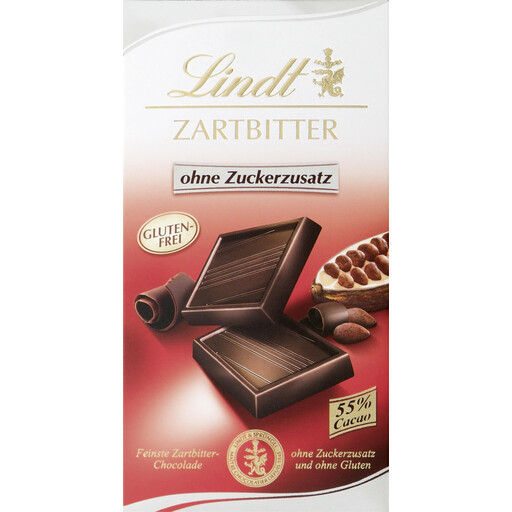
Lindt dark chocolate with no added sugar, 100 g
This chocolate bar may suit you if you’re looking for dark chocolate with no added sugar and are happy to portion out a serving for when you’re out. Lindt Germany states that the 100 g bar contains 1 g of sugar per 100 g and at least 55% cocoa. “No added sugar” doesn’t mean “sugar-free”; check the ingredients and allergen information too.
View on Joybuy
 No image available
Corny Free Chocolate No Added Sugar cereal bars, 6 × 20 g
This option may suit you if you want to take a chocolate cereal bar as a small individual serving. The pack contains six 20 g bars; compare the sugar content per bar and read the ingredients and allergen information to help you choose.
View on Joybuy
 No image available
Premier Protein 50% Bar Chocolate Caramel Low Sugar, described as 16 × 40 g
This chocolate caramel protein bar may suit you if protein matters more to you than the “sugar-free” label. Before buying, pay particular attention to the actual pack quantity and bar weight, as the product description gives different figures. You’ll need the correct serving size to make a meaningful comparison of sugar and protein per bar.
View on Joybuy
Frequently asked questions
Does “no added sugar” mean the same as “sugar-free”?
No. Chocolate with no added sugar can still contain sugar. REWE lists 9 g of sugar per 100 g for the Lindt milk chocolate with no added sugar we looked at. If sugar content matters to you, check both the product description and the “of which sugars” figure in the nutrition information.
Is sugar-free chocolate automatically low in calories or better suited to training?
No. The sugar claim alone doesn’t mean a product is low in calories or particularly suitable for training. Lindt Germany lists 482 kcal per 100 g for the dark chocolate with no added sugar we looked at; the No Sugar Sugar dark chocolate listed by REWE contains 476 kcal per 100 g. If protein matters to you, also compare the amount per serving you’ll actually eat.
What should I look out for with maltitol and erythritol?
Check which sweetener the specific chocolate or bar contains and what warnings appear on the pack. The German Federal Institute for Risk Assessment classifies maltitol and erythritol as sugar alcohols, also known as polyols; several of the products we looked at warn of a possible laxative effect if consumed in excess.
Does “sugar-free” tell me anything about allergens?
No. A sugar claim doesn’t tell you whether a product is suitable for someone with an allergy. The products we looked at vary in their ingredients and possible traces. So check the allergen information on the specific pack every time you buy, rather than assuming the “sugar-free” label tells you what’s in it.


