For people who need to strictly limit sugar
If ‘sugar-free’ is a firm requirement, the sugar value per 100 g matters more than the wording on the front of the pack. EU Regulation (EC) No 1924/2006 sets a limit of no more than 0.5 g for solid foods.


If your late-night chocolate bar needs to be explicitly sugar-free, check the ‘of which sugars’ value per 100 g: under EU Regulation (EC) No 1924/2006, it must be no more than 0.5 g. Chocolate with no added sugar may be suitable if you don’t need to meet this limit, but it can still contain sugar. Also check the ingredients, allergens and any sweetener warnings.
If ‘sugar-free’ is a firm requirement, the sugar value per 100 g matters more than the wording on the front of the pack. EU Regulation (EC) No 1924/2006 sets a limit of no more than 0.5 g for solid foods.
If you prefer a dark chocolate bar and don’t need to meet a strict sugar-free limit, you can compare products with no added sugar. The actual sugar content and the sweeteners used are still worth checking before you buy.
If you’re after an individually portioned chocolate and peanut bar, a vegan recipe may be the deciding factor. Ingredients and ‘may contain’ warnings are still important: NEOH lists peanuts and soya in its NEOH Peanut Bar and warns that it may contain traces of other allergens.
First, decide whether ‘sugar-free’ is essential. Then you can compare the type of chocolate, portion size and ingredients.
| Criterion | What to check | Who might care most |
|---|---|---|
| Sugar-free limit | Check the ‘of which sugars’ value per 100 g. Under EU Regulation (EC) No 1924/2006, products labelled ‘sugar-free’ must contain no more than 0.5 g. | If I specifically want to buy a sugar-free product, ‘no added sugar’ isn’t enough for me. For around 42% of consumers, this strict sugar-free requirement comes first. |
| Chocolate with no added sugar | Check the type of chocolate and the sugar value separately. Lindt states that its dark chocolate with no added sugar contains 1.0 g of sugar per 100 g. | For a late-night snack, I want a dark chocolate bar with no added sugar, even if it isn’t sugar-free. Around 33% of consumers prioritise this taste and recipe. |
| Vegan bar and portion size | Check the portion size, ingredients and ‘may contain’ warnings for the specific variety. | An individual vegan chocolate snack is closer to what I’m looking for in the evening, but I also need to check its ingredients. Around 25% of consumers put these requirements first. |
These are different claims. Lindt states that its dark chocolate bar with no added sugar contains 1.0 g of sugar per 100 g; REWE states that its milk chocolate version contains 9.0 g per 100 g. Both are above the sugar-free limit set by EU Regulation (EC) No 1924/2006.
If you need to stay within the limit, compare the ‘of which sugars’ value per 100 g before buying.
The sugar value alone doesn’t tell you the total energy content of a chocolate bar.
For the variety you choose, also check the energy value in the nutrition information and take the portion size into account.
The consumer advice centre warns that consuming large amounts of polyols can have a laxative effect. The Lindt and NEOH products described here carry warnings about excessive consumption.
Check the ingredients and consumption advice on the specific pack before deciding how much to eat.
NEOH describes its Peanut Bar as vegan, but lists peanuts and soya as ingredients and warns that it may contain traces of other allergens.
If you have an allergy, always check the ingredients and ‘may contain’ warnings for the variety you choose.
The Torras mint chocolate bar featured by Simply Keto is an example of a product for those looking for a strict sugar-free option.
The Lindt bars featured here are options with no added sugar, not examples of sugar-free chocolate.
According to NEOH, its Peanut Bar is a vegan, individually portioned chocolate and peanut option with no added sugar.
These two products are chocolate options with no added sugar for a late-night snack. If you specifically need a sugar-free product, compare the sugar value per 100 g for each variety with the 0.5 g limit.
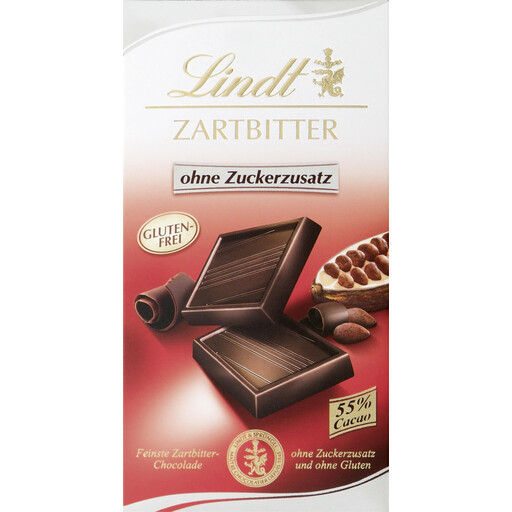 No image available
A dark chocolate bar for people who are happy with ‘no added sugar’.
Lindt states that it contains at least 55% cocoa and 1.0 g of sugar per 100 g. This means it’s above the sugar-free limit. It contains maltitol, milk and soya.
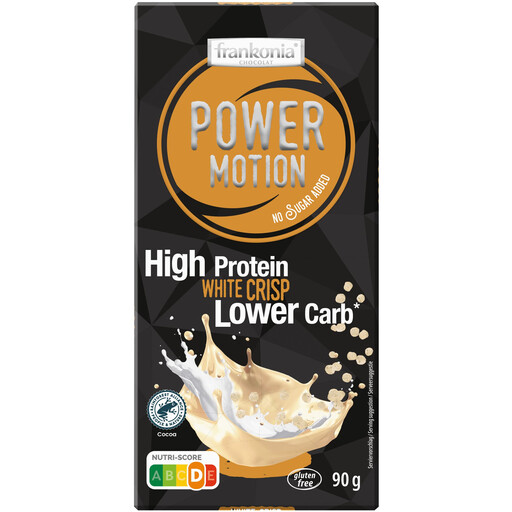 No image available
A white crisp chocolate for people who prefer this variety to a dark chocolate bar.
The pack contains 90 g. ‘No Sugar Added’ doesn’t in itself confirm that a product is sugar-free. Check the ‘of which sugars’ value per 100 g, as well as the ingredients and allergen information on the pack.
Under EU Regulation (EC) No 1924/2006, a solid chocolate bar must contain no more than 0.5 g of sugar per 100 g to use this claim. Check the ‘of which sugars’ line in the nutrition information, not the ‘no added sugar’ claim.
No. The dark chocolate version listed by Lindt contains 1.0 g of sugar per 100 g, so it exceeds the sugar-free limit. It’s only an option if chocolate with no added sugar is enough for you.
Check the ingredients and consumption advice for the specific variety. The consumer advice centre warns that polyols may have a laxative effect when consumed in large amounts; the Lindt and NEOH products featured here carry warnings about excessive consumption.
No. NEOH’s vegan Peanut Bar contains peanuts and soya; NEOH also warns that it may contain traces of tree nuts, gluten and milk. Check the ingredients and ‘may contain’ warnings on the pack you choose.