If you mainly want a small piece of low-sugar chocolate before your workout, compare the nutrition information for the specific variety and don’t assume that ‘no added sugar’ means ‘sugar-free’. For a longer or more intense endurance session, very low-carb chocolate isn’t a substitute for an appropriate carbohydrate intake: according to the German Nutrition Society (DGE), carbohydrates are an important source of energy during sport. Also check the sweeteners and warnings, and don’t try a new variety for the first time just before an important session.
Who might this snack suit?
Early-morning exercisers looking to reduce sugar
If you fancy something sweet before your workout without specifically looking for fuel for your training, a small portion of chocolate could satisfy your craving. For each variety, compare the ‘of which sugars’ value, polyols and the portion you plan to eat.
Low-carb-focused strength trainers
If carbohydrate content is your main consideration when buying, check the nutrition information for the individual product. Low-sugar chocolate isn’t necessarily a proven snack for improving performance.
Endurance and interval trainers
If you’re mainly looking for fuel for a longer or more intense session, first consider whether chocolate is meant to serve that purpose. The German Nutrition Society describes carbohydrates as an important source of energy during sport.
What should you look for when buying?
First decide whether you want a small treat or a source of energy to fuel your activity. Then compare the nutrition information for the specific chocolate variety and the portion you plan to eat.
| Your priority |
What to check |
Who it matters to |
| Fuel for your workout |
Compare the carbohydrates in your planned portion with what you need from the snack, and take the session’s duration and intensity into account. |
Before a longer or more intense endurance session, I don’t want to choose a snack based on its sugar content alone. Around 31% of consumers put energy provision first. |
| Sugar and carbohydrates |
Check ‘of which sugars’ and carbohydrates per 100 g and per planned portion; see whether the pack says ‘sugar-free’ or ‘no added sugar’. |
If I’m planning chocolate as a small treat and want to limit sugar, the actual amount in my portion matters. Around 31% of consumers put this dietary goal first. |
| Sweeteners and tolerance |
Check the ingredients list, information about polyols and any warnings; try a new variety outside an important training session. |
Before a demanding session, I want to know how well I tolerate the portion I’ve chosen. This is a priority for around 23% of consumers. |
| Ingredients and portion size |
Compare the ingredients and allergen information for the exact variety, and think about how much you’ll actually eat. |
If particular ingredients are important to me, the brand name alone isn’t enough to help me decide. For around 15% of consumers, ingredients and a suitable portion are their main priorities when buying. |
Common pre-workout pitfalls
-
Assuming ‘no added sugar’ means ‘sugar-free’
According to Lindt’s product information, both its no-added-sugar milk chocolate and dark chocolate bars contain sugar: 9 g and 1 g per 100 g respectively.
For the variety you’re interested in, check the ‘of which sugars’ line rather than relying on the wording on the front of the pack.
-
Trying a new variety just before an important session
The consumer advice centre warns that sugar substitutes can have a laxative effect in larger quantities. The Lindt bars mentioned here carry a relevant warning.
Check the sweetener and try a small portion first, outside an important training session.
-
Confusing low sugar with suitable workout fuel
If you’re planning fuel for a longer or more intense endurance session, don’t automatically treat a low-sugar chocolate snack as a carbohydrate source for this purpose. The German Nutrition Society highlights the role of carbohydrates in providing energy during sport.
Before you buy, decide whether your priority is enjoyment or your planned carbohydrate intake.
-
Assuming one variety represents the whole brand
The two no-added-sugar Lindt bars mentioned here already differ considerably in their sugar content per 100 g.
Check the current nutrition table, ingredients list and allergen information for the exact variety and pack size.
Relevant brands and product ranges
Lindt
Lindt’s no-added-sugar milk and dark chocolate bars can be compared; both are sweetened with maltitol.
- Lindt Germany lists 1 g of sugar per 100 g for its dark chocolate bar and 9 g per 100 g for its milk chocolate bar.
- The bars mentioned contain polyols and carry a warning that excessive consumption may have a laxative effect. Check the exact variety and portion size.
No Sugarsugar
The dark chocolate described by REWE is an option to compare with no-added-sugar bars.
- REWE lists at least 70% cocoa and 0.5 g of sugar per 100 g for this variety.
- Check the pack for sweeteners, warnings and possible allergen traces in the specific variety; this information doesn’t apply to the whole brand.
Simply Keto
The dark chocolate drops with erythritol are aimed at shoppers comparing chocolate options for a low-carb diet.
- Simply Keto lists 3 g of digestible carbohydrates per 100 g for these drops; this figure relates to the specific product and is provided by the manufacturer.
- This figure says nothing about any effect on athletic performance or how well you’ll tolerate them immediately before exercise.
Chocolate options at Joybuy
This selection includes a dark chocolate bar and two crisp chocolate bars labelled ‘no added sugar’, which could suit a small treat before a workout. If you’re looking for fuel for a longer or more intense session, consider your planned carbohydrate intake separately.
 No image available
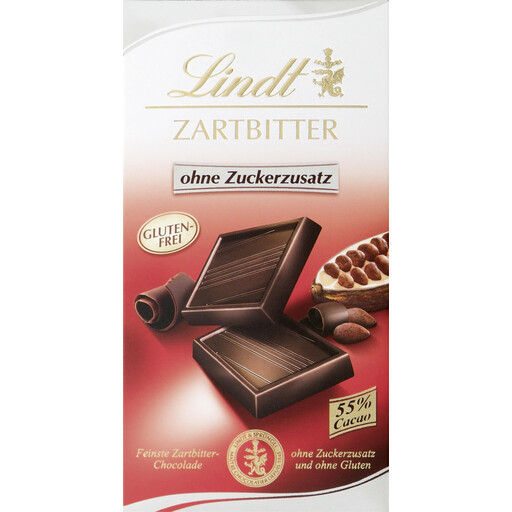
Lindt dark chocolate, no added sugar, 100 g
For a small portion of chocolate if you mainly want to limit sugar and aren’t looking for fuel for your workout.
Lindt Germany lists 1 g of sugar and 38 g of fat per 100 g for its dark chocolate bar; REWE lists 37 g of polyols per 100 g. Note the warning about excessive consumption and check the allergens on the pack.
View at Joybuy
 No image available
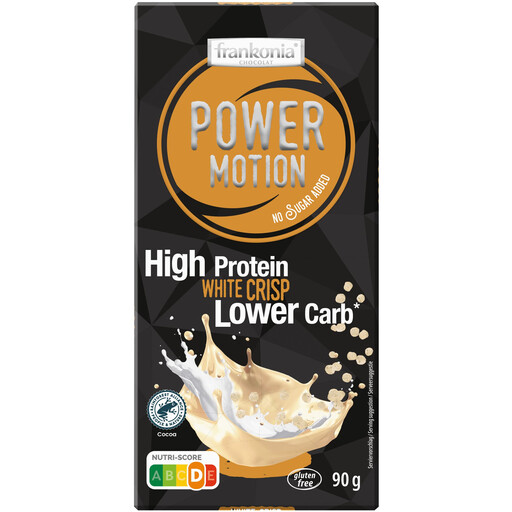
Frankonia Chocolat Power Motion White Crisp, no added sugar, 90 g
A white crisp chocolate to compare if you’re looking for a small treat with no added sugar.
‘No added sugar’ doesn’t mean ‘sugar-free’. Before eating, check the sugar content per portion, as well as the sweeteners and allergens listed on the pack.
View at Joybuy
 No image available
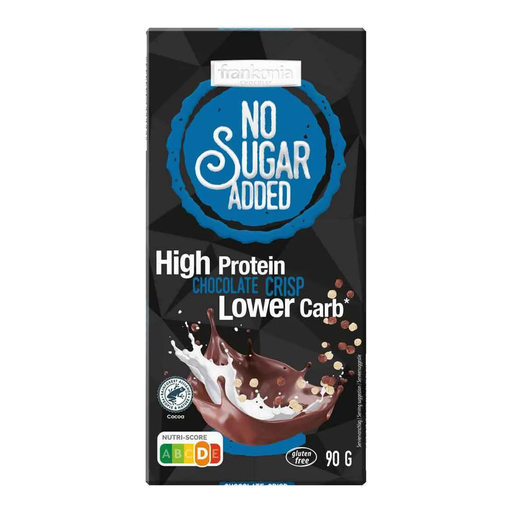
Frankonia Chocolat Power Motion Chocolate Crisp, no added sugar, 90 g
A chocolate crisp option if you’re considering chocolate with no added sugar as a treat before your workout.
Check the sugar and carbohydrate values for the specific variety before choosing it to suit your dietary goal. Also check for sweeteners and warnings before exercising.
View at Joybuy
Frequently asked questions
Is sugar-free chocolate a suitable energy snack before a long or intense workout?
Not necessarily. If you’re planning fuel for a longer or more intense session, compare it with a carbohydrate source suited to that purpose. The German Nutrition Society describes carbohydrates as an important source of energy during sport; your needs depend, among other things, on the duration and intensity of the activity.
Is chocolate with no added sugar also sugar-free?
No. ‘No added sugar’ doesn’t mean that the product contains no sugar. Lindt Germany lists 9 g of sugar per 100 g for its no-added-sugar milk chocolate bar and 1 g per 100 g for its dark chocolate bar. To compare varieties, check the ‘of which sugars’ line for each one.
Why do some chocolate bars carry a warning about a laxative effect?
Sugar substitutes can have a laxative effect in larger quantities, as the consumer advice centre explains. If you want to eat chocolate sweetened with them before exercising, follow the warning on the pack and try a small portion first, outside an important session.
Is vegan chocolate automatically free from allergens?
No. ‘Vegan’ doesn’t mean that chocolate is free from all allergens or possible traces. Check the ingredients list and allergen information for the specific variety rather than assuming anything about its ingredients from the name or brand alone.


