
Lieferung heute & morgen

Qualitätsgarantie

Willkommens-Angebote freischalten: KOSTENLOSE Lieferung | Bis zu 80 % RABATT | Kostenlose 30-Tage-JoyPlus-Testphase
App herunterladen
Sugar-free drink powder can be a practical alternative to ready-bottled drinks when you are out and about, at work or exercising. However, terms such as “sugar-free”, “vegan” and “low-calorie” alone are not enough to make an informed purchase decision. The preparation quantity, sweeteners, possible sources of caffeine and the intended use are all important factors.
The following selection from the Joybuy Product Recommendation Officer highlights what shoppers in Germany should look out for and which products are suited to different everyday situations.
A drink may only be described as sugar-free if its sugar content meets the legal thresholds for this claim. “Low-sugar” is a different category. One example is the Vitasoy soya drink: according to the product information, it contains 4.0 g of sugar per 100 ml, meaning it is not sugar-free, even though it contains less added sugar than the classic version.
With powder, you should also consider the drink as prepared. If it is mixed with milk, yoghurt or Skyr, the natural sugars come from the chosen base product. The powder itself may be sugar-free, but that does not automatically mean the finished drink contains no sugar.
An instant drink powder may be designed for 0.25 litres, 0.5 litres or up to 1 litre of water per stick. Comparing products “per serving” only makes sense when the drinking volume is identical. You should therefore check:
A drink powder that dissolves to provide 0 g of sugar per 100 ml may be a low-calorie option. Nevertheless, the ingredients list should show whether it contains maltodextrin, acidity regulators or different sweeteners, for example.
A classic vegan drink powder without caffeine is suited to different purposes than an energy drink powder. Products containing green tea or black tea extract may contain small amounts of caffeine. With energy variants, information such as 52 mg of caffeine per stick is particularly important.
Children, young people, pregnant women and breastfeeding people should take particular care with caffeinated drinks. Energy drink powder should also not be combined with alcohol and should only be used according to the instructions on the packaging.
Drink powder in sticks is practical because each portion is dosed separately. Depending on the product, around 0.5 to 1 litre of water is used for flavoured water. Energy variants are often intended for smaller quantities, such as 0.25 litres. Using more water can significantly dilute the flavour.
Milk drink powder is not automatically suitable for water, however. Some varieties have been specially developed for milk, yoghurt, Skyr, quark or plant-based alternatives. With these products, the base is crucial to the flavour, calorie and sugar content.
“Vegan” should be checked against the ingredients list and the manufacturer’s information. For vegans and vegetarians, milk ingredients, whey protein, egg and gelatine are also important points to check. A whey-based protein powder, for example, is not vegan and contains milk ingredients.
If you have a nut allergy, also look for information about flavourings and possible traces. The labels “lactose-free” or “allergen-free according to the manufacturer” do not replace checking the current packaging. Recipes and product information can change.
Sticks should be stored in a dry, cool place away from direct sunlight. Once opened, the contents of individual sachets should generally be used immediately. Check the best-before date on the packaging and compare the number of portions with your actual consumption.
For frequent users, a bulk or mixed pack may be more economical. If you want to try a flavour first, a taster pack reduces the risk of buying a large quantity in a flavour you do not enjoy.
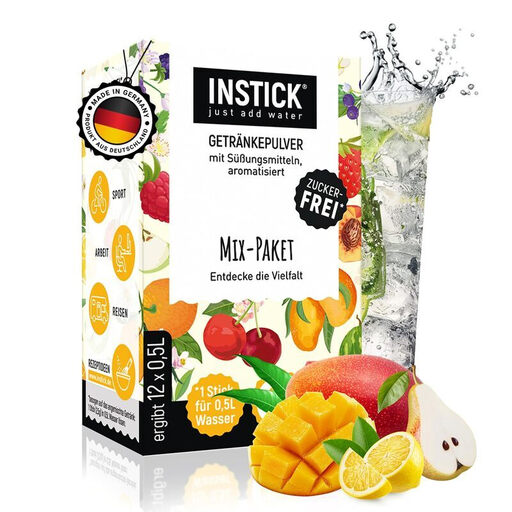
Why this product suits this profile: The taster pack contains 12 sticks with different fruit flavours. Each stick is intended for around 0.5 to 1 litre of still or sparkling water.
The clear dilution recommendation makes it easier to compare the product per litre. The mixed pack also prevents you from buying a large pack containing just one unfamiliar flavour.
12 individual sticks, sugar-free according to the manufacturer, vegan and with vitamin C. The drink can be prepared with still or carbonated water.
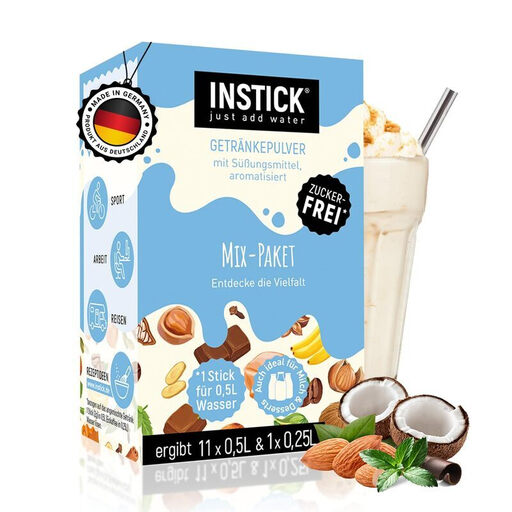
Why this product suits this profile: The 12 flavours are designed for milk, yoghurt, Skyr, quark and plant-based milk alternatives. This makes the product suitable for breakfast and desserts, too.
The intended use is clearly defined. This helps you avoid buying a water powder when you actually want a flavoured milk drink or a dessert preparation.
24 g total content in 12 sticks, sugar-free and vegan according to the manufacturer. You can choose the base yourself, making it easier to assess the calorie and sugar content of the finished drink.
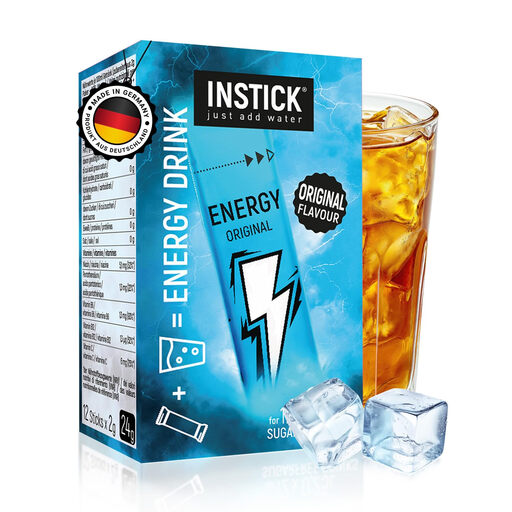
Why this product suits this profile: The energy drink powder is designed for 0.25 litres per stick and, according to the product information, contains 52 mg of caffeine as well as taurine and vitamins.
The caffeine content per serving is clearly stated. This allows shoppers to include it in their daily caffeine intake instead of relying solely on the word “energy”.
Portion sticks for when you are out and about, sugar-free and vegan according to the manufacturer. According to the labelling, this product is not intended for children, pregnant women or breastfeeding people.
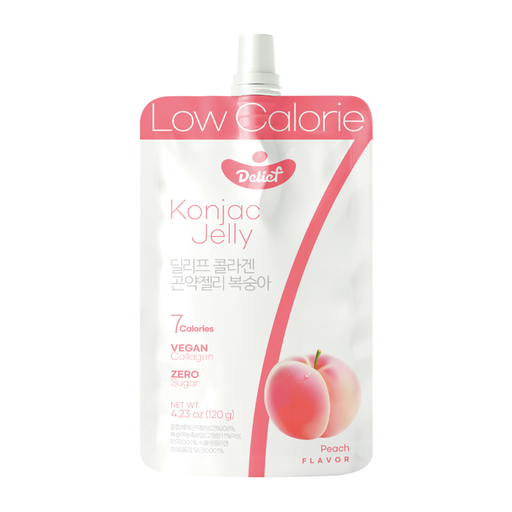
Why this product suits this profile: The peach snack is a handy accompaniment to drinks when you want a portioned, vegan alternative to traditional confectionery.
The nutritional values are stated per 100 g: 5 kcal, 0 g fat and 0 g sugar. This makes it easier to assess the portion objectively rather than relying on purely promotional claims.
Vegan according to the manufacturer, peach flavour and a single 120 g portion in a non-resealable pouch. The ingredients list includes sweeteners and thickeners, among other ingredients.
We have put together a complete, regularly updated list of products that fully meet these strict selection criteria and the safety regulations applicable in the EU.
A stick is not automatically cheaper than a ready-made drink. Calculate the price per litre:
For everyday use, resealable or reusable water bottles are a sensible choice, provided the powder dissolves completely. With cold water, shaking may work faster than stirring. The powder should not be consumed dry; the dosage and temperature information on the packaging always applies.
No. “Sugar-free” does not necessarily mean calorie-free. Acidity regulators, carriers, flavourings or other ingredients may contribute energy. The nutritional information for the specific product is the deciding factor, ideally per 100 ml of the prepared drink.
Shelf life varies depending on the product. In the information available, the stated periods range from around 365 to 730 days from production. The key reference is always the best-before date on the original packaging. Opened sticks should be used completely straight away and stored in a dry place.
For the office, walks or everyday use, a caffeine-free, vegan drink powder in sticks is generally straightforward. During exercise, flavour, fluid volume and tolerability may be more important than additional marketing claims. Energy drink powder contains caffeine and should therefore be selected based on the serving size and your personal sensitivity. Protein powder, on the other hand, serves a different purpose and should not be equated with a traditional drink powder.