
Lieferung heute & morgen

Qualitätsgarantie

Willkommens-Angebote freischalten: KOSTENLOSE Lieferung | Bis zu 80 % RABATT | Kostenlose 30-Tage-JoyPlus-Testphase
App herunterladen
A sugar-free drink powder can be a space-saving alternative to ready-made drinks, soft drinks and large bottles. All you need for preparation is water, while individual portions take up very little space in a rucksack, at the office or during exercise. However, instant drink powders, drink sticks and drink concentrates differ considerably in terms of dosage, caffeine content, ingredients and intended use.
The term sugar-free does not automatically mean that a product provides no energy at all. Sweeteners such as sucralose or acesulfame K replace household sugar, while other ingredients such as maltodextrin or fruit components must also be taken into account in the nutritional information. The key figure is therefore the value for the prepared drink, not just for the powder or concentrate.
A drink powder designed to be dissolved in water is not necessarily suitable for milk, yoghurt, skyr or quark. Conversely, specially developed milk drink powders may taste and perform differently in water than intended. Before buying, make sure it is clear whether the product is designed for:
Classic fruit varieties are often caffeine-free. Iced tea powder, on the other hand, may contain tea extracts, while energy drink powder usually states its caffeine content clearly. For example, the INSTICK Energy varieties contain 52 mg of caffeine per serving. These products are not intended for children and, according to the product information, are not recommended for pregnant or breastfeeding women. The specific labelling on the packaging remains decisive.
Depending on the product, one stick may be intended for 0.25 litres, 0.5 litres or up to 1 litre of drink. A concentrated drink concentrate, by contrast, often specifies a mixing ratio such as 1:80. So do not compare pack prices alone. Also compare the amount of drink that can be prepared from each pack or bottle.
For a powder intended for water, you should also check whether it dissolves in still and carbonated water. Individual drink sticks are particularly easy to measure out when you are on the go. Resealable packaging is generally more suitable for use at home.
Checking the ingredients list will show whether the sugar-free drink powder contains sucralose, acesulfame K, cyclamate or saccharin, for example. If you want to avoid certain sweeteners, compare the individual varieties carefully. It is equally important to look for information about lactose, gluten, soya, nuts and possible cross-contamination.
A vegan recipe refers to the ingredients in the product itself. With milk drink powders, you should also check whether the powder is designed for plant-based milk alternatives or is intended to be mixed only with cow’s milk.
For a low-calorie drink, the nutritional value per prepared serving is what matters. For concentrates, the table should show the values after dilution as recommended. Vitamins such as vitamin C, B1, B6 or niacin may also be added. These claims should be considered separately from the ingredients and nutritional declaration and do not replace a balanced diet.
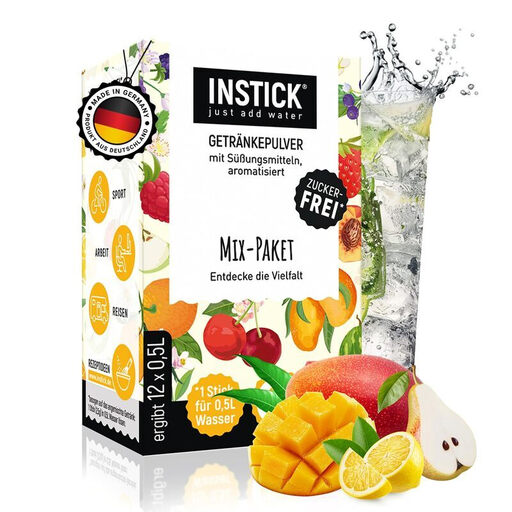
Why this product suits this profile: The sample pack contains 12 sticks in a range of fruit flavours. According to the product information, each stick is designed for 0.5–1 litre of water.
The individual portions help prevent incorrect mixing. The stated caffeine content is caffeine-free, so the product is not confused with an energy drink powder.
12 flavours, a vegan recipe according to the manufacturer, vitamin C and preparation with still or sparkling water.
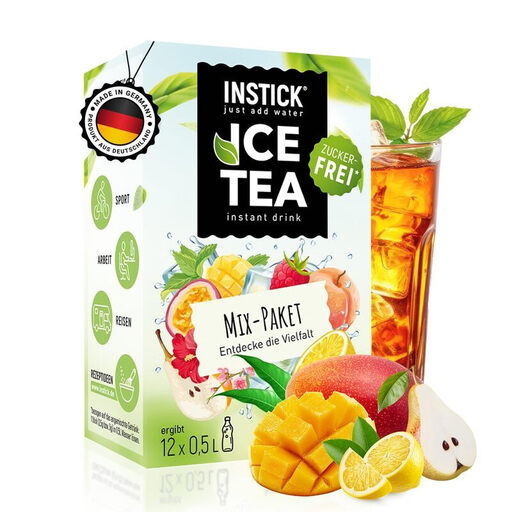
Why this product suits this profile: This selection is aimed at people looking for iced tea powder in several varieties who want to take tea extracts into account when choosing.
The product description refers to black or green tea extract and a low caffeine content. This makes it easier to distinguish the variety from caffeine-free fruit options.
12 sticks, eight stated flavours, vitamin C and a dosage of 0.5–1 litre per stick.
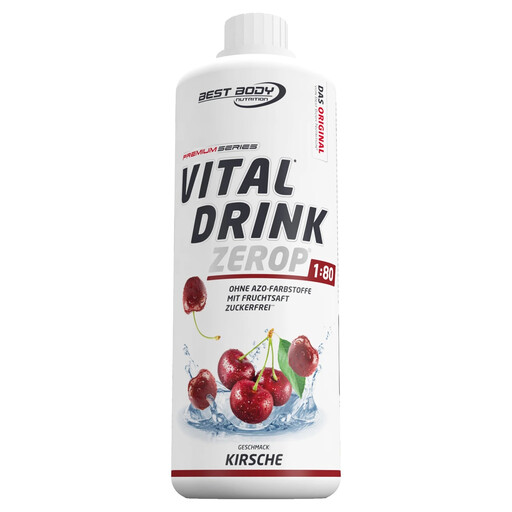
Why this product suits this profile: This liquid drink concentrate is suitable for households that want to prepare larger quantities and use a soda maker.
The 1:80 mixing ratio and the recommended dosage of 5 ml per 400 ml of water make the yield easy to understand. The concentrate must not be consumed undiluted.
1-litre bottle, suitable for use with sparkling water makers and, according to the product information, less than 0.5 g of sugar per 100 ml of prepared drink.
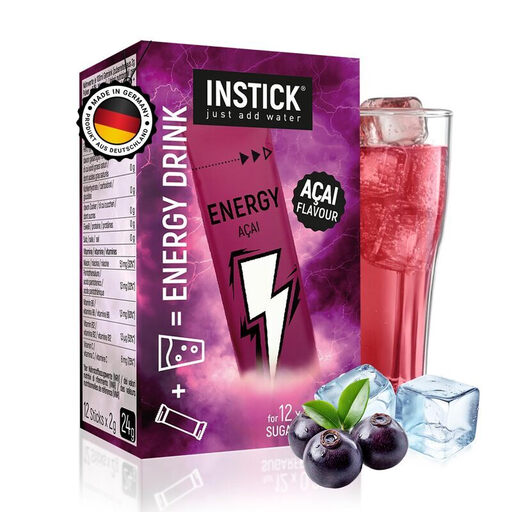
Why this product suits this profile: The sticks are portioned for 0.25 litres of drink and, according to the product information, contain caffeine, taurine and several vitamins.
Each serving contains a stated 52 mg of caffeine. The guidance for adults, moderate use and avoiding combination with alcohol should be observed.
12 individual portions, a vegan recipe according to the manufacturer and preparation with still or carbonated water.
We have compiled a complete, regularly updated list of products that fully meet these strict selection criteria and the safety regulations applicable in the EU.
The dosage depends on the information provided for the individual product. Many fruit powders require one stick for 0.5–1 litre of water, while some energy drink powders are intended for just 0.25 litres. With concentrates, follow the specified mixing ratio. The powder should not be consumed dry.
Unopened sticks and powder sachets should be stored in accordance with the best-before date on the packaging. Keeping them somewhere dry and cool and protecting them from moisture will prevent the powder from clumping. Once opened, drink concentrates often need to be refrigerated and used within a specified period, depending on the manufacturer’s instructions.
No. A low-calorie drink may contain milk ingredients, gelatine or other animal-derived ingredients. If you want a vegan option, the product should explicitly state that it has a vegan recipe. With milk drink powders, you should also check whether they are intended to be prepared with plant-based milk alternatives.