
Lieferung heute & morgen

Qualitätsgarantie

Willkommens-Angebote freischalten: KOSTENLOSE Lieferung | Bis zu 80 % RABATT | Kostenlose 30-Tage-JoyPlus-Testphase
App herunterladen
Sugar-free drink powder can add flavour to water at the office, during exercise or on the go, without the need to carry heavy bottles of drinks. However, products can vary considerably in serving size, yield, caffeine content and ingredients. If you focus only on terms such as “sugar-free” or “low-calorie”, you could miss important details.
This guide explains what adults, vegans, working professionals and active people should look for when buying. It focuses on instant drink powders, drink sticks and options for iced tea, energy drinks and classic fruit flavours.
A sugar-free drink can still contain sweeteners such as sucralose or acesulfame K. These ingredients are not automatically a sign of poor quality, but they should suit your personal taste and diet. Checking the ingredients list can help you avoid the wrong purchase.
Also, “sugar-free” does not mean completely calorie-free. For the products covered here, the stated energy content of the prepared drink is sometimes around 2 kcal per 100 ml. Always follow the dilution instructions provided.
Not every stick makes the same amount of drink. Classic fruit flavours and sugar-free iced tea powder are often made with 0.5 to 1 litre of water. Energy drink powder, on the other hand, is intended for smaller amounts, such as 0.25 litres per stick.
If you dilute an energy stick in half a litre or a whole litre of water, the drink will be much milder. It also changes the concentration of caffeine and other ingredients per serving.
Iced tea powder can contain black or green tea extracts, and therefore caffeine. Always check the caffeine content of energy options. According to the product information, INSTICK Energy products contain 52 mg of caffeine per stick, intended for 250 ml of water.
According to the labelling, these products are not recommended for children, pregnant women or breastfeeding women. They should not be combined with alcohol and should only be consumed in moderation.
Compare more than just the number of sticks: check how much drink you can make with them:
You can adjust the strength of many flavours by adding more or less water. For an objective comparison, however, always check the nutritional information based on the preparation method recommended by the manufacturer.
A vegan drink powder should be more than just marketed as “vegan”; the information on the packaging and product page is what matters. The INSTICK options mentioned here are described as vegan. Many classic flavours are also sugar-free and, in some cases, stated to be free from the 14 allergens that must be declared.
Using the powder with milk, plant-based drinks, yoghurt or Skyr changes the nutritional values and may also affect the allergen information. The powder itself may be vegan, but the finished drink will only be vegan if you use a suitable plant-based liquid.
Don’t choose a vitamin C drink solely because it mentions vitamin C. What matters is the amount in the prepared drink and the full ingredients list. Depending on the option, the products described here state 6 mg of vitamin C per 100 ml.
For energy and iced tea flavours, also check the caffeine content, serving size and warnings. If you’re sensitive to caffeine, a caffeine-free flavouring powder for water may be a better choice.
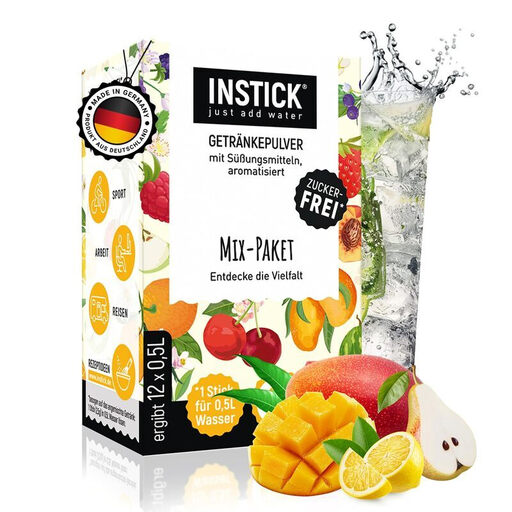
Why this product suits this profile: The set includes 12 different fruit flavours. Each stick is designed for around 0.5 to 1 litre of water, making it a good way to try out a range of flavours.
The yield per stick is stated, making it easier to work out the cost per litre. This avoids comparing products based on pack size alone.
12 flavours, a vegan recipe, sugar-free and, according to the product information, contains vitamin C.
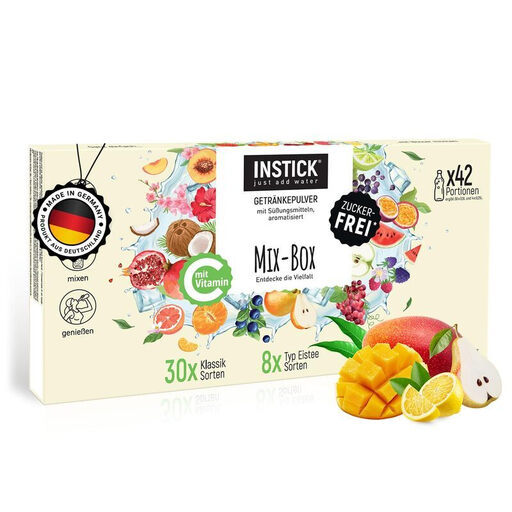
Why this product suits this profile: The box combines Classic, iced tea and energy flavours. It’s a good choice if you want to compare the ingredients and yield of each product group directly.
The preparation volumes are listed for each product. This makes it easy to tell energy sticks apart from classic drink sticks.
42 sticks in 42 flavours; according to the product information, made in Germany and vegan.
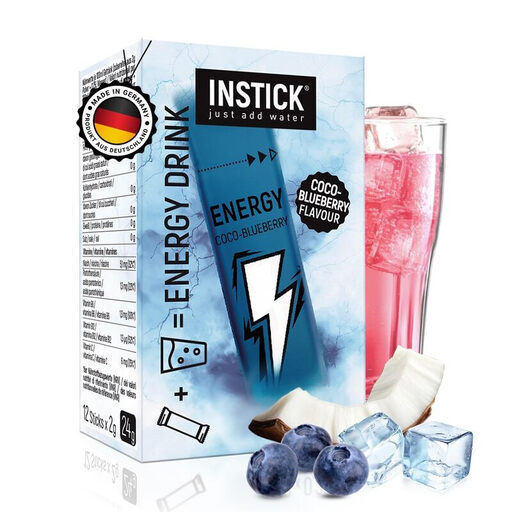
Why this product suits this profile: Each serving is intended for 250 ml of water and, according to the product information, contains 52 mg of caffeine and 640 mg of taurine per stick. This clearly sets it apart from caffeine-free fruit powders.
The caffeine content and recommended amount of water are clearly stated. Check the warnings before buying and preparing the drink.
Sugar-free, vegan, 2 kcal per 100 ml according to the product information, and contains vitamin C as well as other vitamins.
We’ve put together a complete, regularly updated list of products that meet these strict selection criteria and fully comply with the safety regulations in force in the EU.
For an even result, empty the stick into your bottle or glass first. Then add still or sparkling water and stir or shake well. The powder should not be consumed dry.
Individually wrapped drink sticks are handy for the office, cycling, walking trips or travelling. They take up little space and let you prepare one serving at a time. Store the packs in a cool, dry place away from heat. Always check the best-before date on the relevant packaging; shelf-life information may vary by product.
It depends on the product group. Classic flavours and many iced tea options are mixed with around 0.5 to 1 litre of water. Energy drink powder is often intended for around 0.25 litres. Follow the dosing instructions for each product rather than relying on general rules of thumb.
No. “Sugar-free” describes the sugar content, not necessarily the overall energy content. For the INSTICK products mentioned here, prepared drinks are stated to contain around 2 kcal per 100 ml, depending on the flavour. For a comparison, check the nutritional information per 100 ml.
Divide the purchase price by the number of litres you can actually make. A stick for 0.5 litres yields less than one intended for 1 litre. For energy options, also take the recommended 250 ml serving and the caffeine content into account. This makes it easier to compare products by price per litre based on pack size.