Shoppers with a strict sugar-free requirement
‘No added sugar’ isn’t enough if you’re looking for sugar-free chocolate. Compare the wording on the pack with the ‘of which sugars’ figure per 100 g.


If you’re specifically looking for sugar-free chocolate to enjoy with your morning coffee, check the wording on the pack and the sugar content per 100 g. The German Food Federation explains that ‘sugar-free’ means no more than 0.5 g of sugar per 100 g. If you’re looking for chocolate with no added sugar instead, you can also compare milk and dark chocolate options, although they may still contain sugar. Check the sweeteners, allergens and any warnings about excessive consumption, too.
‘No added sugar’ isn’t enough if you’re looking for sugar-free chocolate. Compare the wording on the pack with the ‘of which sugars’ figure per 100 g.
You’d like to choose milk or dark chocolate to enjoy with your coffee and avoid added sugar. The recipe matters, but so does the total amount of sugar in the bar.
If sweeteners, milk, soya or possible traces of nuts are important to you, check the details on the specific pack. Chocolate with no added sugar may also carry a warning about excessive consumption.
First, decide whether you’re looking for ‘sugar-free’ or ‘no added sugar’. Then compare the nutrition information and ingredients of the chocolate you’re planning to buy.
| What to check | What to look for when buying | Who it matters most to |
|---|---|---|
| Sugar-free or no added sugar | Read the wording on the pack alongside the ‘of which sugars’ figure per 100 g. The German Food Federation states that ‘sugar-free’ means no more than 0.5 g of sugar per 100 g. | If I specifically want sugar-free chocolate, avoiding added sugar isn’t enough. Around 42% of consumers prioritise this sugar-free requirement. |
| A recipe to enjoy with coffee | Compare the milk or dark chocolate recipe, cocoa content and sugar per 100 g of the specific bar. | For my coffee break, I want to choose chocolate with no added sugar and a recipe I enjoy. Around 33% of consumers prioritise this. |
| Sweeteners and allergens | Read the ingredients, allergen and trace warnings, and any warnings about excessive consumption on the pack. | If particular ingredients are a deciding factor for me, I check them before choosing a flavour. Around 25% of consumers put this check first. |
Chocolate with no added sugar can still contain sugar. Lindt states that its dark chocolate with no added sugar contains 1 g of sugar per 100 g, while its milk chocolate with no added sugar contains 9 g per 100 g.
If you specifically want sugar-free chocolate, check the wording and sugar content per 100 g rather than relying only on the front of the pack.
The recipes reviewed use different sweeteners. The consumer advice centre warns that consuming large amounts of polyols can have a laxative effect.
Read the ingredients and warnings for the specific chocolate, especially if you’re planning to have several pieces with your coffee.
Even dark chocolate may contain milk or soya ingredients, and warnings about possible traces of nuts may be relevant.
Check the ingredients list and allergen information on the current pack before choosing a bar.
Lindt describes its milk and dark chocolate bars, both 100 g, as having no added sugar.
REWE describes one of the brand’s dark chocolate bars as sugar-free.
Xucker offers chocolate made with xylitol instead of sugar, including milk and dark varieties, as well as a Crispy Chocolate bar.
These bars are options for a coffee break without added sugar. The claim ‘no added sugar’ alone does not confirm that any of these bars is specifically sugar-free.
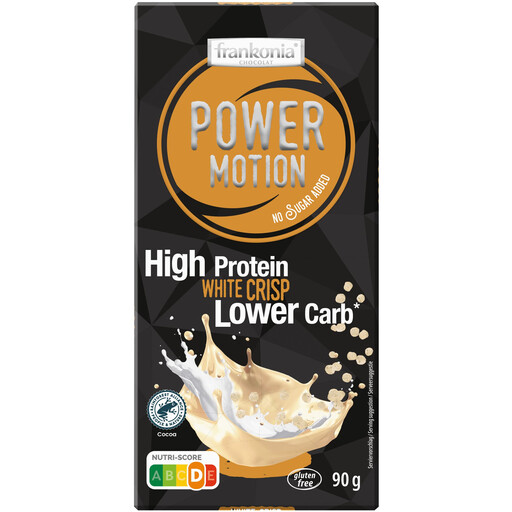 No image available
If you’re looking for crunchy white chocolate with no added sugar for your coffee break, this could be an option.
If you have a strict sugar-free requirement, also check the sugar content per 100 g. Check the ingredients and allergen information on the pack, too.
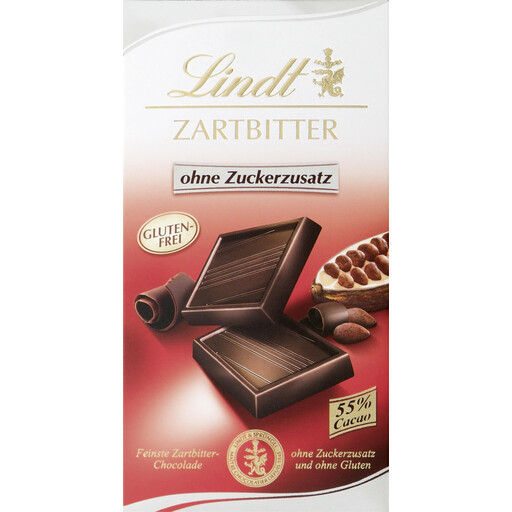 No image available
This dark chocolate bar is a good fit for your coffee break if you’d like to avoid added sugar but don’t need chocolate that is specifically sugar-free.
Lindt states that it contains at least 55% cocoa and 1 g of sugar per 100 g. The recipe contains maltitol, whole milk powder and soya lecithin; also check the warnings about possible traces of nuts and excessive consumption.
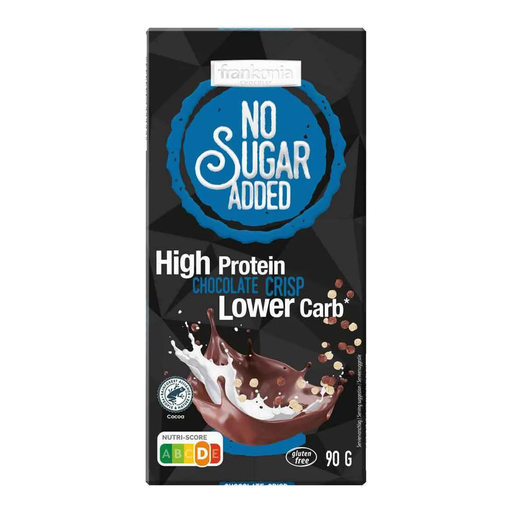 No image available
If you fancy crunchy chocolate with no added sugar for your coffee break, this bar is worth considering.
If you’re specifically looking for sugar-free chocolate, check the wording and sugar content per 100 g on the pack. Also read the allergen and consumption warnings.
No. The German Food Federation explains that ‘sugar-free’ means no more than 0.5 g of sugar per 100 g; ‘no added sugar’ does not rule out sugars that are naturally present. So, as well as checking the wording, always compare the nutrition information per 100 g.
The varieties described do not meet the maximum of 0.5 g of sugar per 100 g explained by the German Food Federation: Lindt states that its dark chocolate contains 1 g and its milk chocolate 9 g of sugar per 100 g.
This warning may be relevant for chocolate containing polyols: according to the consumer advice centre, consuming large amounts of polyols can have a laxative effect. Read the ingredients and warning on the specific pack.
No. The claim ‘sugar-free’ doesn’t describe the overall nutritional composition. If energy or fat content matters to you, compare the nutrition information per 100 g.
Check the ingredients and trace warnings for each specific bar. For the dark chocolate described, Lindt lists whole milk powder and soya lecithin, as well as possible traces of hazelnuts, almonds and other tree nuts.