Which base is right for you?

For anyone with a strict sugar target

If you’re specifically looking for porridge labelled “sugar-free”, “no added sugar” isn’t a substitute for that claim. Compare the label with the sugars per 100 g and read the ingredients list. Lebensmittelklarheit and the Verbraucherzentrale explain the difference between the two claims.

For anyone who likes to build their own bowl

If you want to choose your own flavours and ingredients, a plain oat base gives you room to add spices, cocoa and your favourite toppings. Still, check the ingredients in the specific mix: for example, the Kölln Feine Basis described by REWE also contains almonds and linseeds.

For anyone who prefers ready-made flavour

If you want something quick in the evening, a pre-flavoured mix may be more convenient. It’s especially worth comparing nutrition information for fruit and protein varieties: “no added sugar” alone doesn’t tell you how much sugar is in 100 g.

What should you look for when buying?

First decide whether you’d prefer a plain base or ready-made flavour. Then compare the exact sugar information and consider what you’ll add to the porridge when preparing it.

Criteria What to check Who is it important for?
Sugar labelling Read the exact claim, “sugar-free” or “no added sugar”, alongside the sugars per 100 g and the ingredients list. Lebensmittelklarheit and the Verbraucherzentrale explain the difference between the claims. If I’m specifically looking for sugar-free porridge, I don’t want to rely on a similar-sounding label alone. For around 42% of consumers, this precise sugar check comes first.
Choosing your own ingredients Check whether the base contains only oats or includes other ingredients too. For your preferred texture, choose between fine and coarse flakes. For my fakeaway bowl, I want to choose the sweetness, spices and toppings myself, even if it takes more preparation. This freedom to customise is the main priority for around 33% of consumers.
Ready-made flavour For flavoured mixes, compare the sugar per 100 g, fruit or date ingredients, and preparation instructions. When it’s a spontaneous evening, I want to make a flavoured bowl without lots of extra ingredients. For around 25% of consumers, convenience comes first, although the sugar information still needs to be taken into account.

Common selection mistakes

  • Assuming “no added sugar” means “sugar-free”

    A mix with no added sugar may still contain sugar from its ingredients. Lebensmittelklarheit also points out that sweeteners or sugar substitutes may be used.

    As well as checking the claim on the front of the pack, read the nutrition information and ingredients list. If you’re specifically looking for “sugar-free”, check that the particular product carries the relevant claim.

  • Overlooking fruit ingredients when comparing sugar

    A fruit or protein porridge may contain sugar from its ingredients, even if it’s labelled “no added sugar”. So the variety name doesn’t tell you what’s in the sugars row.

    Check for fruit and date ingredients, and compare the “of which sugars” figure per 100 g of dry product before choosing a mix.

  • Assuming a plain base is allergen-free

    Even a lightly flavoured mix may contain other ingredients: REWE lists almonds in Kölln Feine Basis, and any warnings about possible traces of other allergens should also be taken into account.

    If you have relevant allergies, check the ingredients, highlighted allergens and trace warnings on the specific pack. Neither “no added sugar” nor “vegan” answers this question.

  • Judging only the dry mix

    The nutrition information for the oat base doesn’t automatically describe the finished bowl. The liquid and toppings change its nutritional composition.

    If you want to estimate the sugar content of your prepared portion, take the ingredients you actually use into account separately.

Brands and retailers to help you choose

Kölln

Kölln offers porridge mixes in a range of recipes. When choosing a ready-made base, it’s worth checking which ingredients are already included.

  • The Kölln Feine Basis described by REWE is listed as containing whole grains, almonds and linseeds, among other ingredients, and carries the claim “no added sugar”.
  • Feine Basis isn’t made from oats alone; almonds and possible traces of other allergens are relevant when choosing it.

Seitenbacher

Seitenbacher is worth considering if you’re choosing between a plain oat base and a porridge mix.

  • Seitenbacher lists water as one possible liquid for preparing porridge.
  • According to Seitenbacher, porridge made with water may be less creamy and full-flavoured than porridge made with milk.

Alnatura

Alnatura offers oat flakes as a base for making your own porridge.

  • The fine-melting oat flakes described by Alnatura are made from wholegrain oats. You can choose the sweetness and other ingredients yourself when preparing them.
  • Fine-melting and jumbo oat flakes have different textures. Choosing one type of flake over another won’t, by itself, determine the sugar content of the finished bowl.

REWE

Here, REWE is a retailer, not a manufacturer of one standard porridge recipe. Its product information can help you compare specific mixes.

  • The Kölln Feine Basis and Verival Protein Porridge products described by REWE have different ingredients and sugar information.
  • Don’t assume the information for one variety applies to another; check the nutrition information for the product you’re planning to buy.

EDEKA

EDEKA offers Herzstücke Haferhimmel Beeren, a porridge mix that comes ready-made with fruit flavour.

  • EDEKA24 describes the berry mix as “no added sugar” and gives instructions for preparing it with milk or water.
  • As with this mix, “no added sugar” doesn’t mean “sugar-free”. The ingredients and allergen information on the pack are still important.

Brüggen

Brüggen says it makes breakfast cereals for own-label brands. When choosing a porridge, however, the specific retailer’s pack is what matters.

  • Knowing Brüggen’s role as a manufacturer helps distinguish it from an individual porridge brand.
  • The manufacturer’s name alone doesn’t tell you the ingredients or sugar information for a specific product sold to consumers.

Oat products for homemade porridge

This selection includes plain oat flakes and a coarser oat base for dishes you put together yourself. It doesn’t include ready-flavoured fruit porridges. In particular, check that the preparation method for the oat groats suits you before buying.

Kölln Fine Tender Rolled Oats, 500 g

Kölln Fine Tender Rolled Oats, 500 g

Fine oat flakes for a bowl with ingredients you choose yourself. If you’re specifically looking for sugar-free flakes, check the label and nutrition information on the pack.

View at Joybuy

Alnatura Organic Fine Rolled Oats, 500 g

Alnatura Organic Fine Rolled Oats, 500 g

Fine organic oat flakes for a base that lets you choose your own flavours and toppings. If you have a strict sugar target, the sugar information on the specific pack is what matters.

View at Joybuy

Kölln Gluten-Free Tender Rolled Oats, 500 g

Kölln Gluten-Free Tender Rolled Oats, 500 g

Tender oat flakes for a base you can put together yourself. If the gluten-free claim in the product name is important to your choice, check the label and allergen information on the specific pack. Check the sugar content separately.

View at Joybuy
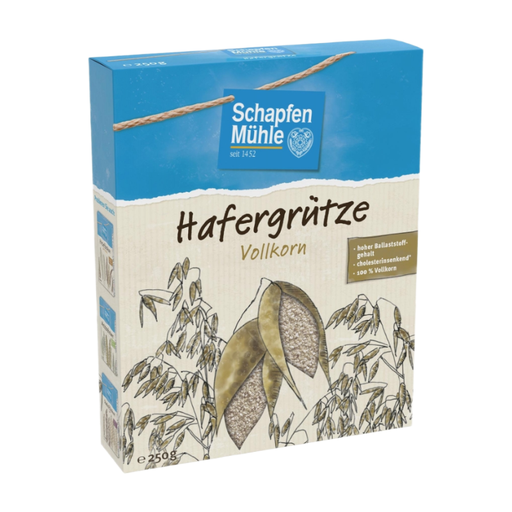
Schapfenmühle Whole Oat Groats, 250 g

Schapfenmühle Whole Oat Groats, 250 g

Whole oat groats for anyone who wants to use a coarser oat base. Before buying, check the pack to make sure the preparation method and texture will suit your planned porridge. They’re not a like-for-like alternative to fine flakes that absorb liquid quickly.

View at Joybuy

Frequently asked questions

Does “no added sugar” mean the same as “sugar-free”?

No, the two claims mean different things. A product labelled “no added sugar” may still contain sugar from its ingredients. Lebensmittelklarheit also points out that sweeteners and sugar substitutes may be used. So read the nutrition information and ingredients list rather than assuming one claim means the same as the other.

How do I compare fruit porridge with a plain oat base?

For both dry products, first compare “of which sugars” per 100 g, then read the ingredients list. EDEKA24 states that EDEKA Herzstücke Haferhimmel Beeren contains 3 g of sugar per 100 g; REWE gives 8.5 g per 100 g for Verival Protein Porridge Cocoa Banana. These figures apply to those specific mixes, not to all fruit or oat products.

How do I put together a porridge base for a fakeaway evening?

Start with a plain oat base, then choose your own liquid and other ingredients. Kölln lists water, milk and oat drink among the options in its basic recipe. If you want to assess the sugar content of the finished bowl, include your chosen liquid and all your toppings in the calculation.

How should I store an opened porridge mix?

Follow the storage instructions on the pack you’ve bought, and keep the mix dry and away from heat. For Kölln Feine Basis, the instructions say to reseal the inner bag securely after opening.