
Lieferung heute & morgen

Qualitätsgarantie

Willkommens-Angebote freischalten: KOSTENLOSE Lieferung | Bis zu 80 % RABATT | Kostenlose 30-Tage-JoyPlus-Testphase
App herunterladen
Finding a snack that satisfies sweet cravings while fitting into an active, health-conscious lifestyle can be a challenge. Chocolate lovers who monitor their nutritional intake, in particular, often face a dilemma. Conventional chocolate is typically high in sugar and fits poorly into a diet focused on muscle building or reduced carbohydrate intake.
This article serves as a guide. We will introduce a selection of sugar-free protein chocolate and explain the key features to look for when making your choice. Our goal is to provide an objective basis for your purchasing decision, helping you find a chocolate that meets both your taste preferences and nutritional requirements.
The range of products is constantly growing. To make an informed decision, it's helpful to understand a few basic criteria.
A crucial factor is the protein content. Products labelled as high-protein chocolate should have a significant amount of protein, often over 20g per 100g. This protein contributes to the maintenance and growth of muscle mass.
Since added table sugar is omitted, sugar substitutes are used instead. Maltitol, a polyol (sugar alcohol), is frequently used. It has a sweetness similar to sugar but provides fewer calories. It's important to be aware that excessive consumption of polyols can have a laxative effect. Therefore, always adhere to the manufacturer's recommended serving size.
The type of protein influences the quality and nutritional profile. Commonly used sources include whey and soy protein, which provide a complete amino acid profile.
Texture is another key feature. Many manufacturers add protein crispies (made from whey or soy protein) to create a crunchy experience. This transforms the chocolate high in protein into a satisfying protein-rich snack, rather than just a simple sweet treat.
For individuals following a low-carbohydrate diet, the net carbohydrate content is relevant. In addition to sugar substitutes, low-carb chocolate often contains dietary fibres like polydextrose. These are metabolised differently by the body than sugar and can be factored into the calculation of net carbs. Always check the nutritional information on the packaging to ensure the product fits your individual dietary plan.
Based on the criteria mentioned above, we have compiled a selection of products that stand out for their specific characteristics.
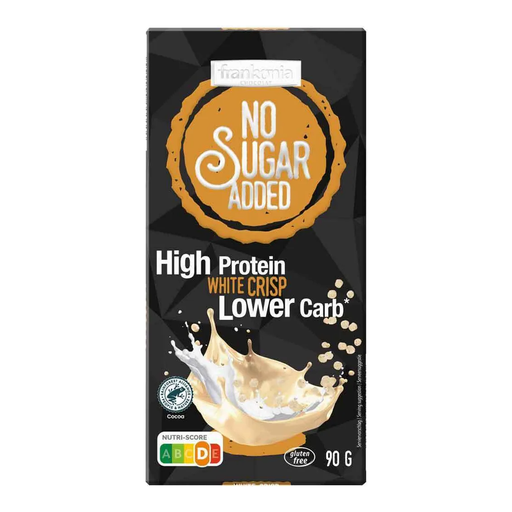
Why it stands out: This variety combines the creamy taste of white chocolate with a crispy texture from added protein crispies. It's aimed at anyone looking for an alternative to classic dark or milk chocolate.
Benefits:
Who it's for: For lovers of white chocolate who want a protein-rich, crunchy snack that fits well into an active lifestyle.
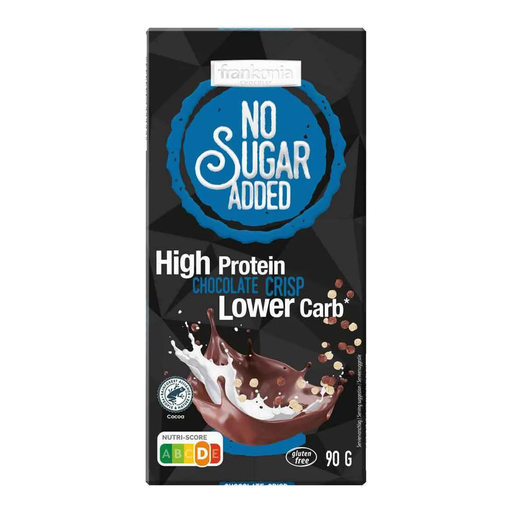
Why it stands out: This Frankonia protein chocolate offers a classic chocolate experience with a 40% cocoa content in the chocolate portion. It's an excellent choice for purists who prefer an intense cocoa flavour.
Benefits:
Who it's for: For those who appreciate the taste of high-cocoa milk chocolate and are looking for a functional, protein-rich snack for in-between meals or post-workout.
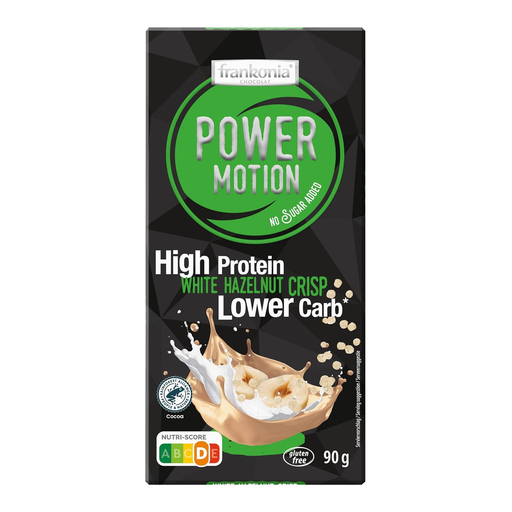
Why it stands out: The combination of white chocolate, creamy hazelnut paste, and crispy soy and milk protein crispies makes this bar a complex and flavourful product. The cocoa is also Rainforest Alliance certified.
Benefits:
Who it's for: For discerning connoisseurs who prefer a combination of nuts, white chocolate, and a crispy texture, while also valuing a high protein content.
The products featured are just a glimpse into the world of functional confectionery. If you prefer other flavours or snack formats, you might find the right product in our broader selection.
? Discover more snacks with no added sugar here
1. Can protein chocolate help with muscle building? Protein is proven to contribute to the growth and maintenance of muscle mass. A protein chocolate can serve as a convenient protein-rich snack to supplement your daily protein intake. However, it should be consumed as part of a balanced diet and in conjunction with a regular exercise programme, and does not replace a complete meal.
2. What does "no added sugar" mean for chocolate? The term "no added sugar" means that no table sugar (sucrose) or other mono- and disaccharides have been added to the product. However, the chocolate may contain naturally occurring sugars (e.g., lactose from dairy products) and is typically sweetened with sugar substitutes like maltitol. Always refer to the nutritional information on the packaging.
3. Is low-carb chocolate suitable for a ketogenic diet? Whether a low-carb chocolate is suitable for a ketogenic diet depends on its specific net carbohydrate content (total carbs minus polyols and fibre) and your individual daily carb limit. Products containing maltitol can slightly affect blood sugar levels, which should be considered on a strict ketogenic diet. A thorough review of the nutritional panel is essential here.