If ‘sugar-free’ is essential for your film night, look for chocolate with no more than 0.5 g of sugar per 100 g; ‘no added sugar’ does not automatically meet this condition. If you’d rather have a milk chocolate or crunchy option, you can compare products with no added sugar, but check the actual sugar content, sweeteners, allergen information and warnings on the specific pack.
Which type of chocolate is right for you?
For anyone with a strict sugar-free target
If you specifically want chocolate with no more than 0.5 g of sugar per 100 g for film night, a dark variety and alternative sweeteners may fit the bill. The nutrition information on the specific bar is what matters.
For milk chocolate fans avoiding added sugar
A familiar milk chocolate flavour matters more to you than meeting the strict sugar-free limit. Even so, it’s worth checking the ‘of which sugars’ figure on a bar with no added sugar: Lindt gives 9.0 g per 100 g for its equivalent milk chocolate variety.
For anyone checking ingredients and allergens closely
If you need to watch out for sweeteners or specific ingredients, check the full ingredients list, as well as allergen, trace and warning information, before buying. These details vary between chocolate varieties.
What should you look for when buying?
First decide whether ‘sugar-free’ is a firm requirement or whether your main aim is to avoid added sugar. Then compare the flavour, ingredients and how much you plan to have for film night.
| Criterion |
What to check |
Who it matters to |
| Sugar-free limit |
Check for the ‘sugar-free’ claim and the ‘of which sugars’ figure per 100 g. Under the EU regulation on nutrition claims, chocolate labelled ‘sugar-free’ must contain no more than 0.5 g of sugar per 100 g. |
If I’m specifically looking for a sugar-free bar, ‘no added sugar’ isn’t enough to make me choose it. For around 36% of consumers, this strict sugar target comes first. |
| Type of chocolate |
Compare milk and dark chocolate by looking at the specific variety. Lindt states that its bars with no added sugar contain at least 35% cocoa for milk chocolate and at least 55% for dark chocolate. |
If I want a creamy, sweet flavour, I’d be more likely to consider a milk chocolate variety with no added sugar than a dark bar. Around 29% of consumers put this flavour preference first. |
| Ingredients and warnings |
Check the sweeteners used, as well as allergen, trace and warning information on the specific pack. |
If certain ingredients matter to me, I want to know the exact recipe before choosing a variety. This check takes priority for around 21% of consumers. |
| Portion size |
Compare the pack weight and nutrition information per 100 g, then decide how much you actually want to eat while watching the film. |
For a long film night or one shared with others, I want to portion out the chocolate beforehand rather than lose track of how much I’m eating. Around 14% of consumers prioritise this. |
Common selection mistakes
-
Assuming ‘no added sugar’ means ‘sugar-free’
The claims don’t mean the same thing: chocolate with no added sugar can still contain sugar. The Verbraucherzentrale explains the different labelling requirements; under EU law, ‘sugar-free’ means no more than 0.5 g of sugar per 100 g.
If meeting this limit matters to you, check the ‘of which sugars’ figure in the nutrition information as well as the claim on the front of the pack.
-
Assuming a sugar claim means the product is low in calories
‘No added sugar’ tells you nothing about the energy content. Lindt states that its milk chocolate bar with no added sugar contains 510 kcal per 100 g; Frankonia gives 469 kcal per 100 g for its milk chocolate bar.
Compare the energy and sugar figures per 100 g, and take into account the portion you plan to eat.
-
Overlooking the warning about excessive consumption
The products with sweeteners described here carry a warning that excessive consumption may have a laxative effect. The Verbraucherzentrale also notes that consuming large amounts of sugar substitutes can have a laxative effect.
Read the warning before buying and set aside a portion for the film, rather than eating from the pack without planning how much you’ll have.
-
Taking dark chocolate as proof that it’s sugar-free
The stated sugar content matters for dark chocolate too. Lindt gives 1.0 g of sugar per 100 g for its dark chocolate bar with no added sugar – above the limit for a ‘sugar-free’ claim.
Always check the specific variety and its nutrition information, rather than relying on the brand, colour or cocoa content alone.
Brands to consider
Lindt
Lindt’s bars with no added sugar come in dark and milk chocolate varieties. The right one for you depends on the flavour you want and the actual sugar content.
- Lindt states that its dark chocolate contains at least 55% cocoa and 1.0 g of sugar per 100 g, while its milk chocolate contains at least 35% cocoa and 9.0 g of sugar per 100 g.
- Both varieties are sweetened with maltitol and carry a warning about excessive consumption. Neither has a stated sugar content within the sugar-free limit.
Frankonia Chocolat
Frankonia Chocolat offers several varieties of chocolate with no added sugar. The specific recipe matters more when choosing than the product range name.
- For its milk chocolate bar, the manufacturer lists maltitol as a sweetener, along with 11 g of sugar and 469 kcal per 100 g.
- This milk chocolate bar is therefore not sugar-free. According to the manufacturer, it contains milk, hazelnuts and soya; if you have allergies, check the current pack as well.
NO SUGAR SUGAR
This dark chocolate, listed by REWE, is an option if meeting the sugar-free limit matters more to you than a milk chocolate flavour.
- REWE states that this variety contains at least 70% cocoa and 0.5 g of sugar per 100 g. The sweeteners listed are erythritol and steviol glycosides.
- When checking ingredients and possible allergen traces, always go by the labelling on the specific pack.
Chocolate with no added sugar at Joybuy
This selection includes one dark chocolate bar and two crunchy varieties with no added sugar for film night. ‘No added sugar’ does not guarantee that a variety meets the stricter sugar-free limit.
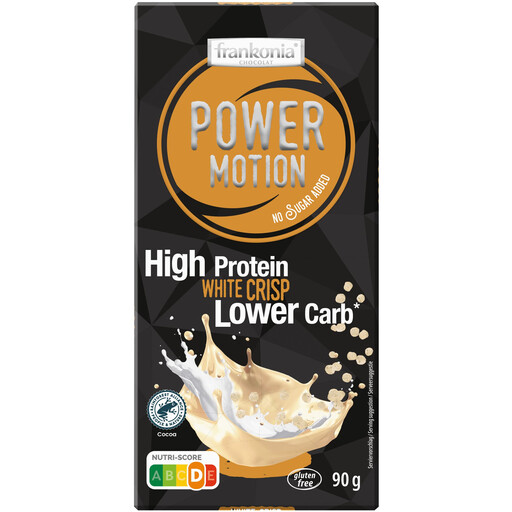 Image unavailable
Frankonia Chocolat Power Motion No Sugar Added White Crisp, 90 g
A crunchy white chocolate option for film night if you’re looking for a variety with no added sugar rather than a bar that’s specifically sugar-free.
If you have a strict sugar-free target, check the ‘of which sugars’ figure on the pack, along with the ingredients and sweetener warnings.
View at Joybuy
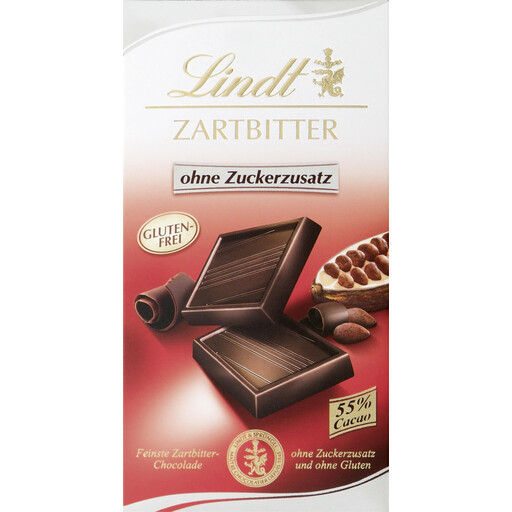 Image unavailable
Lindt No Added Sugar Dark Chocolate, 100 g
A dark chocolate bar with no added sugar for anyone who prefers a richer cocoa flavour on film night.
Lindt states that this dark chocolate variety contains at least 55% cocoa and 1.0 g of sugar per 100 g. That’s above the limit for a ‘sugar-free’ claim; the bar is sweetened with maltitol and carries a warning about excessive consumption.
View at Joybuy
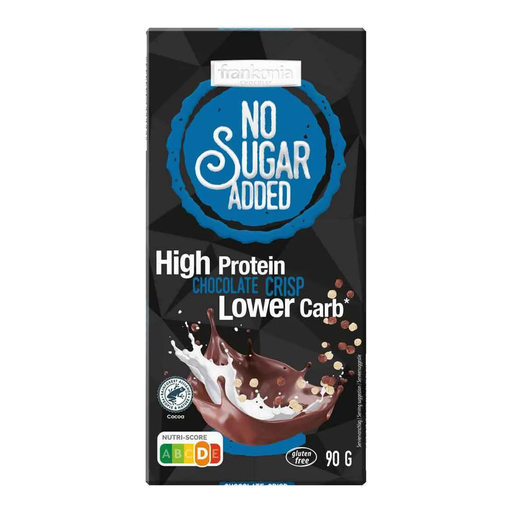 Image unavailable
Frankonia Chocolat Power Motion No Sugar Added Chocolate Crisp, 90 g
A crunchy chocolate option with no added sugar for film night.
If you’re specifically looking for sugar-free chocolate, check the sugar content per 100 g on the pack before buying. Also read the ingredients, allergen information and warnings.
View at Joybuy
Frequently asked questions
Does ‘no added sugar’ mean the same as ‘sugar-free’?
No. Under the EU regulation on nutrition claims, chocolate can only be labelled ‘sugar-free’ if it contains no more than 0.5 g of sugar per 100 g. ‘No added sugar’ does not rule out naturally occurring sugars; the Verbraucherzentrale explains this distinction too.
Why does chocolate with no added sugar still contain sugar?
The claim doesn’t mean that the finished chocolate contains no sugar from its ingredients. Lindt states that its milk chocolate bar with no added sugar contains 9.0 g of sugar and 510 kcal per 100 g. So compare the nutrition information rather than relying on the front of the pack alone.
What does the warning about excessive consumption mean?
For the chocolate products described here that contain sugar substitutes, the warning refers to a possible laxative effect if you eat too much. The Verbraucherzentrale explains that consuming large amounts of these substances can have a laxative effect. Bear this in mind when deciding how much to have during a long film night.
Are sugar-free sweets a standard alternative for children?
Not necessarily: the Verbraucherzentrale generally does not consider products with sweeteners and sugar substitutes to be a suitable alternative for children. Check the specific ingredients list and warnings rather than basing your choice on the ‘sugar-free’ claim alone.
Do I need to check allergens in sugar-free chocolate?
Yes. The sugar content doesn’t tell you which allergens a chocolate contains or which traces it may mention. The varieties described here differ in their ingredients and trace information; if you have allergies, always check the labelling on the specific, current pack.


