People who train and have a strict sugar limit
You specifically want a wafer labelled ‘sugar-free’. In that case, the ‘of which sugars’ figure is what matters – not just the wording on the front of the pack.


If you’re looking for a ‘sugar-free’ label after a workout, check the sugar content per 100 g on packaged wafers: according to Lebensmittelklarheit, it must be no more than 0.5 g to qualify for this claim. ‘No added sugar’ means something different. You should also consider the nutritional values for the portion you’ll actually eat, the ingredients and, where relevant, sweeteners and allergens.
You specifically want a wafer labelled ‘sugar-free’. In that case, the ‘of which sugars’ figure is what matters – not just the wording on the front of the pack.
You compare the protein and energy content of the amount you actually plan to eat. A low sugar figure alone won’t answer that question.
You want to reduce sugar but also need to take sweeteners or certain ingredients into account. In that case, check the ingredients list and allergen information as well as the nutritional values.
First, decide whether you’re looking for a wafer labelled ‘sugar-free’ or whether a no-added-sugar option would suit you. Then compare the nutritional values on the same basis and check the ingredients for the portion you’ll actually eat.
| Criterion | What to check | Who it matters to |
|---|---|---|
| Sugar claim | Compare the claim on the front of the pack with the ‘of which sugars’ figure per 100 g. According to Lebensmittelklarheit, ‘sugar-free’ means no more than 0.5 g of sugar per 100 g. | If keeping to a strict sugar limit is my priority, I don’t want to confuse ‘no added sugar’ with ‘sugar-free’. Around 42% of consumers put this distinction first when making their choice. |
| Protein and portion size | Compare protein and energy per 100 g or per portion. If portion sizes differ, make sure you’re comparing like with like. | After a workout, I want to know what the wafer contributes to my usual portion, rather than relying only on the sugar claim. This is the main priority for around 33% of consumers. |
| Ingredients and suitability | Check the ingredients list, allergen information and, where relevant, sweetener labelling on the specific product. | If I need to avoid certain ingredients or sugar alcohols are a concern, I start by checking what the product contains. This is the main consideration for around 25% of consumers. |
The two claims aren’t interchangeable. Frankonia Schokoladenwerke lists 3.0 g of sugar per 100 g for its no-added-sugar Hazelnut Crisp Waffles. Lebensmittelklarheit, on the other hand, says that ‘sugar-free’ means no more than 0.5 g per 100 g.
If you want to stay within this limit, check the ‘of which sugars’ line on the specific pack.
A low sugar figure doesn’t tell you which sweeteners are included. The Verbraucherzentrale notes that consuming large amounts of sugar substitutes may have a laxative effect.
Read the ingredients list and take the guidance into account for the amount you plan to eat.
Nutritional values vary between wafers. Retailer World of Sweets lists 3 g of protein per 100 g for Gullón Sugar Free Vanilla Wafer, while Frankonia Schokoladenwerke lists 12 g per 100 g for its no-added-sugar Hazelnut Crisp Waffles.
Compare protein and energy on the same basis, then work out the figures for your portion.
Even classic wafer products can have quite different values: ALDI SÜD lists 33,1 g of sugar per 100 g for BISCOTTO Vanilla Wafers, while EDEKA lists 31 g per 100 g for GUT&GÜNSTIG Wafer Rolls.
Choose based on the nutritional information for the specific product, not its shape or retailer.
A source of wafer recipes if you’d like to choose the ingredients and toppings yourself.
Recipes for homemade waffles let you choose which ingredients to use.
A source of oat and quark waffle recipes with nutritional values given per portion.
BISCOTTO Vanilla Wafers show why it’s important to check the specific nutritional table for classic ready-made wafers.
The brand features a waffle recipe with Biscoff spread, biscuits, berries and cream.
Sugar Free Vanilla Wafer is a specific example of a ready-made wafer labelled ‘sugar-free’.
This selection includes a plain spelt wafer to use as a base for your choice of topping, as well as hazelnut wafers labelled ‘no added sugar’. Check each product to see whether it meets the ‘sugar-free’ limit and whether its nutritional values suit your chosen portion.
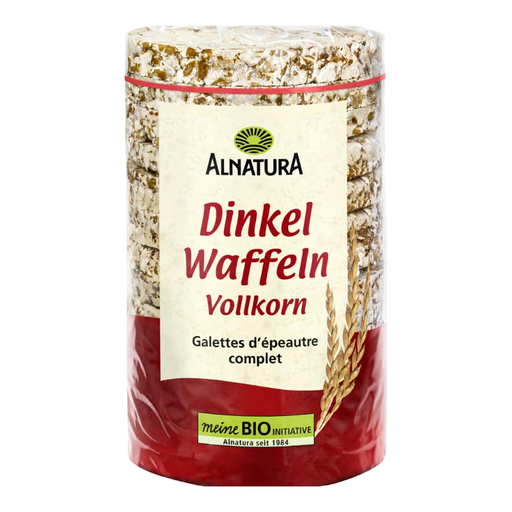 Image unavailable
A simple spelt wafer if you’d like to choose the topping for your snack yourself. If you have a strict sugar limit or need to avoid gluten, check the information on the pack. The nutritional values of any topping are in addition to those of the wafer.
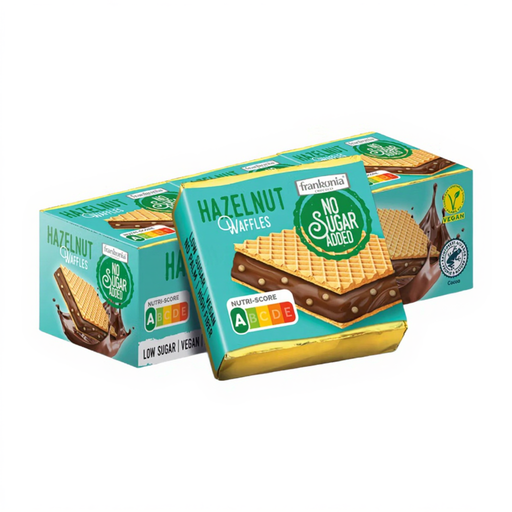 Image unavailable
An option if you’re looking for a hazelnut wafer with no added sugar, but don’t want to base your choice on the ‘sugar-free’ claim alone. The pack contains 9 × 19,4 g. Before buying, check the total sugar and protein content, the sweeteners and, if you have allergies, the ingredients list for the specific product.
According to Lebensmittelklarheit, a food can contain no more than 0.5 g of sugar per 100 g to be labelled ‘sugar-free’. Naturally occurring sugars count towards the stated total sugar content, so check the ‘of which sugars’ line in the nutritional information.
No. The Verbraucherzentrale distinguishes between the two claims; a wafer with no added sugar may still contain sugar from its ingredients. The sugar figure per 100 g will show whether it also meets the ‘sugar-free’ limit.
Sweeteners are a separate consideration when checking ingredients, regardless of the sugar content. The Verbraucherzentrale notes that consuming large amounts of sugar substitutes may have a laxative effect, so check the ingredients and pack guidance for the specific wafer.
No. The claim doesn’t tell you the protein or energy content of your portion. Compare the nutritional values on the same basis and take into account how much you actually plan to eat.
Yes. For example, EDEKA has a quark waffle recipe with no added sugar, which provides 7 g of protein per portion. The ingredients depend on the recipe and toppings you use; ‘no added sugar’ doesn’t automatically mean the finished portion meets the ‘sugar-free’ limit.