
Lieferung heute & morgen

Qualitätsgarantie

Willkommens-Angebote freischalten: KOSTENLOSE Lieferung | Bis zu 80 % RABATT | Kostenlose 30-Tage-JoyPlus-Testphase
App herunterladen
Choosing eco-friendly disposable tableware is a significant step, but the market can be overwhelming. Many who buy sugarcane plates find that the products don't live up to their promises. To help you make the right choice, we'll highlight the most common pitfalls and show you which objective criteria truly matter.
The 3 Most Common Problems When Choosing Eco-Friendly Disposable Plates:
To make an informed decision, don't be swayed by marketing promises. Instead, focus on verifiable product features.
Sugarcane plates are made from bagasse, a fibrous by-product of sugar production. This material is a resource-efficient alternative to wood or petroleum-based plastics.
Look for certification according to DIN EN 13432. This European standard confirms that a product is compostable in an industrial facility. This means it breaks down into water, CO?, and biomass within a specified period under specific conditions. Such party plates are compostable in the context of industrial processing and belong in the organic waste bin, not necessarily in your home compost pile.
A good sugarcane plate must be sturdy and hold its shape. Key features include:
The most common size for main courses is based on the classic 23 cm (9-inch) paper plate. This size offers enough space for a full meal. For desserts, cakes, or small snacks, smaller formats between 15 and 18 cm are often more practical. Before buying, consider the primary use for the plates to choose the right size and sufficient quantity.
Here are some product recommendations tailored to different needs and use cases.
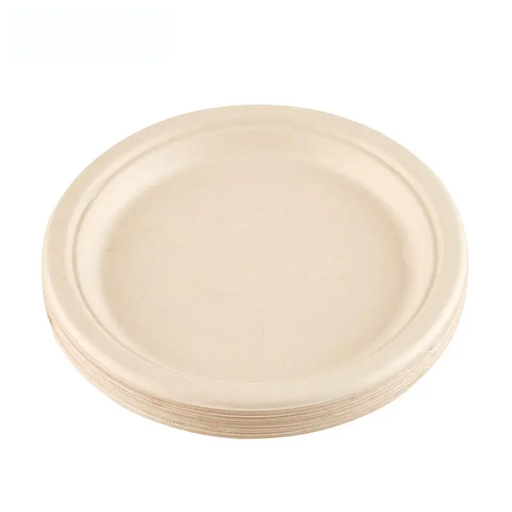
Why This Fits Their Persona: Ideal for parties, picnics, or events where a practical yet environmentally friendly solution is needed. The plates are made from sugarcane pulp and offer a reliable option for a large number of guests.
The product is explicitly described as water- and oil-resistant, which counteracts the problem of soggy plates. The "biodegradable" label directly addresses the desire for eco-friendly disposal.
Made from food-grade sugarcane pulp; microwave-safe for quick reheating of food.
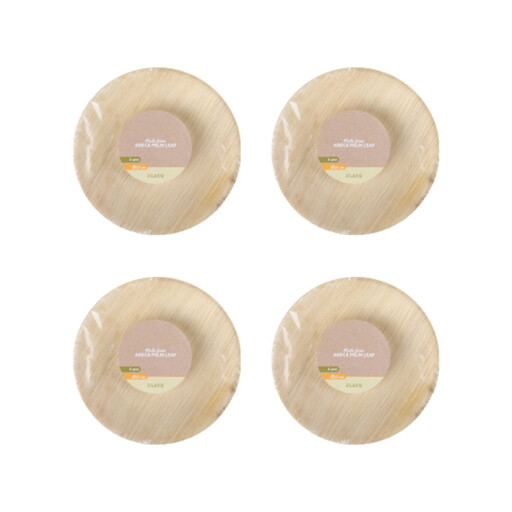
Why This Fits Their Persona: For hosts seeking a sustainable alternative with a distinctive aesthetic. Each plate has a unique grain, lending the table a natural, high-end look that goes beyond standard disposable plates.
Palm leaf is naturally very sturdy and shape-retaining, which minimises the risk of it becoming soggy or bending. As a pure natural product without artificial coatings, it avoids the trap of hidden plastics.
Sustainable, as it's made from naturally fallen palm leaves; each plate is one-of-a-kind with an individual texture.
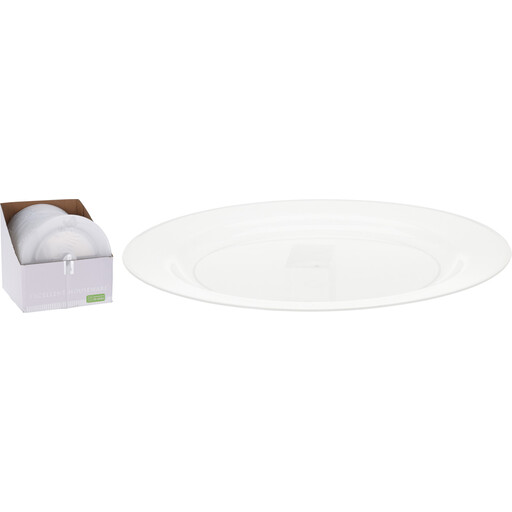
Why This Fits Their Persona: For regular use at kids' birthday parties, camping, or garden barbecues, a reusable solution can be more practical. These plates are durable, lightweight, and easy to clean.
As a reusable product, it completely bypasses the typical problems of disposable tableware, such as a lack of stability. Furthermore, its reusability reduces long-term waste compared to constantly repurchasing single-use items.
Shatterproof and lightweight, making them safe for children; dishwasher-safe for hassle-free cleaning.
We have compiled a complete, up-to-date list of products that fully meet these strict selection criteria and relevant safety regulations.
Many sugarcane plates are suitable for microwave use. However, it's important to check the manufacturer's specific instructions, as heat resistance can vary. They are typically designed for brief reheating at medium power, not for extended cooking processes.
Eco-friendly disposable plates certified under DIN EN 13432 belong in the organic waste bin. From there, they are sent to industrial composting facilities where the necessary conditions for complete decomposition exist. They are generally not suitable for home composting, as the required high temperatures are not reached.
Yes, high-quality sugarcane tableware is known for its excellent stability and strength. The material is naturally grease- and water-resistant and retains its shape even when in contact with hot foods up to a certain temperature (often around 100°C). This makes them a reliable alternative to conventional paper plates, which can quickly become soggy.