If keeping sugar as low as possible is your priority for holiday snacks, look for the claim “sugar-free” and compare the nutritional values per 100 g. If your main aim is to avoid added sugar, “no added sugar” may also be suitable, although the biscuits can still contain sugar from their ingredients. For the right choice, also check the ingredients, allergens and sweeteners, and think about how much you want to pack.
Who needs to know the difference?
Families with a clear sugar target
If you want to limit sugar for holiday mornings or days out, the claim on the pack and the “of which sugars” figure in the nutrition table are more informative than a product name that sounds similar. The consumer advice centre explains that “sugar-free” and “no added sugar” mean different things.
Families checking ingredients and allergens
If certain ingredients need to be avoided, the sugar claim alone isn’t enough. The Federal Institute for Risk Assessment highlights how sweeteners are labelled in the ingredients list; allergen information on the specific pack also needs to be checked.
Families planning snacks for days out
For a holiday break, the amount you actually take with you may matter more than the pack size. Compare the nutritional values per 100 g, then decide how much you want to pack, rather than assuming “sugar-free” tells you everything about the snack’s nutritional value.
What should you check before buying?
First decide whether a limited sugar content or avoiding added sugar matters more to you. Then check the ingredients and plan a portion for your holiday break.
| What to check |
What to look for |
Who it matters to |
| Sugar claim |
Compare “sugar-free” and “no added sugar” with the “of which sugars” figure per 100 g. According to the consumer advice centre, solid foods can contain no more than 0.5 g of sugar per 100 g to be labelled “sugar-free”; the other claim allows for naturally occurring sugars. |
If I’m looking for a clearly limited sugar content, “no added sugar” on its own isn’t enough. For around 36% of consumers, this verifiable sugar figure is the main priority. |
| Ingredients and allergens |
Check the ingredients list for sweeteners and the allergen information for your chosen variety. For products containing polyols, also follow the guidance on the pack. |
For a holiday break, I need to know whether the ingredients meet our requirements. Around 29% of consumers focus on checking ingredients and suitability. |
| Portion planning |
Check the pack size and, where available, portion information; decide how much to take with you. Use the nutritional values per 100 g to compare products. |
For a day out, I want to be able to decide in advance how many biscuits to take. This ability to plan the amount is the most important buying criterion for around 21% of consumers. |
| Overall nutritional values |
As well as “of which sugars”, look at energy and fat per 100 g, and check the ingredients for each variety. |
If there are no stricter requirements for sugar or ingredients, I want to weigh up taste and nutritional values together. For around 14% of consumers, this overall comparison comes first. |
What are some common misconceptions?
-
Assuming “no added sugar” means “sugar-free”
Biscuits with no added sugar can still contain sugar from their ingredients. So if you’re looking for a specific sugar content for your holiday break, you can’t use the two claims interchangeably.
Compare the “of which sugars” figure per 100 g. If you have a strict sugar target, also check whether the specific pack is labelled “sugar-free”.
-
Overlooking sweeteners because of the sugar claim
Sugar substitutes don’t necessarily contain no energy. The consumer advice centre also points out that large quantities can have a laxative effect.
Read the ingredients list and any warnings before deciding how much to take with you. This is particularly relevant if a product contains polyols such as maltitol.
-
Assuming “Zero” means there are no allergens
A sugar claim says nothing about allergens. Gullón lists wheat among the ingredients in one of its own Zero oat and chocolate recipes; the information for this variety doesn’t apply to other biscuits.
If allergens are a concern, check the ingredients and warnings on the pack of the exact variety you want to buy.
-
Planning to use sugar-free biscuits as a breakfast replacement
“Sugar-free” refers to the sugar content, not the energy, fat or nutritional value of a whole meal. The amount you eat is also relevant when making comparisons.
Plan to have biscuits as a snack, and compare the nutritional information and suggested portion together when choosing between varieties.
Brands to help you choose
Gullón
Gullón has its own range of Zero biscuits, including Mini Cookies, Digestive biscuits and oat and chocolate varieties, according to the manufacturer.
- Gullón’s product pages can help you check the ingredients for individual varieties; one oat and chocolate option lists maltitol, oats and wheat among its ingredients.
- The recipe for one variety doesn’t apply to the whole range, so check the labelling on the pack you choose.
Bahlsen
Bahlsen’s product range includes biscuits and wafers, making it a useful point of comparison for classic holiday snacks.
- The product range makes it easy to see the different types of baked goods on offer.
- The brand name doesn’t tell you the sugar content of a particular variety. Check its pack and nutrition table instead.
Sondey
Sondey is Lidl’s own brand of sweet biscuits and other small baked treats.
- Knowing it’s a range of small baked treats makes it easier to find individual varieties in Lidl’s range.
- The only way to tell whether a particular variety meets your sugar target is to check its own labelling and nutritional values.
Products for the holiday break
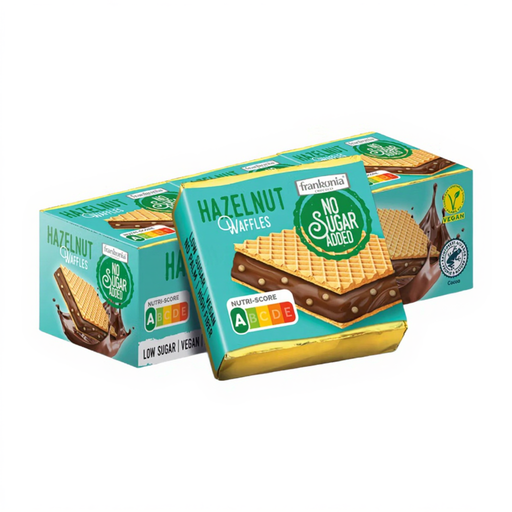
This Joybuy selection includes biscuits labelled “Zero Sugar” or “Sugar-Free”, as well as hazelnut wafers labelled “No Sugar Added” as an alternative baked treat. It’s particularly important not to confuse the claim on the wafers with “sugar-free”.
 No image available
Oreo Zero Sugar Sandwich Cookies, 97 g
A biscuit option for the holiday break if you’re looking for a product labelled “Zero Sugar”.
To check whether it meets your sugar target, look at the nutritional values per 100 g and read the ingredients and allergen information on the specific pack before choosing.
View on Joybuy
 No image available
Coppenrath Sugar-Free Viennese Sand Ring Biscuits, 200 g
A sand ring biscuit option for holiday breaks if you’re specifically looking to compare a variety labelled “Sugar-Free”.
Compare the sugar content per 100 g on the pack. When deciding how much to take, also check the ingredients and allergen information, along with any warnings about sugar substitutes.
View on Joybuy
 No image available
Frankonia No Sugar Added Hazelnut Wafers, 9 × 19,4 g
These hazelnut wafers are a portionable option if you fancy wafers rather than biscuits and are looking for a “No Sugar Added” product.
The product name lists nine portions of 19,4 g each. Only the nutrition table can tell you whether the overall sugar content meets your target; also check the ingredients, allergens and pack information.
View on Joybuy
Frequently asked questions
What does “sugar-free” mean on biscuits?
“Sugar-free” doesn’t necessarily mean 0 g of sugar in a solid food: according to the consumer advice centre, this claim is allowed for foods containing no more than 0.5 g of sugar per 100 g. If you’re choosing between varieties, compare the “of which sugars” figure on the pack.
Does “no added sugar” mean the same as “sugar-free”?
No. The consumer advice centre explains that “no added sugar” excludes added sugars and other ingredients used for sweetening, but not sugars that occur naturally in the ingredients. If you have a specific sugar target, it’s also important to check the total sugar content in the nutrition table.
How can I spot sweeteners in biscuits?
Sweeteners are generally listed in the ingredients; the Federal Institute for Risk Assessment explains how they’re labelled on packaging. Alongside the ingredients list, check any guidance on consumption, particularly if the product contains sugar substitutes.
Are sugar-free biscuits automatically low in energy?
No. The “sugar-free” claim doesn’t tell you the overall energy or fat content of a biscuit. Compare the full nutritional information per 100 g, and consider how much you plan to eat during your holiday break.
What should I know about biscuits containing maltitol?
Maltitol is a sugar substitute. The consumer advice centre points out that large quantities of sugar substitutes can have a laxative effect. So check the ingredients and pack information, and plan how much to take with you accordingly.


