Students with a strict sugar target
You’re specifically looking for chocolate labelled ‘sugar-free’ for your study break and don’t want to confuse this claim with ‘no added sugar’.


For a study break, start by checking the sugar claim you want and the ‘of which sugars’ value per 100 g. ‘No added sugar’ does not mean a bar is labelled ‘sugar-free’. Then compare the sweeteners, allergens and portion you plan to eat. For products containing polyols, pay particular attention to the warning about possible laxative effects if consumed in excess.
You’re specifically looking for chocolate labelled ‘sugar-free’ for your study break and don’t want to confuse this claim with ‘no added sugar’.
You’d like to choose between milk and dark chocolate with no added sugar, comparing the actual sugar content of each variety.
As well as sugar, you consider portion size and ingredients, or check whether plant-based ingredients, allergens and sweeteners meet your needs.
First, decide whether you specifically want a sugar-free claim or whether chocolate with no added sugar will do. You can then narrow down your options by checking the ingredients, nutrition information and portion size.
| Criteria | What to check | Who it matters to |
|---|---|---|
| Sugar claim | Check the wording on the pack and the ‘of which sugars’ value per 100 g. | If you’re specifically looking for sugar-free chocolate, you won’t want to mistake a bar with no added sugar for one. For around 36% of consumers, this strict sugar target comes first. |
| Type of chocolate | For milk and dark varieties, compare the sugar content per 100 g and the stated cocoa percentage. | For a familiar chocolate break, I’d be happy with naturally occurring sugars if I liked the variety. Enjoying chocolate with less added sugar is the main priority for around 29% of consumers. |
| Ingredients and allergens | Check the specific ingredients list for sweeteners, as well as allergen and ‘may contain’ information. | When buying a new variety for a longer study session, I want to know about its sweeteners and allergen information in advance. This check takes priority for around 21% of consumers. |
| Portion and ingredients | Compare the nutrition information per 100 g and, where available, per portion. If protein matters to you, check the protein content. | If you’re setting aside chocolate for a short break, you may want to choose a particular portion size or recipe. This is the most important consideration for around 14% of consumers. |
A bar with no added sugar can still contain naturally occurring sugars. For example, REWE lists 1 g of sugar per 100 g for Lindt dark chocolate with no added sugar, while Lindt Deutschland lists 9 g per 100 g for the equivalent milk chocolate bar.
If the distinction matters to you, check both the claim and the ‘of which sugars’ line in the nutrition information.
Eating too much chocolate containing polyols may have a laxative effect. Verbraucherzentrale explains the connection, and several of the bars described also carry a relevant warning.
Choose a sensible portion for your study break and follow the guidance on the individual pack.
A sugar figure tells you nothing about the chocolate’s energy or fat content.
Compare the nutrition information per 100 g and factor in the portion you plan to eat.
A plant-based recipe or dark chocolate variety doesn’t, by itself, tell you which allergens or traces are listed for that specific product.
Check the ingredients and allergen information for every variety, even if you already know the brand.
The milk and dark chocolate bars with no added sugar give you two different types to compare.
REWE stocks a dark chocolate bar from this brand labelled ‘sugar-free’.
REWE describes a no-added-sugar chocolate from this brand as vegan and gluten-free.
You can also compare a Chocolate Crisp bar with no added sugar, as described by REWE, by looking at its protein and fibre content.
Here you’ll find a dark Lindt bar with no added sugar, along with two different Frankonia Crisp varieties bearing the product description ‘No Sugar Added’. If you’re specifically looking for a bar labelled ‘sugar-free’, check this claim and the sugar content for the individual product.
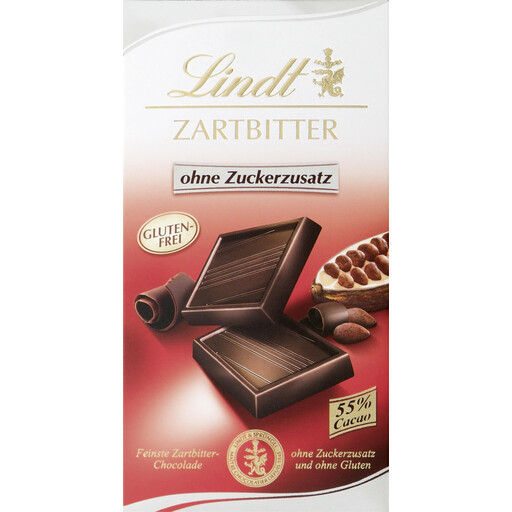 Image unavailable
A good choice for a study break if you fancy dark chocolate with no added sugar and don’t need an explicit sugar-free claim.
REWE lists 1 g of sugar per 100 g and at least 55% cocoa for the Lindt dark chocolate bar. Before buying, also check the ingredients and allergen information.
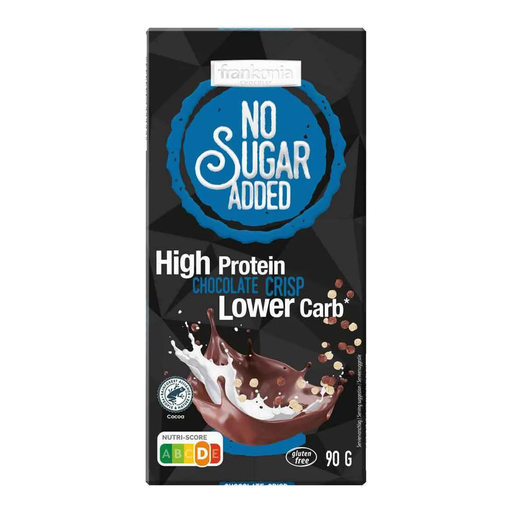 Image unavailable
A Chocolate Crisp option for anyone considering a bar bearing the product description ‘No Sugar Added’ for their study break.
The pack contains 90 g. Check the ‘of which sugars’ value per 100 g, along with the ingredients, allergens and portion guidance for this specific bar.
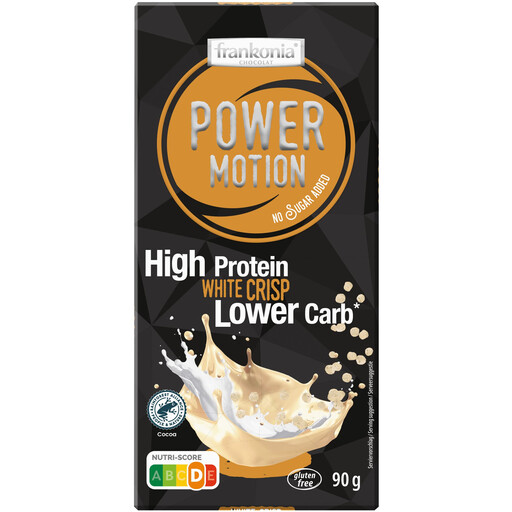 Image unavailable
Choose the white Crisp variety if you’d prefer this type of chocolate to a dark bar and ‘No Sugar Added’ is one of your selection criteria.
The pack contains 90 g. Check the sugar content per 100 g and allergen information for this variety; don’t assume the figures for another Frankonia bar are the same.
No, the claims don’t mean the same thing. Chocolate with no added sugar can still contain naturally occurring sugars. Check the claim and the ‘of which sugars’ value per 100 g for the specific bar.
Check the ingredients list and consumption guidance for the individual chocolate. Verbraucherzentrale notes that polyols can have a laxative effect when consumed in large quantities.
No, a claim about added sugar doesn’t describe the overall nutritional value. Compare the energy, fat and sugar content per 100 g, and take into account how much you plan to eat during your study break.
Yes. The ingredients and ‘may contain’ information for the specific variety are what matter. REWE lists possible traces of almond, hazelnut and milk for the Veganz bar described; the Frankonia Chocolate Crisp bar described contains milk and soya ingredients.