
Lieferung heute & morgen

Qualitätsgarantie

Willkommens-Angebote freischalten: KOSTENLOSE Lieferung | Bis zu 80 % RABATT | Kostenlose 30-Tage-JoyPlus-Testphase
App herunterladen
A summer duvet should keep you comfortable on warm nights without compromising on a good night’s sleep. Many products are advertised as “cooling”, “breathable” or filled with especially lightweight materials. However, these terms are not always directly comparable. The key details to look at are fill weight, materials, size, care instructions and certifications.
If you’re looking to buy a duvet for warm nights or a cooling duvet, you should also consider your sleeping habits. Some people get hot quickly, couples may have different warmth preferences, and allergy sufferers tend to pay closer attention to the cover, filling and washability.
A cooling blanket made with specialist fibres can passively draw heat away from your body and feel cool to the touch at first. However, it is not a replacement for air conditioning and will not actively lower the room temperature. For products featuring Arc-Chill cooling fibre and a stated Q-Max > 0,45, this figure describes the initial heat transfer or cool sensation on the skin. How long that feeling lasts depends on factors such as room temperature, air circulation and contact with your body.
The weight of a lightweight summer duvet should be considered in relation to its filling and cover. With a feather and down duvet, for example, the proportion of feathers to down matters. A very light filling may be suitable for warm nights, but might not provide enough warmth in transitional seasons.
Cooling fibres, zips and natural fillings all need different types of care. A duvet that can only be washed at low temperatures and air-dried is not the same as one that is fully machine washable. Before buying, check the washing temperature, drying instructions and any potential size changes.
Fill weight is a useful way to compare summer duvets. It tells you how much filling there is per square metre. According to the product details, the DOWNFOCUS summer duvet has a filling weight of 200 g/m². This gives shoppers a clear reference point when looking for a lightweight duvet for warm nights.
With natural fillings, it’s also worth checking the proportions of each material. According to the product descriptions, the fillings in the DOWNFOCUS models mentioned here consist of 90 % feathers and 10 % down. A feather duvet and a down duvet may differ in loft, feel and how evenly they distribute warmth. So don’t focus on the word “down” alone.
The cover sits directly over or under your duvet cover and affects how the duvet feels while you sleep. According to the product details, a tightly woven cotton cover can act as a barrier against dust mites. If you have sensitive skin or allergies, it’s also important to look for clear information about certifications.
According to the product details, the DOWNFOCUS models are described as OEKO-TEX-certified duvets. The covers are also said to have been tested by Dermatest and OEKO-TEX. Always check these details against the information on the relevant product page. A certification relates to specific testing requirements; it is not a general guarantee that a product will suit everyone.
The WOLTU cooling bedding products are listed as having OEKO-TEX 100 certification. Depending on the model, the materials include nylon, polyester and polyethylene. If hypoallergenic bedding is important to you, consider the manufacturer’s details, care instructions and your own needs together.
Choosing the right size helps stop your duvet slipping off during the night. Common German sizes include:
For couples, two single duvets may offer more flexibility. A 2-in-1 duvet usually consists of two sections that can be joined together, each with a different fill weight. Before buying, check that the size works with your duvet cover, bed frame and existing bedding.
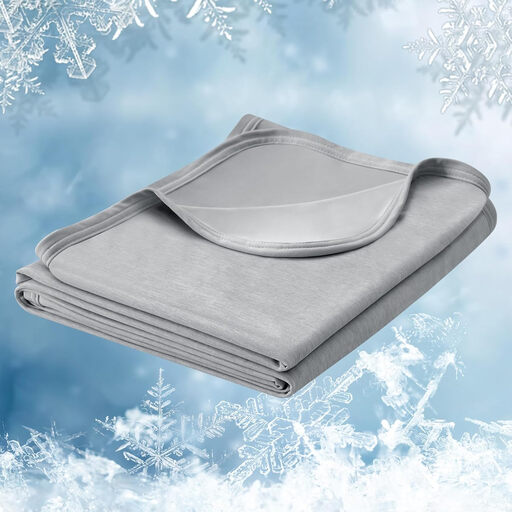
Why this product suits this type of sleeper: This lightweight summer duvet is designed for single sleepers looking for a compact size and reversible use in summer and transitional seasons.
The product details specifically describe passive heat transfer, not active cooling. This helps set more realistic expectations for its cooling properties.
Arc-Chill fibres with a stated Q-Max > 0,45, a reversible 2-in-1 design and machine washable at up to 30 °C, according to the product description.
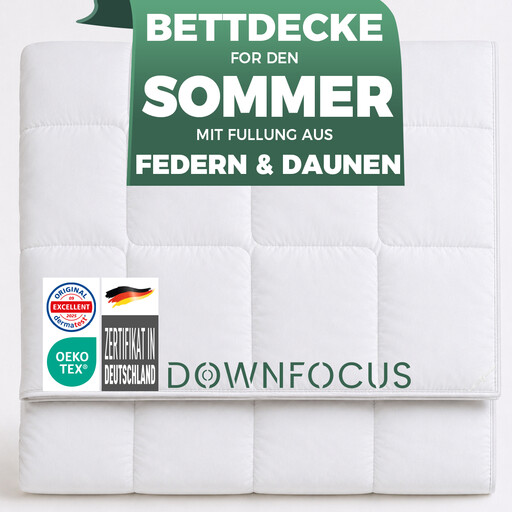
Why this product suits this type of sleeper: This 155 x 220 cm summer duvet is for shoppers who prefer a natural filling, a clearly stated fill weight and certified material details.
The stated fill weight of 200 g/m² gives you a clearer idea of its suitability for warm nights than a marketing claim such as “ultra-lightweight” alone.
According to the product details, it has a filling of 90 % feathers and 10 % down, a cotton cover, and OEKO-TEX and RDS details.
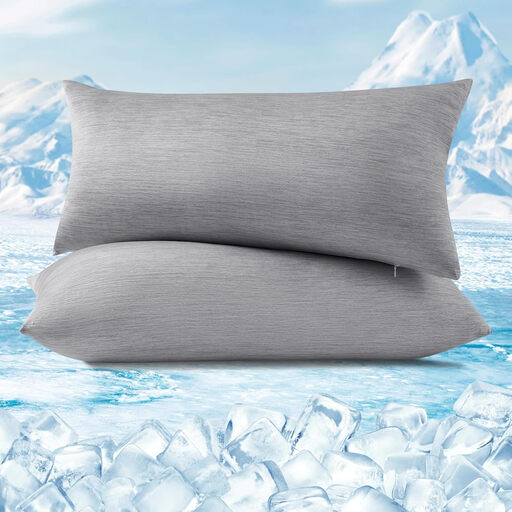
Why this product suits this type of sleeper: A cooling pillowcase targets the head area and is a practical choice if you don’t want to replace your entire duvet.
The description explains that the cooling effect is passive and may fade with prolonged, continuous contact. This helps avoid expecting it to work like an active cooling device.
Arc-Chill cooling fibre with a stated Q-Max > 0,45, a concealed zip and OEKO-TEX 100 details, according to the product page.
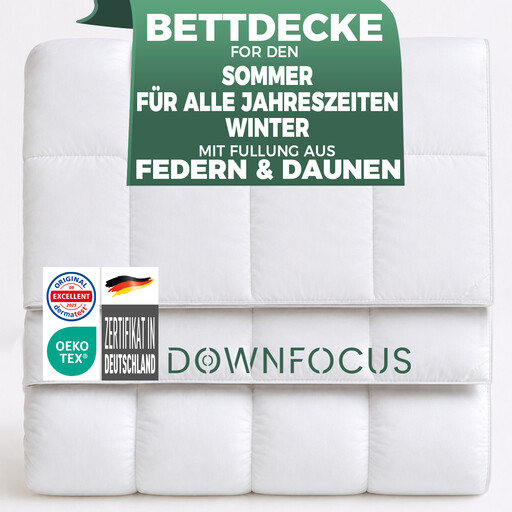
Why this product suits this type of sleeper: Two duvets that can be joined together let you adapt to summer and transitional temperatures without having to store several separate products.
The product description gives the fill weights of the two duvets as 200 g/m² and 450 g/m². This makes their seasonal uses clearer.
2-in-1 design, a filling of 90 % feathers and 10 % down, plus OEKO-TEX, RDS and Downpass details according to the product page.
We’ve put together a complete, regularly updated list of products that meet these strict selection criteria and the safety regulations in force in the EU.
To help your duvet last, follow the care instructions for the specific product. Depending on the model, the WOLTU cooling products mentioned here are recommended for washing at a maximum of 30 or 40 °C, using a laundry bag and air-drying. Bleach, ironing and tumble drying may damage the fibres or coating.
Air your summer duvet regularly, but don’t leave it exposed to direct heat for long periods. With natural fillings, it’s also important to let the duvet dry completely. Dampness can affect the comfort and hygienic properties of the material.
A lightweight duvet with a low fill weight and breathable cover may be a good choice. Cooling fibres can also create a cooler sensation against the skin. However, their effect is passive and they won’t replace good ventilation in the bedroom.
Yes, as long as one of the combined duvets has a low fill weight. On particularly warm nights, you’ll usually only need the lighter section. Before buying, check the dimensions, fastening system and care instructions.
Its lifespan depends on the materials, how often it’s used and washed, and how it’s stored. Regular airing, suitable bedding and following the care instructions can help maintain its shape and performance. With cooling fibres, the initial cool sensation may change over time or after frequent washing.