
Lieferung heute & morgen

Qualitätsgarantie

Willkommens-Angebote freischalten: KOSTENLOSE Lieferung | Bis zu 80 % RABATT | Kostenlose 30-Tage-JoyPlus-Testphase
App herunterladen
A summer duvet should be lightweight, allow air to circulate and suit your own sleep environment. But glossy marketing claims don’t automatically mean you’ve found the right lightweight summer duvet. Terms such as “cooling”, “hypoallergenic” or “all-season” should be considered alongside specific product details.
A cooling duvet made with special fibres may feel cool when you first touch it or help draw heat away from your body. However, it doesn’t actively produce cold air like an air conditioner. The WOLTU product description specifically states that its cooling effect comes from drawing heat away and may lessen with prolonged use.
A stated Q-Max value isn’t the only factor to consider, either. It describes the initial heat absorption or cooling sensation of a textile surface. Room temperature, humidity, bedding and your personal perception of warmth all affect how it feels in use.
An all-season duvet may be designed for use across several seasons by using a heavier filling. If you tend to get hot quickly, a two-part duvet with a summer section and a transitional-season section may be easier to assess than a single model with a medium-weight filling. Look for details such as GSM, filling material and whether the sections can be used separately.
A 135 x 200 cm duvet is typically suitable for a standard German single bed. Other options include 155 x 220 cm for taller people or longer beds, and 200 x 200 cm for a double bed. Check the stated dimensions against your duvet cover, mattress and preferred amount of room to move. Imported sizes such as 150 x 200 cm or 220 x 230 cm may not fit existing German duvet covers properly.
For a summer down duvet, the ratio of feathers to down and the filling weight are useful points of comparison. According to the product details, a DOWNFOCUS model is available at 200 GSM, with a filling of 90% feathers and 10% down. This gives you a clear picture of its construction, but doesn’t replace your own assessment of how warm it will feel.
Synthetic fillings and microfibre are often easy to care for and may be worth considering if you’re looking for a machine-washable duvet. Check the permitted washing temperature and drying instructions.
A breathable duvet should have a cover and filling that don’t trap too much moisture. Cotton, polyester, nylon, cooling fibres and down all differ in feel, care requirements and how they handle moisture. A smooth cooling fibre may feel fresh at first, while a jersey cover has a softer feel.
If you’re looking for a duvet to help with night sweats, don’t just rely on the marketing claim. Check whether it’s washable, how it should be dried and what bedding you use. A duvet can affect your sleeping environment, but it can’t reliably prevent night sweats.
Treat “hypoallergenic” or “for sensitive skin” as product claims, not medical guarantees. The DOWNFOCUS product details mention certifications including OEKO-TEX, Dermatest, Downpass and RDS. Check these details on the product page and label.
The Laneetal duvet is described as using Arc-Chill cooling fibres with a Q-Max value above 0.45. The product details recommend machine washing at up to 40 °C in a laundry bag, and advise against bleach and high tumble-dryer temperatures. WOLTU, on the other hand, specifies a washing temperature of up to 30 °C and recommends air-drying in the shade. Care instructions therefore vary by model.
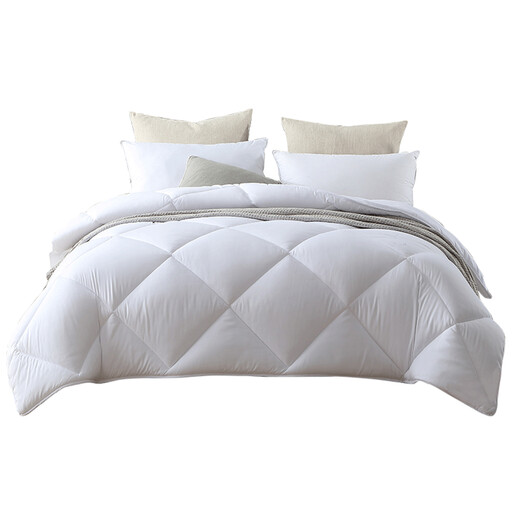
Why this product suits this profile: The 135 x 200 cm size fits many single beds in Germany. According to the product details, the duvet is designed for summer, autumn and winter, and is washable.
The specific size and washable design make it easier to check whether it’s right for you before buying. Even so, consider whether an all-season model will suit your own perception of warmth.
135 x 200 cm single-bed size; described in the product details as suitable for several seasons and made with non-allergenic material.
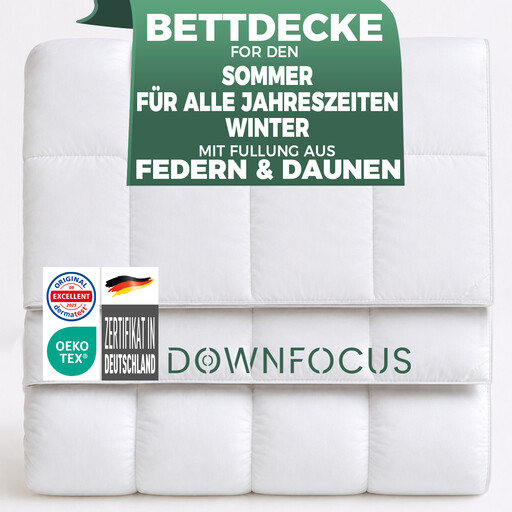
Why this product suits this profile: According to the product details, this model combines a 200-GSM summer duvet with a 450-GSM all-season duvet. You can use the two sections separately, depending on the season.
The separate filling weights make it easier to understand how the duvet can be used in different seasons than a single model with an unclear filling weight. Check certification details on the product page and the item itself before buying.
2-in-1 design; 90% feathers and 10% down according to the product details; 135 x 200 cm size.
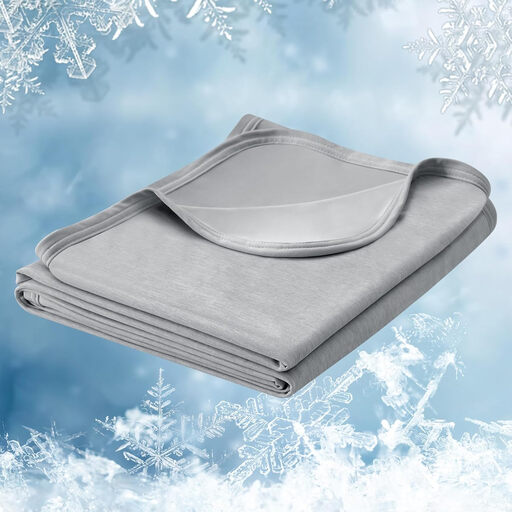
Why this product suits this profile: According to the product description, this lightweight blanket is designed for use on a bed or sofa, as well as for camping, travel and outdoor activities. Its two different sides offer flexible use.
The product description gives a Q-Max value above 0.45, while also noting that the cooling effect may lessen with prolonged use. This helps set realistic expectations: it won’t actively cool you.
Reversible 2-in-1 design; Arc-Chill fibres with Q-Max > 0.45 according to the product details; suitable for travel and camping.
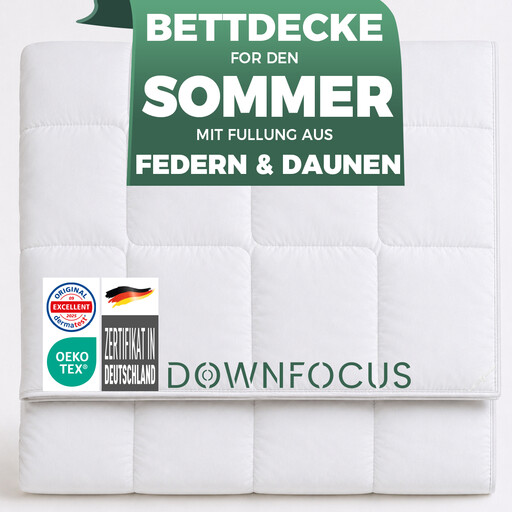
Why this product suits this profile: The square format is designed for a double bed. According to the product details, the summer duvet has a 200-GSM feather and down filling.
The specific dimensions make it easier to choose a suitable duvet cover. Before buying, though, consider the filling weight, cover size and your own perception of warmth together.
200 x 200 cm size; 200-GSM summer filling and natural feather and down filling according to the product details.
We’ve put together a comprehensive, regularly updated list of products that meet these strict selection criteria and fully comply with the safety regulations in force in the EU.
Look for a low filling weight, breathable materials and good washability. A cooling duvet with Arc-Chill cooling fibres may feel fresh against your skin. Also check whether the cooling effect may lessen over time, and choose a size that isn’t unnecessarily heavy or bulky.
It depends on the material, how often you use it and the care label. According to the product details, synthetic models can often be washed at 30 or 40 °C. Down and feather duvets need particular care when choosing a wash programme and drying them, and must be left to dry completely. Regular airing can extend the time between washes, but it doesn’t replace the care recommended by the manufacturer.
In Germany, 135 x 200 cm is a common size for single beds. The 155 x 220 cm size offers extra length and suits taller people. Double beds may take sizes such as 200 x 200 cm or 240 x 200 cm, as well as other formats depending on the bed and duvet cover. The key is to check the dimensions of your existing duvet cover and consider how much coverage you want.