
Lieferung heute & morgen

Qualitätsgarantie

Willkommens-Angebote freischalten: KOSTENLOSE Lieferung | Bis zu 80 % RABATT | Kostenlose 30-Tage-JoyPlus-Testphase
App herunterladen
A summer duvet should feel light on your body, wick away moisture effectively and suit the temperature of your room. But conditions in British bedrooms can vary considerably: loft rooms may get very hot, while poorly insulated rooms can stay cool even in summer. For couples, allergy sufferers, people with sensitive skin and households with children or pets, size, care and materials are also important considerations.
Three common marketing pitfalls can lead to unnecessary spending:
Fill weight is a useful way to compare lightweight summer duvets. For example, the DOWNFOCUS summer duvets available have a stated fill weight of 200 g/m². This gives you a clear point of reference, but you should also consider the cover, filling type and how warm you tend to feel.
A down summer duvet can offer a different level of loft and airflow from a synthetic duvet, even at a low weight. A feather duvet with a higher proportion of feathers may also feel more compact. If you’d like to use the same duvet in spring and autumn, consider an all-season duvet or a 2-in-1 model with duvets that can be combined.
Synthetic fibres are often easy to care for and relatively straightforward to dry. Cooling fibres are usually marketed for their heat or moisture management. For models with Arc-Chill fibres, the stated Q-Max value should be treated as a technical comparison point, not a guarantee of how cool the duvet will feel to you.
Natural down and feather fillings can feel light and lofty. A tightly woven cover is also worth considering if you have sensitive skin or allergies. According to the product information, selected DOWNFOCUS models have a tightly woven cotton cover and carry OEKO-TEX and RDS-related claims. These details describe the specific product and are not a medical efficacy claim.
The size should suit your mattress, duvet cover and sleeping habits. A 200x200 summer duvet, for example, suits many double beds, while 135x200 cm is more commonly intended for a single bed and 155x220 cm for longer beds. Couples should also consider whether they’d be more comfortable sharing one duvet or using two single duvets.
Before you buy, check:
A washable duvet is particularly practical for households with children or pets, or where bedding is changed frequently. However, technical cooling fibres may be more sensitive to high temperatures. Always follow the care instructions provided by the manufacturer.
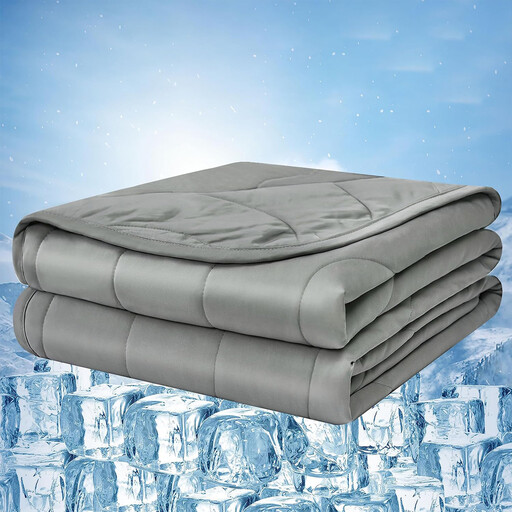
Why it suits this profile: This lightweight 150 x 200 cm duvet is intended for single beds, sofas, travel or camping. According to the product information, it uses Arc-Chill fibres with a Q-Max value above 0.45 and a microfibre filling.
The Q-Max value is clearly stated, but the duvet shouldn’t be confused with active cooling. The care instructions allow machine washing at up to 40 °C; high tumble-dryer temperatures and ironing should be avoided.
A lightweight size, synthetic filling and stated moisture-wicking properties; according to the product information, it’s suitable for the bed, sofa and travel.
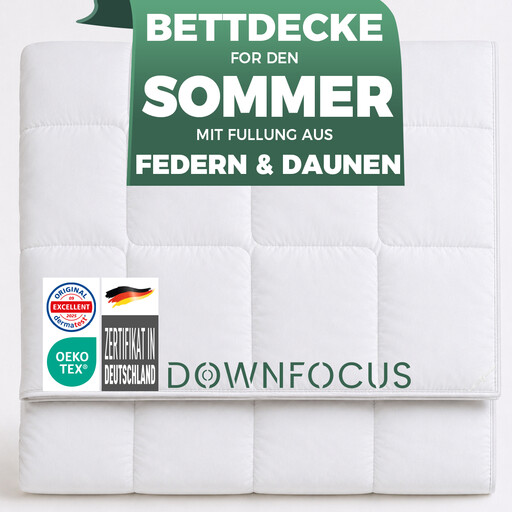
Why it suits this profile: The 200 x 200 cm size is for those who prefer a natural filling and a classic double-bed size. According to the product information, it has a filling of 90% feathers and 10% down, with a fill weight of 200 g/m².
The fill weight and composition are clearly stated. Before ordering, buyers should also check that the care instructions suit the washing facilities they have available.
Natural filling and a 200 x 200 cm size, with OEKO-TEX, RDS and skin-friendliness-related claims according to the product information.
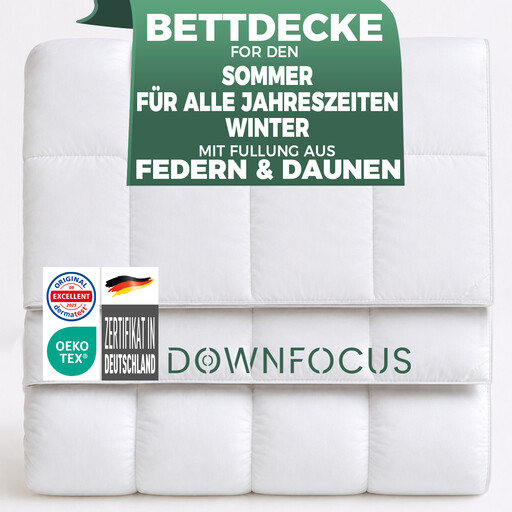
Why it suits this profile: Two duvets that can be combined, with fill weights of 200 g/m² and 450 g/m², let you adapt to different seasons. The 135 x 200 cm size is intended for a single bed.
Rather than relying on a supposedly universal warmth rating, the two fill weights are listed separately. This lets you adjust the configuration to suit your room temperature and personal preferences.
2-in-1 design, feather and down filling, and a single-bed size; according to the product information, it carries OEKO-TEX and RDS-related claims.
We’ve put together a complete, regularly updated list of products that meet these strict selection criteria and fully comply with the safety regulations in force in the EU.
After washing, a summer duvet should be completely dry before you put it back in its cover or store it away. Dampness can lead to unpleasant smells. High temperatures, ironing and harsh bleach are often unsuitable for technical fibres. Natural fillings usually need plenty of air and shouldn’t be stored compressed for long periods.
If you’re buying a duvet for children, pets or allergy sufferers, it’s worth comparing washability, the cover and recommended washing intervals before you buy. A duvet described as hypoallergenic is no substitute for individual medical advice and may not be suitable for everyone with sensitivities.
A lightweight, breathable duvet with a suitable cover can help with heat and moisture regulation. According to product descriptions, cooling fibres often create a fresh feel when you first touch them. However, room temperature, nightwear, bedding and your personal preferences all matter too.
It depends on the material, how often you use it and the care label. If the duvet is washable, follow the manufacturer’s instructions on temperature, drying and detergent. A washable cover and regular airing can also reduce how often the duvet needs cleaning.
Not necessarily. A 2-in-1 model may consist of a thin summer duvet and an additional mid-season duvet. Used on its own, the lighter layer may be suitable for warm nights. Check the fill weight, size and care instructions before you buy.