
Lieferung heute & morgen

Qualitätsgarantie

Willkommens-Angebote freischalten: KOSTENLOSE Lieferung | Bis zu 80 % RABATT | Kostenlose 30-Tage-JoyPlus-Testphase
App herunterladen
A good sun spray is practical: it's quick to apply and can reach even difficult-to-access areas. However, the vast selection and lofty marketing promises can make the decision difficult. The wrong product or incorrect application not only reduces protection but can also lead to skin irritation or a sticky residue.
As your Joybuy Product Recommendation Officer, I'll help you distinguish important features from marketing jargon. We'll highlight the most common pitfalls and show you what to look for to find the right spray-on sunscreen for your needs.
Before we dive into product features, let's clear up three common misconceptions that often lead to inadequate protection.
The term water-resistant sun spray is often misunderstood. It doesn't mean that protection remains fully intact after swimming or heavy sweating. According to EU regulations, a product declared "water-resistant" must still provide at least 50% of its original Sun Protection Factor (SPF) after two 20-minute sessions in the water. For "extra water-resistant" products, this extends to four 20-minute sessions. This means: reapplying after swimming and towel-drying is essential.
A sun spray with SPF 50 offers high protection against UVB rays, but it's not a shield that lasts all day. The protective effect diminishes over time due to factors like sweat, friction from clothing, and UV radiation itself. Regardless of the SPF, sunscreen should be reapplied approximately every two hours to ensure continuous protection.
A transparent sun spray promises an invisible finish with no white cast. However, some formulas can leave an oily or sticky film on the skin that is not only unpleasant but also attracts sand and dirt. Additionally, certain ingredients, when combined with UV light, can cause yellowish stains on light-coloured clothing that are difficult to remove.
To find the right product, you should focus on objective criteria. These three parameters are crucial for effective and comfortable sun protection.
The Sun Protection Factor (SPF) indicates how much longer you can stay in the sun with sunscreen before getting a sunburn, compared to your skin's natural self-protection time. An SPF 50 filters out about 98% of UVB rays.
Just as important is protection from UVA rays, which penetrate deeper into the skin and contribute to premature skin ageing. Look for the UVA logo (a circle with "UVA" inside) on the packaging. It guarantees that the UVA protection is at least one-third of the stated SPF, thus complying with EU recommendations.
The texture determines whether you'll enjoy using a product regularly.
For sports activities or a trip to the beach, a water-resistant sun spray is a sensible choice. However, remember to reapply it regularly.
For children's sensitive skin, a special sun spray for children is recommended. These products typically have a high SPF (50+), are often free of fragrances and dyes, and are formulated to be extra water-resistant to provide reliable protection while they splash around in the water.
Here are a few recommendations from our range, tailored to different user profiles.
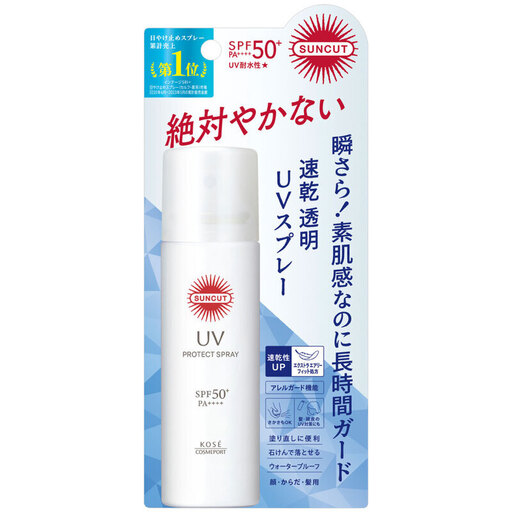
Why This Fits Their Persona: Ideal for those seeking straightforward, invisible protection for daily use. The spray can be applied directly over makeup to refresh protection throughout the day without disturbing your look.
The ultra-light, breathable formula counteracts the problem of sticky or greasy residue common with many transparent sprays.
High protection (SPF 50+ and PA++++) in a transparent, quick-drying formula. Easy to remove with soap.
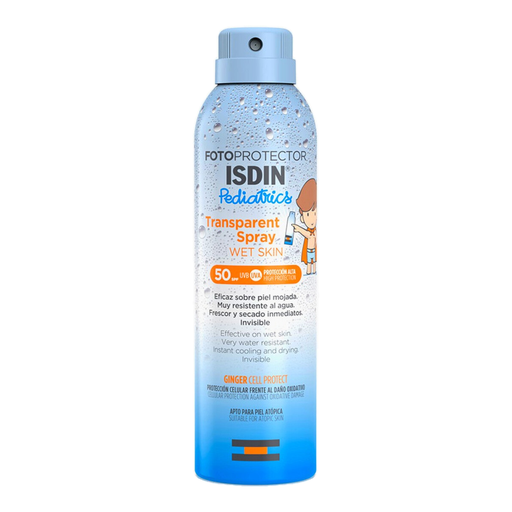
Why This Fits Their Persona: Perfect for parents who need reliable, easy-to-apply protection for their active children (ages 3 and up). The ability to apply it to wet skin is especially practical at the beach or pool.
Its suitability for wet skin and "very water-resistant" properties directly address the uncertainty around water resistance, offering a practical solution for fun in the water.
Very high protection (SPF 50+), suitable for sensitive and atopic-prone skin. The transparent, fast-drying formula leaves no white cast.
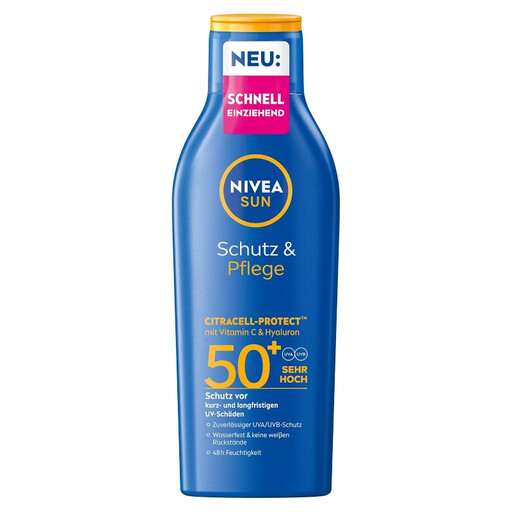
Why This Fits Their Persona: For users who want to combine high sun protection with respect for the environment. The formula is designed to be ocean-friendly while providing intensive care for the skin.
This product addresses the "hidden" pitfall of environmentally harmful ingredients by explicitly stating it is free of the UV filters Octinoxate, Oxybenzone, and Octocrylene, as well as microplastics.
High SPF 50+ with a formula that, according to the manufacturer, is ocean-friendly. Provides 48-hour moisture and absorbs quickly.
We have compiled a complete, up-to-date list of products that fully meet these strict selection criteria and German safety regulations.
Regardless of the SPF, you should reapply sunscreen approximately every two hours. Also, always reapply after being in the water, sweating heavily, or towel-drying. This is the only way to maintain its protective performance.
Check the packaging for an open jar symbol, which indicates the period-after-opening (e.g., "12M" for 12 months). If the product smells strange, has changed in consistency, or the expiration date has passed, you should discard it, as its protective effect can no longer be guaranteed.
The UVA symbol in a circle is a European standard mark. It confirms that the product's UVA protection is at least one-third of the stated Sun Protection Factor (SPF). This ensures balanced, broad-spectrum protection against both UVB and UVA rays.