
Lieferung heute & morgen

Qualitätsgarantie

Willkommens-Angebote freischalten: KOSTENLOSE Lieferung | Bis zu 80 % RABATT | Kostenlose 30-Tage-JoyPlus-Testphase
App herunterladen
Sustainable disposable tableware should be practical, hygienic to use and leave behind as little problematic waste as possible after use. However, terms such as “biodegradable”, “compostable” and “eco-friendly” alone do not tell you whether packaging is suitable for hot food, sauces or transport. What matters are clear product details such as the material, capacity, compartment layout, lid design and usage instructions.
Depending on the material and local regulations, compostable takeaway boxes require specific conditions. Products made from sugar cane or bamboo fibre may be biodegradable under suitable conditions. However, this does not necessarily mean they can be disposed of in every council food-waste bin or on your own garden compost heap. Before buying and after use, check the manufacturer’s instructions and local disposal regulations.
Not every biodegradable food container is suitable for the microwave, oven or naked flames. Some bamboo-fibre products are explicitly not intended for high temperatures, conventional ovens or naked flames. Sugar cane bowls may be suitable for hot food where this is stated in the product details. It is not advisable to assume that the properties of one product automatically apply to another.
A bowl that is too small can quickly become overfilled, while an oversized container requires more material and storage space. For soups and side dishes, 500 ml is often a convenient size. For complete meals, 36 oz or 750 ml may be more suitable. For catering and delivery services, it is also worth considering pack size and stackability.
For compostable disposable bowls and 500 ml sugar cane bowls, the exact material should be stated in the listing. Sugar cane fibre, also known as bagasse, is made from plant fibres. Bamboo fibre is also a plant-based material. Nevertheless, products vary in terms of stability, temperature resistance and disposal instructions.
Look out for the following information:
An environmental label should not be taken as proof that a product has an official certification. If a listing does not state a specific certificate number or standard, the claim should be assessed with appropriate caution.
For soups, stews and desserts, round bowls with a capacity of around 500 ml are practical. A high rim can make serving liquid food easier. With disposable burger boxes, on the other hand, the base area and type of closure are important. According to the product description, a 15 × 15 cm box is suitable for sandwiches, burgers and pasta.
For meals with several components, disposable bento boxes or compartmented trays are a sensible choice. Four or five separate sections prevent side dishes, sauces and main courses from mixing directly with one another. This is particularly useful for catering, food trucks and office lunches.
Disposable meal boxes with lids and transparent lunch boxes can make transport easier. Check whether the lid is included and whether the product is explicitly described as leakproof or tightly sealed. For liquid food, a secure closure is more important than especially large capacity.
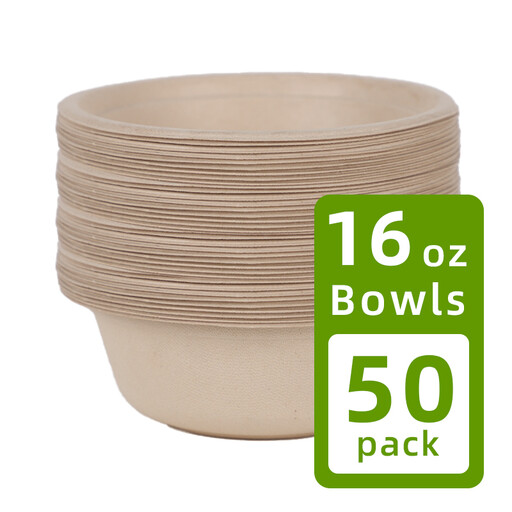
Why this product suits this profile: The pack of 50 round bowls is suitable for private celebrations, barbecues and smaller events where consistent portion sizes are important.
The 500 ml capacity makes portion planning more straightforward than an unspecified universal size. The product description also mentions leakproof and heat-insulating properties.
50 pieces per pack; round shape; according to the description, intended for outdoor dining, barbecues and gatherings.
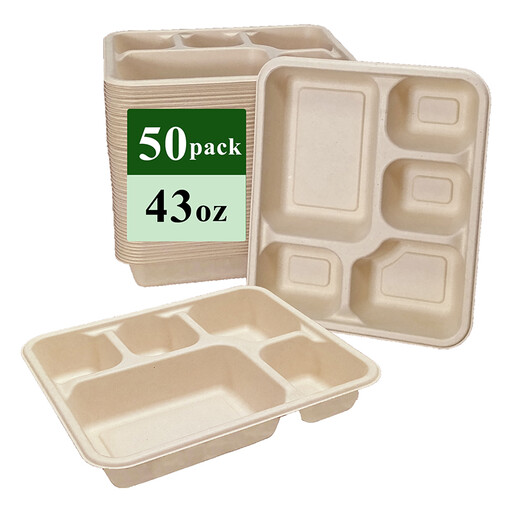
Why this product suits this profile: The five-compartment tray is ideal for users who want to serve the main course, side dishes and sauces separately.
The compartment layout reduces the risk of different foods mixing during serving. The manufacturer’s instructions state that it must not be used in a microwave or at high temperatures.
43 oz capacity; five compartments; 50 pieces per pack; according to the product details, intended for catering, picnics and takeaway.
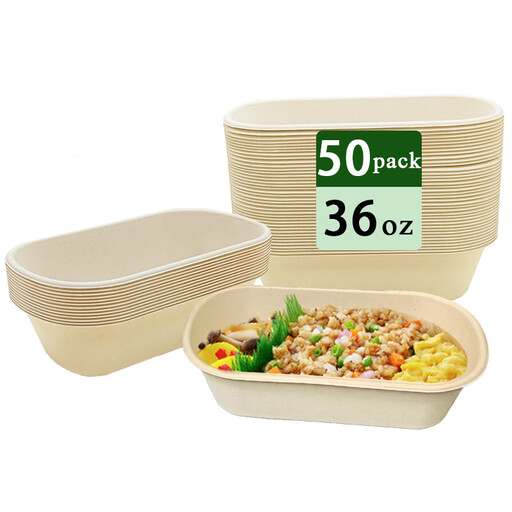
Why this product suits this profile: The pack of 50 is aimed at catering businesses, food trucks, delivery services and households that regularly need disposable bento boxes.
The stated capacity of 36 oz makes portion planning easier. At the same time, the product description makes clear that no specific environmental certification is claimed.
Bamboo fibre as the main material; 36 oz capacity; described as suitable for takeaway, meal prep, catering and picnics.
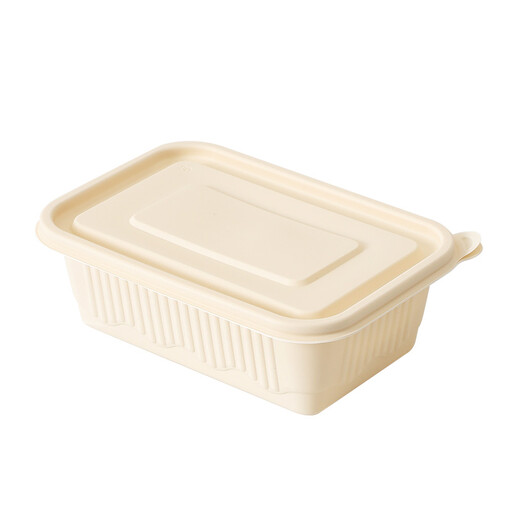
Why this product suits this profile: The 750 ml box with transparent lid is designed for salads, pasta, rice dishes, office meals and transporting portioned food.
The lid is included and, according to the product description, is designed to provide a tight seal and leakproof transport.
750 ml capacity; 20 pieces per pack; lid included; described as suitable for picnics, parties and delivery services.
We have put together a complete, regularly updated list of products that fully meet these strict selection criteria and the safety regulations applicable in the EU.
For sustainable catering packaging and disposable tableware for parties and catering, this short checklist is recommended:
That depends on the specific material and the manufacturer’s instructions. The 500 ml sugar cane bowls described are marketed for soup and hot-food applications. Temperature limits and safe-handling instructions should be checked before use.
Not as a general rule. The RuiBamboo five-compartment tray is not recommended for microwave use or high temperatures. The bento box includes instructions for brief reheating, but not for use in a conventional oven or near naked flames. The relevant product description should always be treated as the deciding source of information.
The unit price depends on factors including the material, pack size, lid and compartment layout. When planning costs, you should also take waste, storage, transport and the required portion size into account. Large packs can be practical for regular commercial use, while smaller sets require less storage space for private occasions.