
Lieferung heute & morgen

Qualitätsgarantie

Willkommens-Angebote freischalten: KOSTENLOSE Lieferung | Bis zu 80 % RABATT | Kostenlose 30-Tage-JoyPlus-Testphase
App herunterladen
When planning a party, catering an event, or organising a takeaway service, the question of appropriate tableware often arises. Sustainable disposable tableware promises a practical and more eco-conscious alternative to conventional plastic. However, the market can be overwhelming, and not every product marketed as "eco-friendly" delivers on its promise. Before you buy disposable tableware, it's crucial to understand the common pitfalls to make an informed decision.
This guide will help you identify the key features and find products suited for your specific use case.
To make the right choice, you should focus on objective and verifiable criteria. The following three parameters are crucial when you buy disposable tableware.
The material determines the stability, heat resistance, and intended use.
The functionality of the tableware must match the occasion.
Needs differ greatly between private parties and commercial use.
Here are some product recommendations tailored to specific use scenarios.
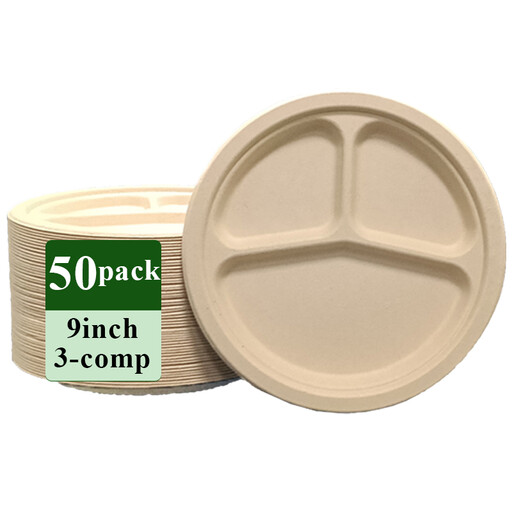
Why This Fits Their Persona: Ideal for guests who want to keep different foods like grilled items, salad, and dips neatly separated. The 50-pack is a suitable size for most private events.
The sturdy bamboo fibre material prevents sogginess from salad dressings or warm sauces and offers significantly more stability than simple paper plates.
The 3-compartment design ensures a clean separation of food. The material is suitable for contact with hot foods.
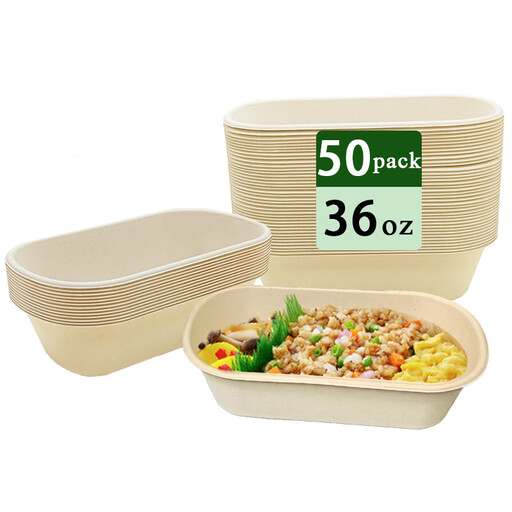
Why This Fits Their Persona: Designed for restaurants and food trucks that need reliable, high-capacity packaging for full takeaway meals. The 50-count bulk pack is designed for commercial needs.
The integrated clamshell design provides a secure closure for transport, avoiding the problem of separate, ill-fitting lids.
Large 36oz capacity (approx. 1065 ml) for full meals. The sturdy material is microwave-safe for reheating.
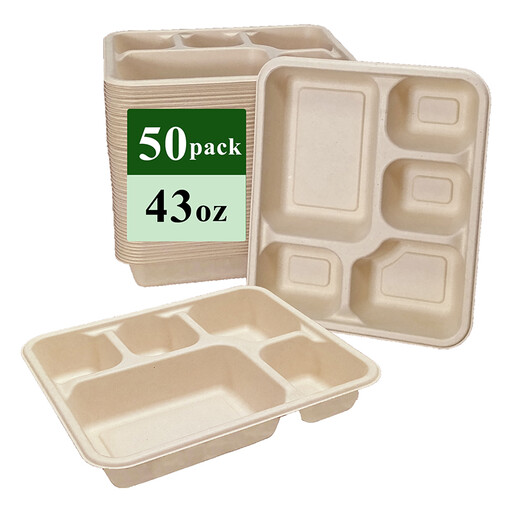
Why This Fits Their Persona: Perfect for caterers serving complex menus with many different components. The compartments allow for an appealing and clean presentation of the food.
Instead of a one-size-fits-all solution, this tray offers a highly specialised shape that prevents food from mixing, thus ensuring the quality of the catering.
Maximum organisation with 5 separate compartments. The very large 43oz capacity (approx. 1270 ml) is suitable for main courses at events.
We have compiled a comprehensive, up-to-date list of products that meet these strict selection criteria and comply with current regulations.
Materials like bamboo fibres and sugarcane (bagasse) are made from rapidly renewable resources. Their advantage over petroleum-based plastic is that they can be biodegradable under the right conditions. Whether a product is suitable for industrial composting or even home composting depends on its exact composition and any certifications it may have.
This depends on the specific product. Many disposable bowls and disposable meal boxes made from pure plant fibres are suitable for brief reheating in the microwave. Aluminium trays must never be put in the microwave. Always read the manufacturer's specifications on the product page before use to avoid damage to the appliance or the tableware.
Conventional disposable plates made of cardboard are often lightweight and can quickly lose their shape when in contact with moist or greasy foods. Tableware made from bamboo fibres or sugarcane is generally thicker, more structurally stable, and more resistant to moisture and heat. This often makes it more cut-resistant and provides an overall more reliable user experience, especially with hot meals.