If you want a clearly defined wholemeal content, look for bread labelled “wholemeal” at breakfast. If taste matters more as you make the switch, you can choose a mixed bread by checking its ingredients, without assuming it is the same as wholemeal bread. A baking mix is a good option if you want to bake your own bread and have time for the process. Check sweet spreads separately from the bread, particularly for sugar and allergens.
Which bread is right for you?
For breakfast lovers who prioritise wholemeal
If you want a clearly labelled wholemeal base, even under a sweet spread, the bread’s name and ingredients matter more than its dark colour or visible seeds. With packaged bread, you can also compare the fibre content per 100 g.
For anyone making a gradual change
If you want to ease into the taste of wholemeal, a bread made with both white and wholemeal flour could be a good choice. Check the ingredients rather than assuming that “multigrain” on the label or the bread’s colour tells you how much wholemeal it contains.
For home bakers who care about ingredients
If you want to make your own bread, a baking mix is a different shopping choice from a ready-made loaf. Read the ingredients on the specific mix and allow time for preparation, proving and baking.
What to look for when buying
Wholemeal bread
A good choice if: You prioritise a clearly defined wholemeal content over a milder flavour. According to the German Nutrition Society, bread labelled “wholemeal” must be made with at least 90% wholemeal flour or meal, measured against the total grain used.
The trade-off: Whether the flavour and texture work with your chosen spread depends on the particular bread.
Mixed bread
A good choice if: You’re looking for bread made with both white and wholemeal flour to help you make a gradual change in taste.
The trade-off: A wholemeal ingredient alone doesn’t make a mixed bread the same as bread labelled “wholemeal”.
Wholemeal bread baking mix
A good choice if: You want to bake your own bread and know what’s in the mix you choose.
The trade-off: Unlike ready-made bread, a mix takes time to prepare and requires the equipment specified in its instructions.
| Criteria |
What to check |
Who it matters to |
| Wholemeal content |
Look for bread labelled “wholemeal” and check the ingredients; compare fibre content per 100 g for packaged products. |
If the wholemeal base matters more to me than how the bread looks, I want to be able to tell from the label. This is the top priority for around 36% of consumers when choosing bread for breakfast. |
| Taste when making the switch |
For bread made with both white and wholemeal flour, read the ingredients list rather than judging by colour or seeds. |
A robust wholemeal bread isn’t my preferred starting point; first, I want to find a recipe whose taste works with a sweet spread. This is the main consideration for around 29% of consumers. |
| Ingredients and allergens |
For packaged bread, check the ingredients, allergen information and nutritional values; for unpackaged bread, ask about specific allergens. Check the spread separately. |
I need to know what’s in the bread and the topping, rather than assume the bread’s name tells me everything about the whole breakfast. This is the priority for around 21% of consumers. |
| Freshness and quantity |
Choose a pack or loaf size that suits how much you’ll eat, and plan to freeze individual portions if you want to keep some for later. |
If I only eat bread for breakfast from time to time, I don’t want to buy a larger loaf than I can reasonably use. Around 14% of consumers focus mainly on planning how much bread to keep in stock. |
Common bread-buying mistakes
-
Assuming dark or seeded bread is wholemeal
Colour, seeds and the word “multigrain” don’t prove how much wholemeal a bread contains. The German Nutrition Society says that bread labelled “wholemeal” must contain at least 90% wholemeal flour or meal, measured against the total grain used.
If wholemeal is your main priority, check the bread’s name and then read the ingredients.
-
Only checking the bread for sugar
A sweet spread contributes to the sugar content of your whole breakfast. EDEKA highlights the sugar content of sweet breakfast spreads such as jam and chocolate hazelnut spread; choosing wholemeal bread doesn’t change what’s in the topping.
Compare the nutritional information for the bread and spread separately, checking the stated serving size and the portion you’ll use.
-
Buying more bread than you can use in time
How long bread stays fresh depends in part on its type and how it’s stored. According to the consumer advice centre, wholemeal and rye bread can typically stay fresh for seven to nine days when stored optimally; this isn’t a guarantee for every loaf.
Choose an amount that suits you and freeze individual portions if needed. Don’t routinely store bread in the fridge; if you see mould, throw away the whole loaf.
-
Judging allergens in unpackaged bread by its appearance
You can’t reliably tell whether bread contains relevant allergens from its colour or seeds. The German Federal Ministry of Agriculture, Food and Home Affairs says that allergen information must also be provided for unpackaged food.
If you need to check for specific ingredients or allergens, ask for information about the particular bread before you buy it.
Brands and bread ranges to consider
REWE Beste Wahl
REWE sells a packaged spelt wholemeal bread under this own-brand label, in a 400 g pack. Product information lists the ingredients, allergens and nutritional values.
- The information for each bread makes it possible to compare ingredients and nutritional values with other packaged products.
- The name alone won’t tell you whether the bread’s flavour works with your sweet spread.
Lidl Unser Brot
Lidl’s “Unser Brot” range includes spelt, pumpkin seed, Weltmeister and crusty breads, and the company says it uses natural rye sourdough in these speciality breads.
- The range includes different types of bread, so you can choose according to the name of each product.
- Don’t assume a particular bread’s wholemeal content or allergen status from the range description; check its label.
Seitenbacher
Seitenbacher offers a wholemeal bread baking mix with sea salt and baking yeast for home baking.
- The listed recipe includes ingredients such as wholemeal rye flour, wholemeal wheat flour, fine spelt flour, yeast and salt.
- The mix contains wheat and rye, and isn’t a ready-to-eat breakfast bread; you’ll need to allow time to prepare it.
Joybuy products to help you choose
This selection includes bread baking mixes for home baking and ready-made bread for breakfast. Compare their names and pack information according to what matters most to you: clearly stated wholemeal content, a recipe that suits your taste or minimal preparation.
 No image available
Küchenmeister spelt wholemeal bread baking mix, 1 kg
For you if you want to bake your own breakfast bread and choose a spelt wholemeal mix. The pack contains 1 kg of baking mix; remember to allow time for the preparation steps needed to make the bread.
Don’t compare the nutritional values of a dry mix directly with figures per 100 g of ready-made bread.
View at Joybuy
 No image available
Alnatura organic spelt and green spelt bread, 500 g
A ready-made option for breakfast if you’re looking for bread made with spelt and green spelt, without baking it yourself. The pack size is 500 g.
If a specific wholemeal content or allergen information is important to you, check the details on the individual pack.
View at Joybuy
 No image available
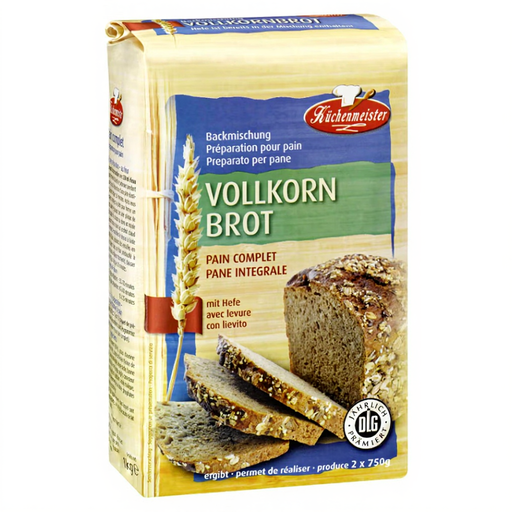
Küchenmeister wholemeal bread baking mix, 500 g
For you if you want to make your own bread using a 500 g baking mix. The word “wholemeal” in the product name alone doesn’t tell you how the individual flours in the mix are described.
If wholemeal content is your top priority, check the full ingredients list and the names of the flours used before buying.
View at Joybuy
 No image available
Mestemacher Sylt walnut wholemeal bread, 250 g
A ready-made breakfast option if you’re specifically looking for a walnut variety. The pack size is 250 g; bear walnuts in mind when checking the ingredients and allergens.
Check the full ingredients list and allergen information on the pack before choosing this bread for specific dietary requirements.
View at Joybuy
Frequently asked questions
How can I spot wholemeal bread when shopping?
Look for bread labelled “wholemeal”, rather than judging by its dark colour or visible seeds alone. According to the German Nutrition Society, at least 90% of the grain used must be wholemeal flour or meal for bread to be labelled this way. For packaged bread, it’s also worth checking the ingredients list.
Is mixed bread an option if wholemeal bread tastes too strong?
Yes. If you’d prefer a different flavour to start with at breakfast, you can choose bread made with both white and wholemeal flour. But don’t assume it’s the same as bread labelled “wholemeal”; check the ingredients if the wholemeal content matters to you.
How can I find out which allergens are in unpackaged bread?
Ask for the allergen information for that particular bread. The German Federal Ministry of Agriculture, Food and Home Affairs explains that this information must also be provided for unpackaged food; the product’s appearance or name isn’t a substitute.
How should I store wholemeal bread for several breakfasts?
Store the bread at room temperature in a dry place away from light, or freeze individual portions if you want to keep it for longer. The consumer advice centre says wholemeal and rye breads typically stay fresh for seven to nine days when stored optimally; the actual time depends on the bread and its storage conditions. If you see mould, throw away the whole loaf.


