Breakfast on your own, with no measuring
You’d rather open a set amount of dry cereal than weigh out muesli in the morning. For example, Seitenbacher offers 50 g sachets; check the packaging of any other product for its portion size.


A single-serve sachet is a handy choice for a sweet breakfast on your own if you’d rather open a pre-portioned amount than measure it out yourself. The right option depends on more than the sachet size: compare the nutritional values per 100 g and for the amount you actually eat, as well as the ingredients and allergen information.
A pre-packed portion makes breakfast easier when you’re eating on your own. The right portion size and recipe still come down to personal preference.
You’d rather open a set amount of dry cereal than weigh out muesli in the morning. For example, Seitenbacher offers 50 g sachets; check the packaging of any other product for its portion size.
You might be looking for chocolate, cinnamon or fruit flavours and want to compare sugar, fibre and protein. The German Federation for Food Law and Food Science (Lebensmittelverband Deutschland) recommends per 100 g as a common basis for comparison. A separately listed serving can also help you assess the amount you eat.
If you need to avoid certain ingredients, the information for the specific variety matters more than its brand name or flavour. Lebensmittelklarheit explains that common allergens are listed and highlighted in the ingredients list. Check for any precautionary allergen statements too.
First decide whether you want a pre-portioned amount of dry cereal or would rather measure it out yourself. Then compare the nutritional values on the same basis and check the ingredients of the variety you’re actually planning to buy.
| Criterion | What to check when buying | Who it matters most to |
|---|---|---|
| Set single-serving amount | Net weight per sachet and, where applicable, the number of sachets in the pack. Extra milk or other ingredients are not part of the dry amount. | If I’m having breakfast on my own, I want to open a pre-portioned amount without weighing anything. Around 42% of consumers put this easy portioning first. |
| Sugar and other nutritional values | Compare sugar, fibre and protein per 100 g, then look at the values for the amount of dry cereal you actually eat. | I want to tell sweet varieties apart without assuming their sugar content from the flavour name. For around 33% of consumers, comparing these nutritional values is the priority. |
| Ingredients and allergens | Read the ingredients list, highlighted allergens and any precautionary allergen statements on the specific pack. | If I need to avoid certain ingredients, the exact recipe matters more to me than the portion size. For around 25% of consumers, checking the ingredients comes first. |
For porridge, it’s also important to check what the nutritional values refer to: values per 100 g of prepared porridge cannot be compared directly with values per 100 g of dry cereal.
A sachet gives you a set amount of dry cereal, but it doesn’t tell you how much you need for breakfast. The manufacturer’s suggested serving is there as an extra guide.
Compare the nutritional values per 100 g and use them to assess the amount you actually eat.
Chocolate, dried fruit and other ingredients can all contribute to the sugar content. Lebensmittelklarheit distinguishes between the ingredients in a recipe and the total sugar from all ingredients shown in the nutrition table.
Read the sugar value per 100 g alongside the ingredients list, then take your portion size into account.
Ingredients vary between varieties. Even individually packed muesli may contain allergens or precautionary allergen statements that are relevant to you.
Check the labelling on each specific pack, especially if you need to avoid certain ingredients.
Single-serve sachets make portioning easier, but they mean several separate packaging units. With a larger pack, you can measure out the amount of dry cereal you want yourself.
Compare both formats if packaging waste matters to you as well as your morning routine.
The brands below offer a range of muesli and cereal products. Check each product to see whether a particular variety is available as a single serving and what ingredients it contains.
Seitenbacher sells muesli in portion sachets, including Bergsteiger Müsli and chocolate-flavoured cup muesli.
The range includes sweet cereals such as Cookie Crisp and LION.
Kellogg's Germany includes brands such as Frosties, Smacks, Tresor, Froot Loops and Crunchy Nut in its portfolio.
familia offers a variety of muesli ranges, including Genuss, Protein and varieties labelled “Lower sugar”.
This selection includes sweet cereals in mini packs and individually portioned porridge for breakfast on your own. Porridge is a warm oat-based breakfast, so don’t treat it as the same as dry cereal when preparing it or comparing nutritional values.
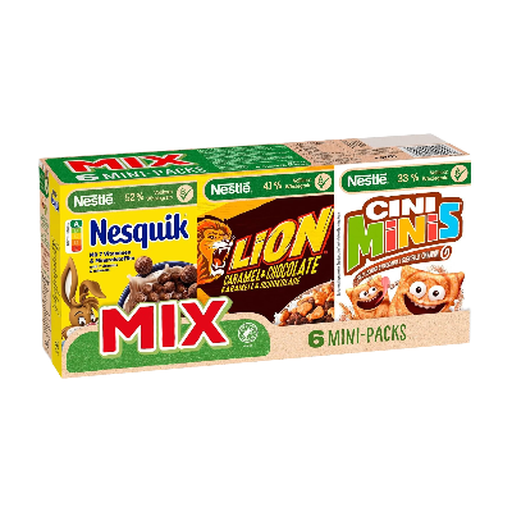 No image available
A handy choice for a sweet breakfast on your own when you’d like to open a small pack of cereal. The total pack is labelled 200 g; check the weight of each mini pack if you want to assess its nutritional values.
Check the ingredients and allergen information for the variety you choose too.
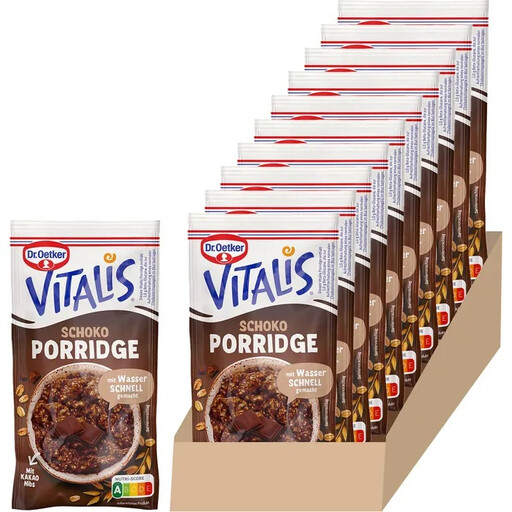 No image available
An option for breakfast on your own if you’d prefer individually portioned chocolate porridge to dry cereal. The pack states that it contains ten 61 g portions.
Only compare nutritional values when they’re based on the same measure, and follow the preparation instructions on the pack.
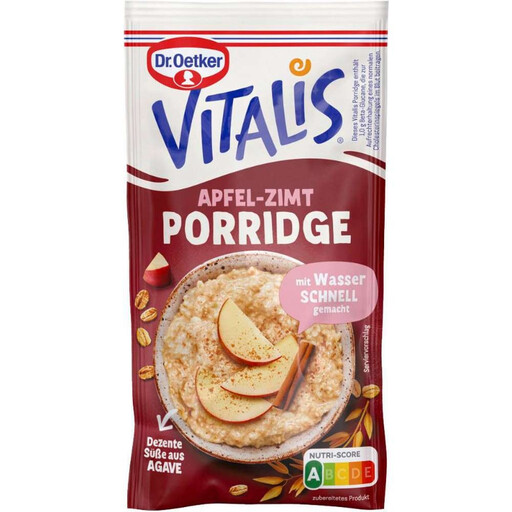 No image available
For a single-serving porridge with apple and cinnamon flavour at breakfast on your own. The pack states that it contains 58 g.
When comparing nutritional values, check whether they refer to the dry or prepared product. Also check the ingredients on the specific pack.
No. A sachet simply contains a set amount of dry cereal; it doesn’t tell you how much is right for you. Use the nutritional values per 100 g to compare different products, then apply them to the amount you actually eat.
Both are useful for different reasons: the ingredients list shows what the product is made from, while the sugar value in the nutrition table includes sugar from all ingredients. Lebensmittelklarheit notes that this includes, for example, sugar from dried fruit. Compare products per 100 g first, then look at the values for your portion.
Yes. If you need to avoid certain ingredients, check the specific pack even if you know the variety. Read the highlighted allergens in the ingredients list and check for any precautionary allergen statements. The portion format doesn’t tell you whether the recipe is suitable for you.
Follow the guidance for the packaging material and your local recycling instructions. Don’t assume that a sachet is paper packaging just because of how it looks. Germany’s Federal Environment Agency explains that household packaging waste is collected through the relevant recycling systems.