Reheating individual portions
You want to serve prepared sweet potatoes hot, without any extra browning, and mainly need a microwave that’s easy to use and fits your dish.


If your sweet potatoes are already cooked and you simply want to serve them hot, a solo microwave should be enough. The key question is whether your serving dish will fit inside. A model without a turntable may be more practical for a square or larger dish, while a grill or convection function is only useful if you also want to brown or bake food. Remember to plan for cooling, transport and thorough reheating before serving.
You want to serve prepared sweet potatoes hot, without any extra browning, and mainly need a microwave that’s easy to use and fits your dish.
You want to heat a larger or square dish, so you’ll need to check the usable surface area and internal dimensions.
You’re making the food before dinner, so cooling, transport and when to reheat it are just as important to your plans as the appliance itself.
A good fit if: You mainly reheat portions and your dish, with its contents, fits on the turntable.
The trade-off: Large or square dishes need room to rotate freely; there’s no grill or convection function.
A good fit if: Your square serving dish wouldn’t sit comfortably on a turntable.
The trade-off: Even a larger, flat cooking surface doesn’t remove the need to spread out or stir the food and check that it’s heated through.
A good fit if: As well as reheating, you’ll make use of a browned finish or extra baking options.
The trade-off: Check the accessories, required space and cleaning, too. Extra functions don’t replace safe food storage or temperature checks.
The German Federal Institute for Risk Assessment recommends heating food to 70 °C for at least two minutes throughout. This is guidance for the food, not a guaranteed feature of the appliance.
| What matters | What to look for when buying | Who it matters most to |
|---|---|---|
| Reheating evenly | Check the power settings and plan to spread out or stir the food while it heats. | If I want to serve prepared pieces hot, I need to be able to check that the thicker parts are heated through, too. Around 36 % of consumers put even reheating first. |
| Room for the serving dish | Measure the width, depth and height of your dish; if the microwave has a turntable, check its diameter, too. | If I’m taking a large or square dish, I want to know in advance whether it will actually fit inside with the food in it. Around 29 % of consumers prioritise having room for their serving dishes. |
| Preparing food and transport | Plan for cooling, transport and where you’ll reheat the food before serving. | If there’s a gap between preparing the food and eating it, I need to work out how to keep it cool on the way and reheat it when I arrive. Around 21 % of consumers prioritise a routine they can plan in advance. |
| Extra browning | Choose a grill or convection function only if you’ll use it for other tasks, too; check the accessories and space required. | If I want a browned finish, I need more than simple reheating. Around 14 % of consumers put extra browning first. |
For food prepared in advance, the German Federal Institute for Risk Assessment recommends considering what refrigeration will be available where it will be eaten and transporting containers in a cool bag. A larger microwave won’t make up for a lack of refrigeration.
For the Severin MW 7772, the manufacturer distinguishes between a 28 l capacity and an effective usable capacity of 16,4 l. A high litre figure alone doesn’t tell you whether your serving dish will fit.
Measure your dish and compare its dimensions with the cavity. If you’re choosing a model with a turntable, check its diameter, too.
If your serving dish doesn’t fit, you may need to use a second dish or reheat the food in several batches.
An appliance setting doesn’t prove that every part of the food has reached a sufficiently high temperature.
Spread out or stir the food as it heats, and check thicker pieces in particular.
A solo microwave and a combination model do different jobs. For sweet potatoes that are already cooked, an extra function is only relevant if you also want to brown or bake food.
First decide whether you just want to serve food hot or make use of other functions, then compare the accessories, cavity and overall size.
Functions you don’t need can mean more space required, extra accessories and more cleaning.
The MW 7772, with a turntable, and the MW 7762, with a flat glass base, offer different solutions for different dish shapes.
The NN-SD37 solo microwave is worth considering if you’re looking for inverter power settings and a larger cavity.
According to LG, the NeoChef MH6535GIS combines a microwave with a grill and inverter technology, making it an option if you want a grill function as well as reheating.
The freestanding FFL023MS2 solo microwave is an option to compare if you use smaller dishes and want straightforward controls.
This selection includes solo and combination microwaves for reheating, as well as models for larger or square dishes and extra grilling or baking.
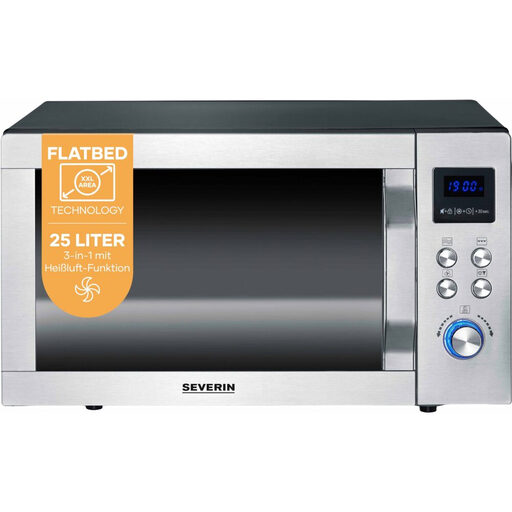 No image available
The glass base without a turntable may suit square serving dishes, provided their dimensions fit the cavity.
Features listed include microwave, grill and convection functions, as well as 10 power levels.
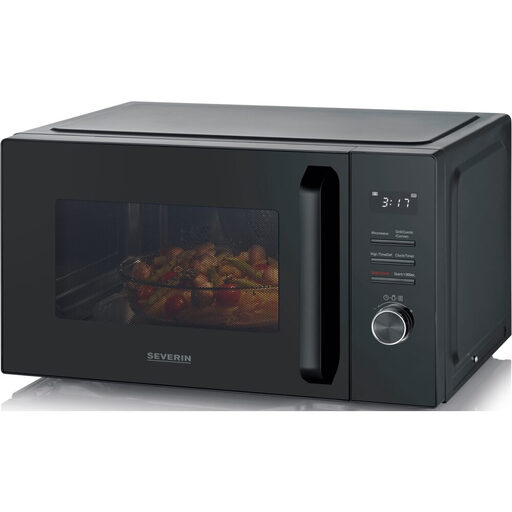 No image available
This combination model is a good fit if you want to use the grill or convection function as well as reheat food.
The title lists 1.000 W; other features include seven power levels, a turntable with a diameter of 31,5 cm and two grill racks. Your dish needs to fit on the turntable.
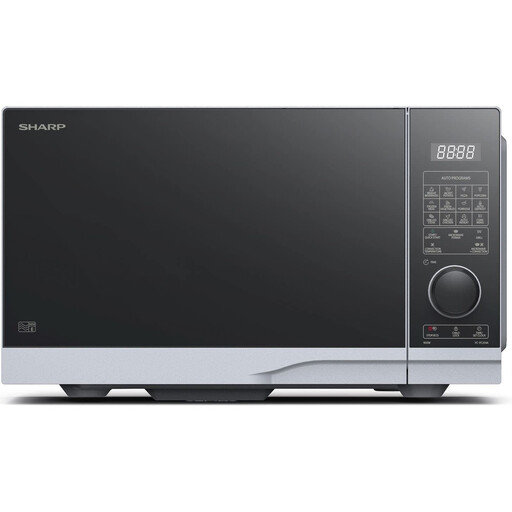 No image available
An option if you want to use your microwave for grilling or baking as well.
Listed features include 900 W microwave output, 10 power levels, a turntable with a diameter of 288 mm, a grill rack and a baking tray. Check that your dish fits on the turntable.
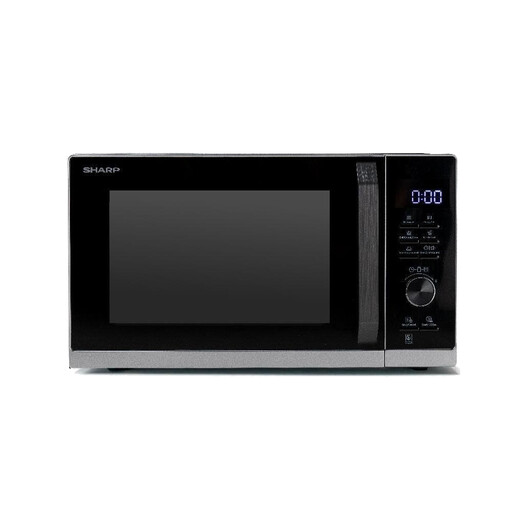 No image available
This model is worth considering if you want to use the grill and convection functions as well as reheat food.
The product title lists 27 l, 900 W microwave output, 1.000 W grill output and 2.100 W convection output. Other listed features include six power levels, a glass turntable and two grill racks.
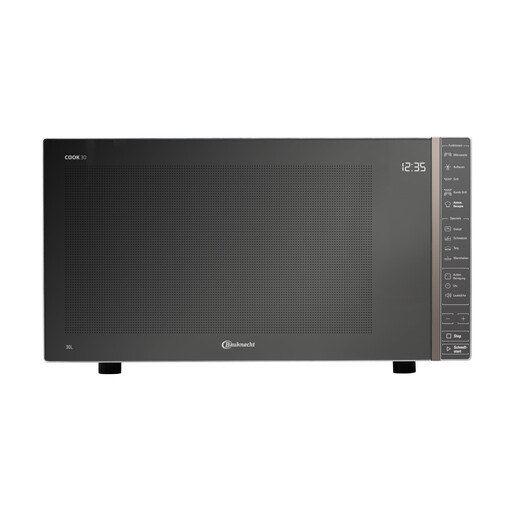 No image available
This model is worth considering if you’re planning to grill or steam food as well as reheat it.
The product title lists 900 W and a 30 l cavity. Other listed features include seven power levels, a turntable with a diameter of 31,5 cm and a square steam container.
Spread out or stir the food as it heats, and check the thicker pieces, too. The German Federal Institute for Risk Assessment recommends heating food to 70 °C for at least two minutes throughout; a wattage setting or automatic programme alone can’t confirm this.
Plan to cool the food promptly, keep it properly chilled during storage and transport, and reheat it when you arrive. The German Federal Institute for Risk Assessment recommends keeping perishable food in the fridge at 2 °C to a maximum of 7 °C, and keeping hot food at a minimum of 60 °C. The right approach also depends on the other ingredients and how long there is before serving.
Only if the container’s instructions say it’s suitable. Check the approved temperature and maximum wattage, and don’t continue using damaged plastic tableware. A suitable glass or ceramic dish may be an alternative. The consumer advice centre recommends checking the instructions for microwave-safe dishes.
Your statutory rights against the seller are separate from any voluntary guarantee. If a product is faulty, you can initially ask for it to be repaired or replaced. Many online purchases also come with a 14-day right to cancel, although statutory exceptions may apply. The consumer advice centre explains these rights.
No. According to consumer information from the European Union, electrical and electronic equipment is among the product groups that must carry the CE marking. CE represents the manufacturer’s declaration of conformity; it doesn’t guarantee a particular reheating result. The German Federal Institute for Occupational Safety and Health describes the GS mark as a voluntary safety mark awarded independently, not a performance or durability test.