What should you look for when buying?
First decide whether you want the airflow mainly to reach your armchair or to move between several seats. Then check noise, speed settings and power supply for the intended location.
| What you need |
What to check before buying |
Who is it particularly relevant to? |
| Quiet operation and a gentle breeze |
Noise level for each setting; adjustable speeds |
If I want as little noise as possible while reading or chatting, I check the setting I’ll actually use. Around 36% of consumers put quiet operation first. |
| Airflow directed at my armchair |
Tilt and footprint; a sufficiently low setting rather than just maximum airflow |
If I mainly want a breeze at my seat, I want to be able to adjust the airflow to suit me from nearby. Around 29% of consumers prioritise a targeted breeze. |
| Airflow shared between several seats |
Switchable oscillation; suitable tilt and direction |
If several seats are in use, I want the airflow to move around rather than blow on one person continuously. Around 21% of consumers prioritise airflow across several seats. |
| A spot without an awkward cable |
For mains-powered models, cable length and routing; for battery-powered models, runtime on the setting you need and charging options |
If the best spot isn’t near a socket, I want to be able to place the fan there flexibly. Around 14% of consumers prioritise being able to position a fan freely without an awkward cable. |
Suitable products at Joybuy
These table fans are designed to direct airflow at your seat; one model also offers oscillation for several seats.
 No image available
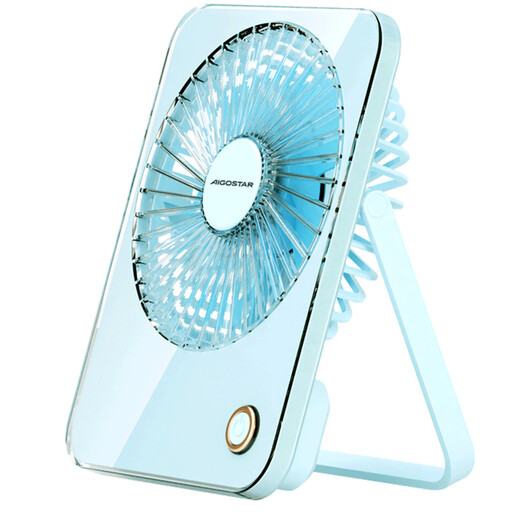
Aigostar portable USB table fan, 3-inch
For a breeze you can direct at your seat, with the option to place the fan away from a socket.
Built-in 3600 mAh battery, USB charging and three speeds. The stand folds through 180°.
View product at Joybuy
 No image available
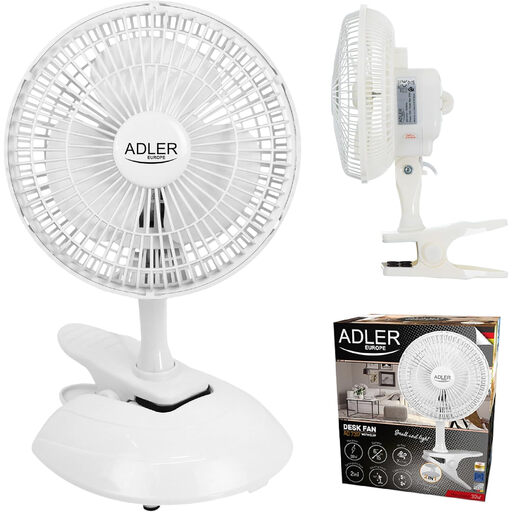
ADLER AD 7317 table fan with clip
An option for a seat where you may want to clip the fan in place or set it on a surface, depending on your surroundings.
Blade diameter: 15 cm; two speeds; adjustable tilt up to 16°. The description lists airflow of up to 7 m³/min and a noise level of 46 dB. A clip and stand are included.
View product at Joybuy
 No image available
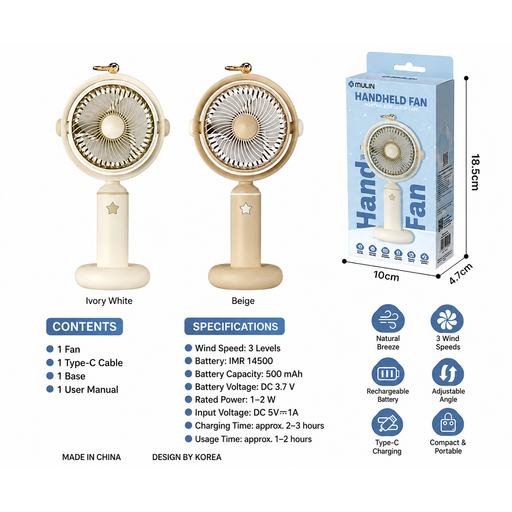
mulin MU-SFS804 mini fan
For personal airflow at your seat if you’re considering a small, rechargeable fan.
500 mAh battery, USB-C charging, three speeds and an adjustable angle. The stated runtime is around 1–2 hours. According to the product name, the colour is sent at random.
View product at Joybuy
 No image available
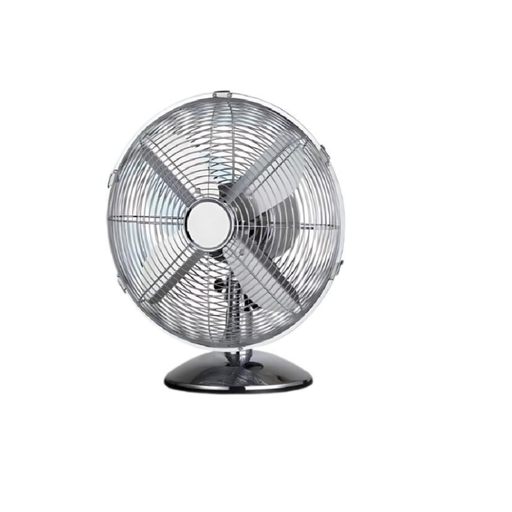
AKAI table fan, 30 cm, 35 W
For airflow that moves between several seats, provided the oscillation suits your seating arrangement.
Three speeds, automatic left-to-right oscillation and a manually tilting head. The product name lists four aluminium blades, a metal casing and a carry handle.
View product at Joybuy
Frequently asked questions
Will a table fan cool down the whole living room?
No. According to the German Environment Agency, a fan won’t lower the room temperature, although the airflow can cool your skin. It isn’t a substitute for measures to reduce heat in the room.
Will a fan replace ventilation when several people are in the room?
No. A circulating fan doesn’t exchange indoor air for outdoor air. The German Federal Ministry for the Environment explains that ventilation improves indoor air quality and that exhaled carbon dioxide can build up in rooms.
What should I consider when positioning and cleaning the fan?
Direct the airflow towards the seat you want to reach, and route a mains cable to suit the shared space as much as possible. Follow the instructions for your particular model for operation and cleaning. If you have a battery-powered fan, make sure there’s a suitable charging option.
What are the ongoing running costs?
Energy use depends on the particular fan, the setting you choose and how long you use it. IMTEST found differences in energy consumption among the table fans it tested. To work out your own costs, you’ll need your model’s energy consumption figure and your electricity tariff.
What should I know about labelling and disposal in Germany?
Check the details for the particular fan you choose and the regulations that apply to that product. The European Union explains that, where required, CE marking represents the manufacturer’s declaration of conformity; it is not an independent test mark. Electrical appliances must not go in unsorted general waste. According to the Verbraucherzentrale, local authorities provide collection points where they can be handed in free of charge.


