For a quiet read on the sofa
If you read in the same seat, you’ll want a gentle breeze directed where you need it. If the room also serves as a bedroom, noise on a low setting is especially worth considering.


If you have a regular seat on the sofa, an adjustable table fan with a finely controlled low setting is a good choice. If you want to reach the bed or other areas too, a suitable oscillation function is also important. Check how noisy it is on the setting you plan to use, make sure you have a stable surface for it and consider how it’s powered. A fan moves air and can cool your skin, but it won’t lower the room temperature (German Environment Agency).
If you read in the same seat, you’ll want a gentle breeze directed where you need it. If the room also serves as a bedroom, noise on a low setting is especially worth considering.
If you use different spots around the room, check the oscillation range and where the fan can be placed rather than focusing solely on its maximum airflow.
If you want to position the fan wherever it suits you, compare battery operation, charging needs and runtime on your preferred setting.
A good fit if: you usually sit in the same spot on the sofa and want to direct the airflow towards you.
The trade-off: At close range, a comfortable low setting matters more than maximum airflow. A fixed stream won’t automatically reach other spots.
A good fit if: you want to circulate air around other seating or sleeping areas as well as the sofa.
The trade-off: Oscillation can extend the airflow’s reach, but you’ll need enough space for the fan and its oscillation range at the intended spot.
A good fit if: there’s no conveniently accessible socket where you want to place it, or you move the fan around frequently.
The trade-off: Check what’s included, how often it needs charging and how long it runs on the setting you plan to use.
For a cooling breeze by the sofa in a bedroom, the key things to consider are airflow at close range, quiet operation, direction and power consumption during extended use.
| What you need | What to look for | Who it matters to |
|---|---|---|
| Comfortable airflow by the sofa | Check for low speed settings and an adjustable tilt, and consider how far you’ll be from the fan. | If I’m sitting close to the sofa, I want to adjust the breeze finely and direct it straight at me. Around 36% of consumers prioritise comfortable, adjustable airflow. |
| Quiet operation when relaxing | Check which settings the noise figures apply to, and distinguish between minimum and maximum levels. | When I’m reading or falling asleep, I want to use the fan on a low setting without being disturbed by the noise. Around 29% of consumers prioritise quiet operation. |
| Positioning and available space | Check the footprint and oscillation range. For rechargeable models, consider charging and runtime on your preferred setting too. | If I move between the sofa and bed, or there’s no socket where I want to put the fan, I need a suitable position and direction. Around 21% of consumers see this flexibility as a priority. |
| Power consumption during extended use | Use the power consumption for the setting you’ll use and your own operating hours to work out the cost. | If I use a fan frequently, I want to estimate its power consumption based on how I use it, rather than relying only on the maximum wattage. Around 14% of consumers prioritise running costs. |
A table fan moves air and cools your skin, but it doesn’t remove heat from the bedroom.
Choose a comfortable airflow for the sofa. Shading and suitable ventilation can also help with an overheated room.
Noise on the setting you actually use can be especially important in a bedroom. Minimum and maximum figures refer to different settings.
Compare the figures for the settings that suit you and, if possible, look for a test or demonstration of the relevant setting.
The product description and specification for the Rowenta VU2740F0 contradict each other on automatic oscillation.
Before buying, ask for the function to be confirmed for the exact model number, and don’t assume similar variants are identical.
Meaco offers table fans for shoppers looking for finer control or airflow in multiple directions. The Sefte 10 Table Pro also offers battery operation.
The Turbo Silence table models are aimed at shoppers who want to compare multiple settings and specific noise figures.
The HT-900E is worth considering as a simple table fan for air circulation.
The Cool CF1 is a bladeless table fan for shoppers who value its design, easy cleaning of the exterior and a Sleep mode.
This selection includes table fans for directing a breeze towards your regular seat, as well as rechargeable options for flexible placement.
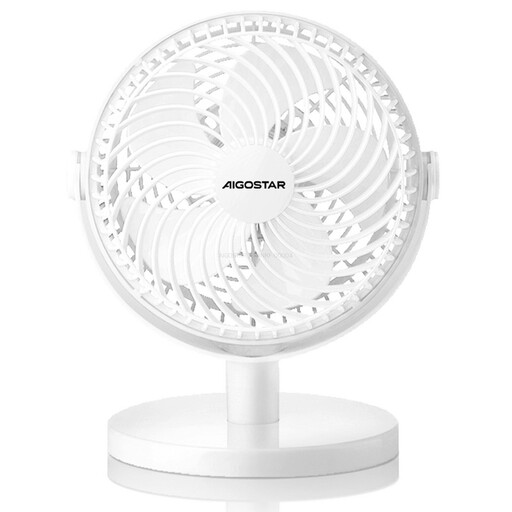 No image available
Direct the airflow towards your regular seat with the adjustable head for a focused breeze.
USB powered; two adjustable speeds; 360° adjustable head.
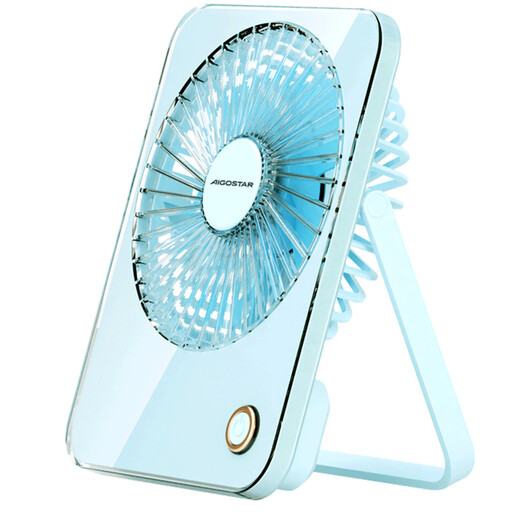 No image available
Battery power is ideal if you don’t want a mains cable running to the fan while it’s in use.
3600mAh battery and USB charging; three speed settings; 180° foldable stand for placing on a surface or hanging up.
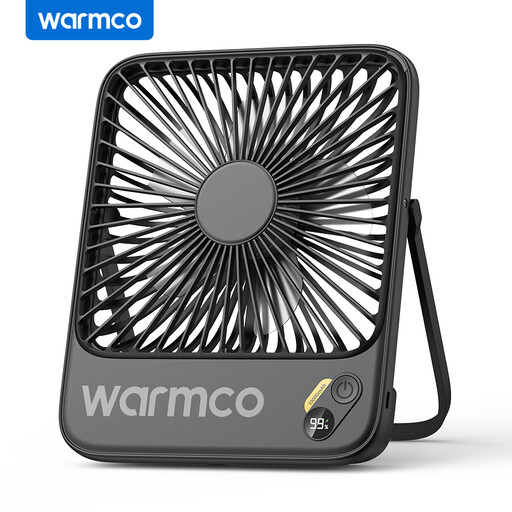 No image available
Battery power is a practical option if there’s no socket nearby. The runtime figure applies only to the lowest setting.
10,000 mAh battery and USB-C; four speeds; under 40 dB on the lowest setting; up to 24 hours’ runtime on this setting.
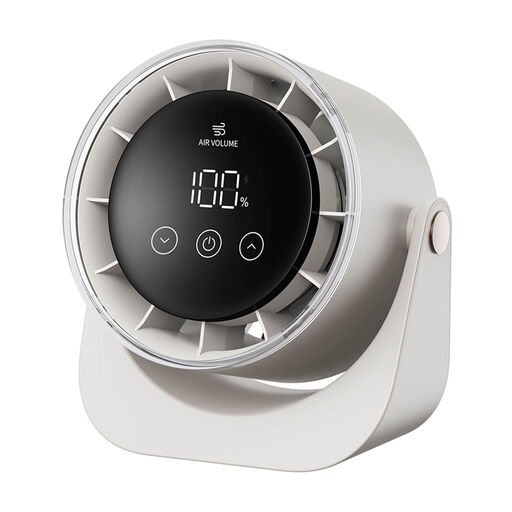 No image available
With 100 speed settings to choose from, you can fine-tune the breeze towards your seat.
4000 mAh battery; 90° tilt; up to 10 hours’ runtime on a low setting.
 No image available
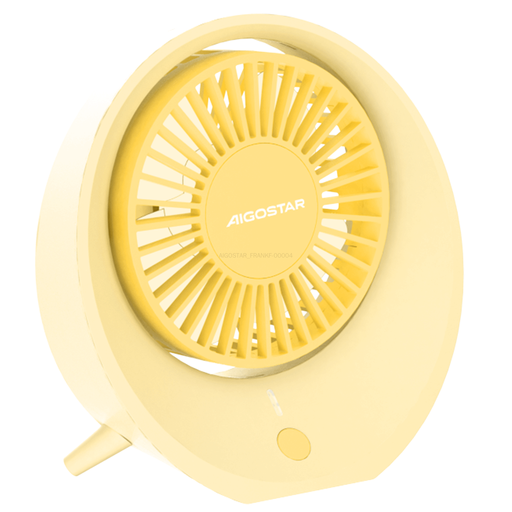
At 104 mm, its compact housing is a good option if you have limited space by the bed or sofa.
Built-in battery and USB charging; three speeds; 3 W power consumption.
No, a fan won’t lower the temperature in the room. According to the German Environment Agency, moving air cools your skin. Shading and ventilation can also help with an overheated room, particularly when the outside air is cooler in the evening.
Check which setting each figure applies to. Minimum and maximum figures refer to different settings, so they don’t necessarily tell you how loud the fan will be on the setting you prefer.
The information for this model isn’t clear: the product description lists automatic oscillation, but the specifications say it doesn’t have this feature. Ask for it to be confirmed for the exact model number before buying.
Multiply the power consumption in watts by the number of hours it’s used, then divide the result by 1,000 to get the energy consumption in kWh. Multiply this figure by your own price per kWh. If possible, use the power consumption for the setting you actually use.
The EU Low Voltage Directive 2014/35/EU covers electrical equipment rated at 50 to 1,000 V AC and 75 to 1,500 V DC. Among its checks, the German Federal Network Agency looks for a CE marking, identifiable manufacturer details and German instructions with the required safety warnings. For USB or battery-powered devices, don’t assume this voltage directive applies without checking the specific product. The CE mark is not an independent quality test mark.