
Lieferung heute & morgen

Qualitätsgarantie

Willkommens-Angebote freischalten: KOSTENLOSE Lieferung | Bis zu 80 % RABATT | Kostenlose 30-Tage-JoyPlus-Testphase
App herunterladen
A high-quality table is often the centrepiece of the home—whether it's the solid wood dining table where the family gathers or the new desk in your home office. But everyday life is full of hazards: scratches from keys, stains from spilled drinks, or wear and tear from daily use. A transparent table protector seems like the ideal solution to protect the surface without compromising its appearance.
However, the selection process often leads to disappointment. Many products don't live up to their promises. Before you make a decision, you should be aware of the most common pitfalls that can lead to a bad purchase.
To avoid these problems, it's important to focus on objective product features. Three parameters are crucial for selecting a durable and functional table protector.
The thickness of the protector is a direct measure of its protective function and durability.
The most important rule is: a crystal-clear, smooth transparent PVC tablecloth is primarily suitable for matte, oiled, waxed, or textured surfaces (e.g., wood with a visible grain). On these surfaces, the protector can lie flat without forming unsightly air bubbles.
For tables with a high-gloss finish, glass tops, or other very smooth, sealed surfaces, a standard transparent protector is not recommended. The trapped air leads to a blotchy appearance.
Calling a table protector heat-resistant is accurate, but the limits must be clear. Most high-quality PVC protectors are designed for temperatures up to approx. 80°C (176°F).
Based on these objective criteria, we have put together a few products for different user profiles.
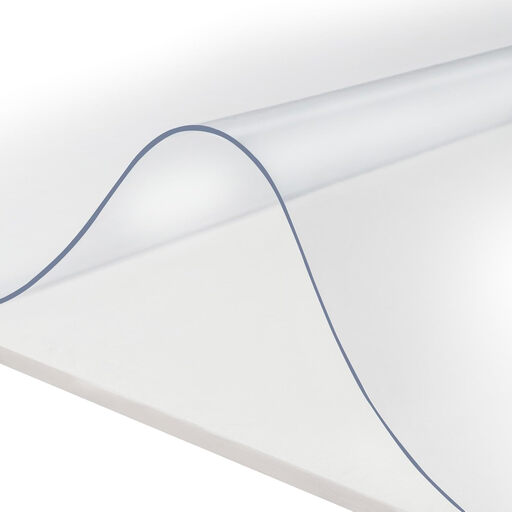
Why this product is a great fit: Ideal for the family dining table. The robust 2 mm thickness withstands crayons, spilled juice, and daily use. Cleaning is straightforward, which saves time in a hectic household. A practical and durable dining table protector.
With a 2 mm thickness, it bypasses the "thin-film fallacy." The protector offers genuine mechanical protection and lies stable without easily curling.
The high material density ensures a durable, flat-lying protective layer that is waterproof and easy to clean.
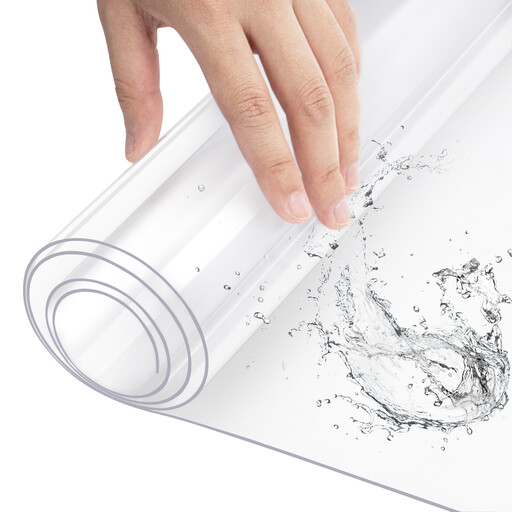
Why this product is a great fit: A good choice for desks, side tables, or craft areas where basic protection from scratches and liquids is sufficient. The 1 mm thickness is a good compromise between protection and cost for less heavily used surfaces.
Although thinner, the manufacturer states this protector is significantly more robust than standard films, offering solid basic protection without straining the budget.
Flexible and easy to cut to size. It provides an effective, waterproof, and washable protective layer for various applications.
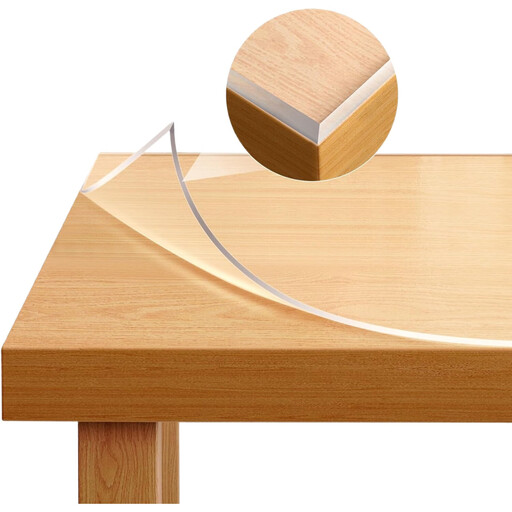
Why this product is a great fit: For anyone who wants to combine maximum protection with a premium feel. The beveled 45° edge is not just a visual detail; it also provides greater comfort, as your forearms can rest comfortably without feeling a hard edge.
This product combines a robust 2 mm thickness with a thoughtful design feature that goes beyond basic protection and enhances user comfort.
The beveled edge (called a "V-cut" by the manufacturer) reduces the risk of scratches and provides a more comfortable resting surface, which is especially beneficial for desks or dining tables.
We have compiled a complete, up-to-date list of products that fully meet these strict selection criteria and relevant safety regulations.
For transport reasons, the protectors are delivered rolled up. After unpacking, it may take some time for it to lie completely flat. To speed up the process, you can spread the protector out on the table and weigh down the corners with heavy books. Gently warming it with a hairdryer on a low setting can also help the material to relax.
Yes, the protectors can usually be cut easily. Use a sharp utility knife or sturdy scissors and a long ruler or a metal straightedge to ensure a straight cut. Some manufacturers note that the material can shrink minimally over time (approx. 1–5 mm). It may be wise to account for this when cutting.
This phenomenon occurs when a completely smooth protector is placed on an equally smooth, non-porous surface like glass, high-gloss lacquer, or polished marble. Tiny air pockets are created that cannot escape. For such surfaces, these crystal-clear protectors are not the first choice. The products featured here are best suited for wooden surfaces or tables with a matte or slightly textured finish.