
Lieferung heute & morgen

Qualitätsgarantie

Willkommens-Angebote freischalten: KOSTENLOSE Lieferung | Bis zu 80 % RABATT | Kostenlose 30-Tage-JoyPlus-Testphase
App herunterladen
A table lamp should do more than just look decorative. It needs to stand securely in its intended spot, complement your existing décor, and be straightforward to use day in, day out. Whether it's for the bedroom, living room, study, hallway or a café, the key factors to consider before buying are dimensions, lamp base, bulb type, wattage and power supply.
Many purchases go wrong because product images don't show the important details. A lamp that looks compact in a photo can take up too much room on a bedside table. A decorative glass shade might be more fragile than you'd expect. And a lamp with the right base isn't automatically compatible with the bulb you already have at home.
A decorative table lamp with a dark or heavily textured shade can create interesting shadows, but it may not distribute light evenly. That can work well for a cosy atmosphere in the living room. As task lighting, however, this kind of light distribution is often less practical.
With a table lamp with a glass shade, you should also pay attention to the shape and transparency of the glass. A clear shade has a very different effect from frosted or tinted glass. The product description should make it clear whether the bulb is included and what type of light source can be used.
An E27 table lamp requires an E27 bulb, while an E14 table lamp is designed for smaller bulbs. The two fittings are not interchangeable. You also need to check the maximum wattage stated.
Important: the wattage figure describes the electrical power consumption, not just the brightness. With LED bulbs, the lumen value is therefore also relevant. A compact LED lamp with 30 lumens, for example, is better suited as an accent or orientation light than for reading.
A cordless table lamp needs a rechargeable battery or disposable batteries. Information about battery life depends on the brightness setting, how you use it and the charge level. With battery-operated models, you should check whether batteries are included and how they are replaced.
With corded models, on the other hand, the cable length, switch position and plug type all matter. A 1.6-metre cable may be enough for a side table, but you should measure the distance from the lamp's position to the socket before buying.
Measure the available surface area, including the distance to the wall, headboard or any decorations. The key factors are:
A lamp made of metal, wood or glass can vary in weight depending on its construction. For narrow shelves, a compact base makes sense. With taller lampshades, a wider base improves stability.
A wooden table lamp brings visible material texture into the room and often suits natural or Scandinavian-style interiors. Metal frames tend to look cleaner or more industrial. A table lamp with a fabric shade filters the light and can create a softer atmosphere. Fabric, wood and metal should be cleaned regularly with a dry cloth or according to the manufacturer's instructions.
With a vintage table lamp featuring an open metal pattern, light and shadow effects are cast on the walls. That is a design feature, but it does not provide even room lighting. So check whether the lamp is intended as an accent light or as the main light source.
Check the following before ordering:
A VDE-approved cable or a corresponding plug is a concrete feature to look for in the product description. For operation, you should follow the enclosed instructions and the stated power limits. A dimmable lamp also requires a dimmable bulb and, if necessary, a compatible dimmer.
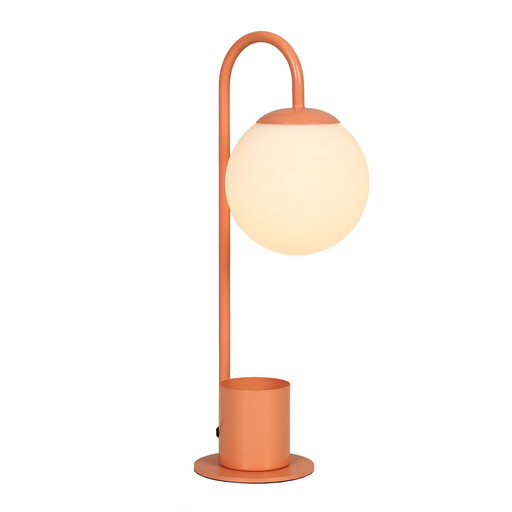
Why this product suits the profile: The compact globe shape with white jade glass works well on a bedside table, side table or in the hallway. An integrated pen holder extends its use in the study.
The description states the fitting, maximum wattage and dimensions of both the shade and the base. This means you can check the space required and the correct E14 bulb before buying.
White glass shade, metal construction, E14 fitting, maximum wattage of 25 W and a 1.6 m connection cable.
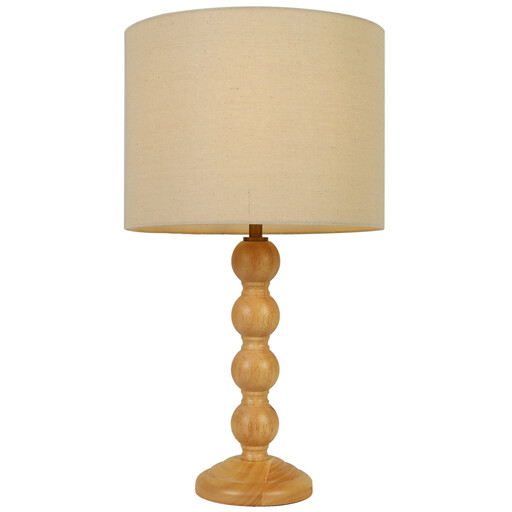
Why this product suits the profile: Rubber wood and a cylindrical fabric shade combine natural materials with a classic shape for the living room or bedroom.
The material details and shade dimensions are clearly stated. This makes it easier to coordinate with your furniture and reduces the risk of choosing a lampshade that is too large.
Wooden base, fabric shade, E27 fitting, maximum wattage of 40 W and a 1.6 m cable.
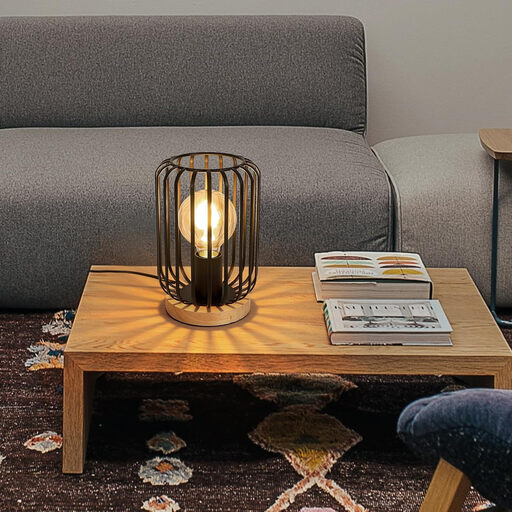
Why this product suits the profile: The open, lantern-shaped metal pattern suits vintage interiors, cafés, bars, as well as living rooms and studies.
The product details clearly state the E27 fitting, the maximum wattage of 60 W and that the bulb is not included.
Black metal frame, wooden base, E27 socket up to 60 W and push-button switch; LED, CFL and Edison bulbs are specified in the product description.
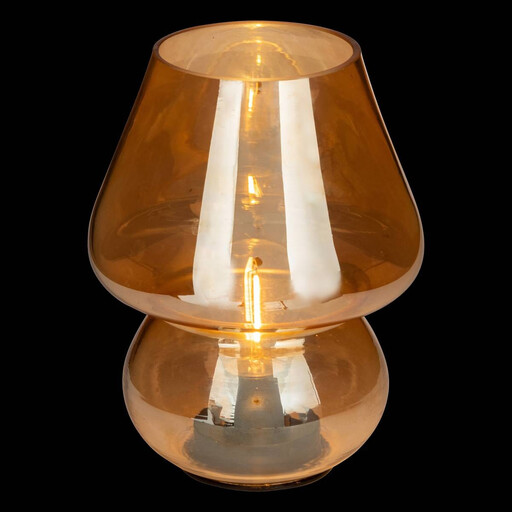
Why this product suits the profile: According to the product description, this compact LED table lamp runs on batteries, so it can be placed flexibly on a coffee table or side table.
The details state the number of batteries, a battery life of 48 hours and 30 lumens. Buyers can realistically assess its intended use as an accent light.
Integrated LED, lightly tinted glass with an iridescent effect, 19 cm height, 30 lumens and cordless battery operation.
We have put together a complete, regularly updated list of products that fully meet these strict selection criteria and the safety regulations in force in the EU.
For a bedside table, compact dimensions, an easily reachable switch and non-glaring light distribution are important. A table lamp with a fabric shade or frosted glass shade can distribute the light more softly. Also check that the base sits securely on your surface and that the cable does not run across the sleeping area.
The consumption depends on the power rating in watts and the daily operating time. An LED table lamp usually requires less electrical power than a comparable conventional bulb. For an accurate estimate, multiply the wattage by the hours of use and your electricity tariff rate. With a cordless table lamp, you should also factor in the energy needed for charging or the battery consumption.
The lifespan of the entire lamp depends on the fitting, switch, cable, materials and how it is used. With replaceable E14 or E27 bulbs, the light source can be changed separately. With an integrated LED, what matters is the lifespan stated by the manufacturer and whether the LED module is replaceable. Direct heat sources, moisture and mechanical stress should generally be avoided.