
Lieferung heute & morgen

Qualitätsgarantie

Willkommens-Angebote freischalten: KOSTENLOSE Lieferung | Bis zu 80 % RABATT | Kostenlose 30-Tage-JoyPlus-Testphase
App herunterladen
A table lamp is more than just a light source; it's a central design element that creates atmosphere and adds functional highlights. However, the search for the right model can quickly become overwhelming. Many products that look appealing online prove disappointing in practice. To help you avoid buyer's remorse, we're highlighting three common weaknesses to watch out for during your selection.
bedside lamp shouldn't emit harsh, undirected light. The quality of illumination depends heavily on the lampshade. An unsuitable material can cause unpleasant glare instead of creating a homely ambience.wooden table lamp made of solid, real wood.To make an informed decision, you should carefully examine three technical features. These determine the functionality, longevity, and lighting effect of your new table lamp.
The lamp socket, usually specified as E27 or E14, determines which bulb you can use.
modern table lamp with an E27 fitting is therefore future-proof.small table lamp or in models with a more delicate design. The choice of bulbs is somewhat more limited, but it is perfectly adequate for decorative purposes and as accent lighting.The base supports the entire lamp and significantly shapes its character.
wooden table lamp made of pine, oak, or rubberwood offers excellent stability and brings a natural, warm touch to the room. Look for the specification "solid wood" instead of "wood-look." This is a hallmark of a durable Scandinavian table lamp.design table lamp a luxurious feel and guarantee maximum stability.The shade shapes the light and is crucial for the atmosphere.
living room table lamp or as a reading lamp next to the bed.Based on these criteria, we have curated a few models for different living styles and requirements.
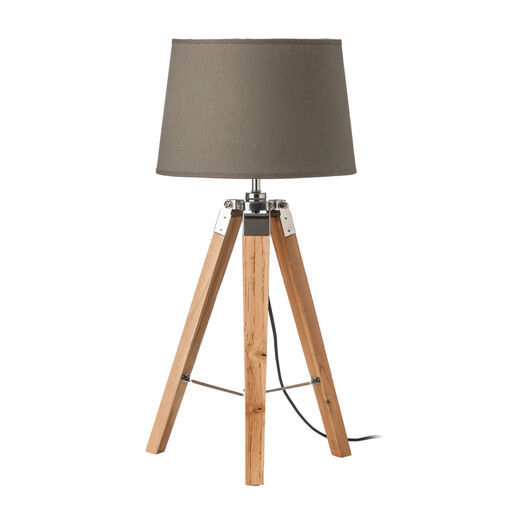
Why it's a great fit: This lamp embodies the Nordic style by combining light wooden legs with a simple grey fabric shade. It blends seamlessly into interiors that focus on natural materials and a cosy atmosphere.
The tripod construction made of pine wood offers high stability, avoiding the stability trap. The fabric shade provides soft, diffuse light without causing glare.
The material combination of 50% pine wood and 40% polyester is clearly declared and creates an authentic Scandinavian aesthetic.

Why it's a great fit: At just 16.3 cm tall, this lamp is ideal for small nightstands or shelves. The integrated dimming function makes it a versatile `dimmable bedside lamp` that adapts to any situation.
The 4-stage touch dimming function solves the problem of inappropriate brightness. The user can adjust the light from a gentle night light to a bright reading lamp.
The memory function saves the last selected brightness level, increasing everyday user convenience. The base is made of solid aluminium.
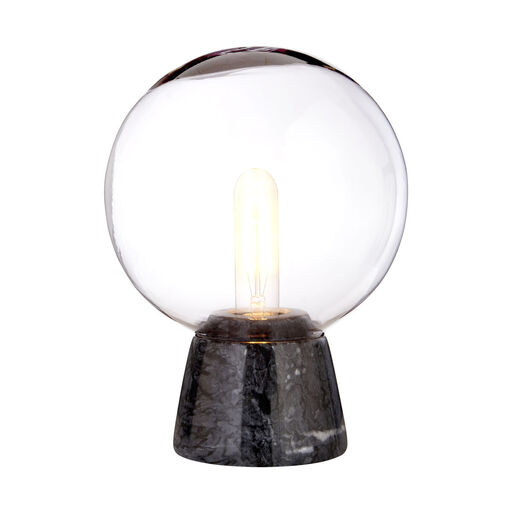
Why it's a great fit: This `design table lamp` combines a heavy, solid marble base with a light glass globe. It's a statement piece for anyone who values high-quality materials and a clean, modern design.
The solid marble base completely solves the stability problem and bypasses the material trap, as it is genuine, heavy stone. There is no inferior "look-alike" material.
The material composition of 50% marble and 50% glass is a clear sign of quality. The clear glass shade allows for the use of decorative filament bulbs.
A table lamp with a fabric shade often provides the cosiest lighting ambience. We have compiled a selection of models that are distinguished by their pleasant light diffusion and stable construction.
The choice of bulb depends on your lamp's socket (usually E27 or E14). For an energy-efficient and long-lasting solution, LED bulbs are recommended. Pay attention to the colour temperature specification: values around 2700 Kelvin produce a warm white, cosy light that is well-suited for living rooms and bedrooms.
A good rule of thumb is that the bottom edge of the lampshade should be roughly at chin level when you are sitting upright in bed. This ensures that you are not blinded by the bulb while reading, yet the cone of light is still sufficiently large.
No, this is a common misconception. For a lamp to be dimmable, both the lamp itself (e.g., through a built-in dimmer) and the bulb used must be explicitly marked as "dimmable". Using a non-dimmable bulb in a dimmer lamp can lead to flickering or damage to both the lamp and the bulb.