
Lieferung heute & morgen

Qualitätsgarantie

Willkommens-Angebote freischalten: KOSTENLOSE Lieferung | Bis zu 80 % RABATT | Kostenlose 30-Tage-JoyPlus-Testphase
App herunterladen
A table lamp should provide enough light for the area it’s intended for, fit the space available and be safe to use. The lamp’s shape, materials and light colour can also affect the feel of a room. But if you buy based on looks alone, it’s easy to overlook important details.
Three common pitfalls can cause problems when choosing a lamp:
That’s why the right choice depends more on where you’ll use the lamp and its technical specifications than on product images or marketing claims.
For an E14 table lamp or E27 table lamp, the fitting is key. E14 fittings are often used in compact lamps and decorative lights, while E27 fittings offer a wider choice of larger standard bulbs. Check the maximum permitted wattage too. Some models, for example, are rated for up to 25 watts, while others allow up to 40 or 60 watts.
If the bulb isn’t included, choose one that matches the fitting and maximum wattage. An LED bulb can produce a different level of brightness from an older type of bulb at the same electrical wattage. So check the stated light output in lumens as well.
A dimmable table lamp can be adjusted to suit different activities. A more neutral light colour may be useful for focused work or study, while a warmer light colour is often preferred for a bedside lamp or decorative table light.
For an LED table lamp, these details are particularly useful:
However, a high lumen rating alone doesn’t tell you whether a lamp is right for your table. Its position, shade and direction also affect the result.
For a bedside table, the lamp’s height and base size are particularly important. A 25 cm-high table lamp, for example, could work as a compact accent light or bedside lamp. For a desk, an adjustable head, jointed arm or clamp fitting may be more useful.
A clamp lamp saves desk space, but it needs to fit the thickness of your tabletop. For electrical products intended for indoor use, also check details such as IP20, the intended environment and the correct mains voltage. IP20 offers no protection against water, so it’s intended for dry indoor areas.
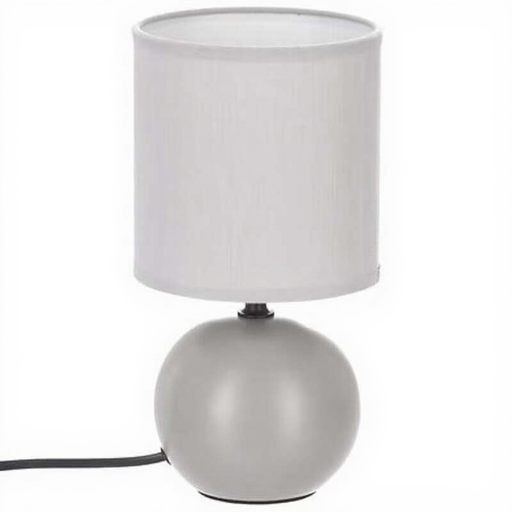
Why it suits this profile: At 25 cm tall, this lamp is well suited to a bedroom, bedside table or living room. Its ceramic globe base and cylindrical polyester shade are designed to provide decorative, indirect lighting.
The height and materials are clearly specified. You can also see in advance that the E14 bulb isn’t included.
Compact height, E14 fitting and a light grey finish to suit a range of interior styles.

Why it suits this profile: This LED table lamp combines touch controls, dimming and a USB charging port in a compact design, making it suitable for a desk, home office or bedside table.
The product details clearly specify 8 W, around 400 lm, warm white light, touch dimming and a USB connection.
Dimmable touch sensor, USB charging port and designed for indoor use at 220–240 V.
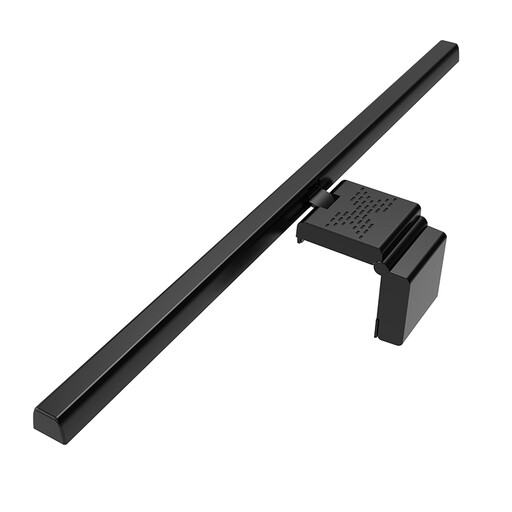
Why it suits this profile: This monitor lamp is designed for people with a large screen or dual-monitor setup who want to keep their desk clear.
The USB power supply and required 5-V/2-A supply are clearly specified, so you can check compatibility in advance.
A 50 cm-wide light bar, three colour temperatures and continuously adjustable brightness.
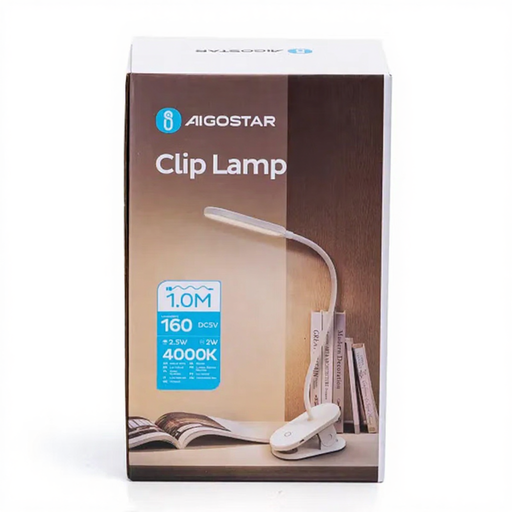
Why it suits this profile: This cordless clamp-on table lamp is ideal for reading areas, shelves, work surfaces or small desks with no room for a freestanding lamp.
The clamp mechanism, battery capacity and run time are clearly described. You should still check your tabletop’s thickness before buying.
2.5 W, 160 lm, three brightness settings, 4000 K and a built-in 1200-mAh battery.
We’ve put together a comprehensive, regularly updated list of products that meet these strict selection criteria and fully comply with the safety regulations in force in the EU.
It depends on how you’ll use it. A decorative bedside lamp usually needs less light than a lamp for an office or reading area. So don’t compare wattage alone: check the light output in lumens and the direction of the beam too.
E14 is often suitable for smaller, compact lamps. E27 usually offers a wider choice of standard bulbs. The key factors are the product specifications, the lamp size you want and the maximum permitted wattage.
Running costs depend on the lamp’s wattage, how many hours you use it each day and your electricity tariff. A simple calculation is: power in kilowatts × operating hours × electricity price. For example, five hours of use from an 8-watt LED table lamp uses 0.04 kWh.