
Lieferung heute & morgen

Qualitätsgarantie

Willkommens-Angebote freischalten: KOSTENLOSE Lieferung | Bis zu 80 % RABATT | Kostenlose 30-Tage-JoyPlus-Testphase
App herunterladen
A table lamp should do more than look good: it needs to work reliably day to day. Whether you’re looking for a bedside lamp, a living room lamp, a desk lamp or a decorative lamp for the hallway, small technical details often determine whether it remains practical over time.
A striking shade may look perfectly proportioned in product photos, but seem too large or too low on your own table. Before you buy, check:
A compact table lamp is usually best for a small bedside table. Larger models with wide shades need a sufficiently deep surface.
A table lamp with an E27 fitting needs a suitable E27 bulb. Likewise, a table lamp with an E14 fitting requires an E14 bulb. However, the fitting alone doesn’t tell you how bright the lamp should be.
Also check:
The maximum wattage is listed for each of the products described here. Do not exceed it.
“Natural” or “boho” describes the style, but doesn’t necessarily tell you anything about the quality of the materials. For example, a wooden table lamp may have a Rubberwood base, while a jute shade might be combined with metal or iron details.
That’s why it’s important to check the specific materials listed. Fabric, jute, glass, metal, wood and plastic all have different characteristics when it comes to cleaning, light diffusion and sensitivity to moisture. These materials are versatile options for indoor spaces, but shouldn’t automatically be considered suitable for outdoor use.
The fitting determines which standard bulbs you can use. E27 is common in many decorative table lamps, while E14 is often used in smaller models. You’ll find the maximum permitted wattage on the product label or in the technical specifications.
A lamp with a stated maximum wattage of 25 watts must not be used with a bulb that exceeds this limit. With LED bulbs, the actual electrical power consumption is also important; the packaging may additionally show an equivalent brightness value.
Measure the space where you plan to put the lamp before placing your order. For a bedside lamp, the cable outlet and switch position matter just as much as the footprint. A lamp with a wide shade may need enough clearance from curtains, books and other objects.
A living room lamp can have a larger shade if it’s going on a sideboard or side table. In a home office, make sure the base is stable and you can reach the switch easily.
The IP20 rating is intended for dry indoor spaces. A table lamp with this rating shouldn’t be used in a bathroom, on an unprotected terrace or anywhere it could be splashed with water. Electrical work on the connection must only be carried out by a suitably qualified professional.
With any lamp:
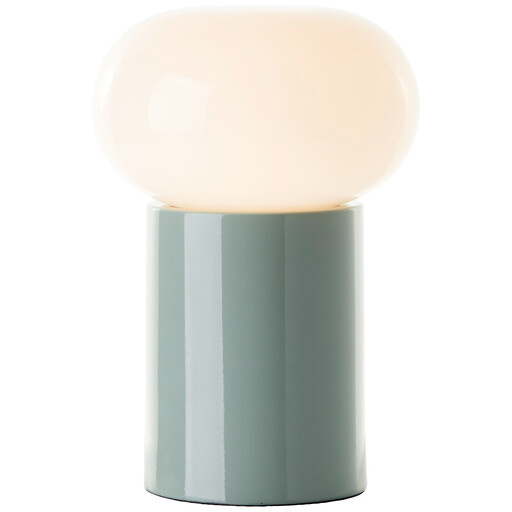
Why this product suits this profile: This compact table lamp is 21.9 cm high and 15 cm in diameter. It can be used on a bedside table, side table or desk.
The dimensions and E27 fitting are clearly listed, making it easier to check that the lamp will fit your space and take the bulb you want before you buy.
White glass shade, green metal frame, 180 cm cable and a handy in-line switch.

Why this product suits this profile: The pleated fabric shade, fringing and gold-coloured details work well with classic, decorative and boho-inspired interiors.
The materials—fabric and iron—as well as the shade and base dimensions are specified, so the design doesn’t take the place of important technical details.
E27 fitting, 1.6 m power cable, in-line switch and a maximum wattage of 25 watts for indoor use.
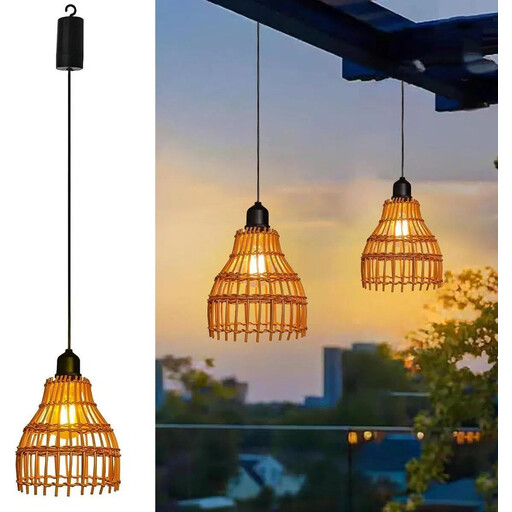
Why this product suits this profile: This battery-operated light is a flexible choice for decorative displays where there’s no direct mains connection, such as in the bedroom or living room, or when you want to change your arrangement.
The power source is clearly stated: it takes four AA batteries, which aren’t included. A timer with a 6/18 setting is also listed.
100 cm lead, hook, A60 bulb and no fixed installation or mains socket required.
We’ve put together a comprehensive, regularly updated list of products that meet these strict selection criteria and fully comply with the safety regulations in force in the EU.
For a bedside table, look for compact dimensions, an easy-to-reach switch and suitable light diffusion. Check the available space and the height of the shade before you buy. An E14 table lamp may be a good option for smaller models, while E27 lamps offer a wider choice of compatible bulbs.
This depends on the bulb you use and its electrical power consumption. An LED bulb with a low wattage uses less energy while it’s on than a bulb with a higher power consumption. To estimate running costs, multiply the power in kilowatts by the number of hours it’s used each day and your electricity price.
Unplug the lamp and let the bulb cool down. Carefully remove dust with a soft, dry cloth or a suitable brush attachment. Fabric and jute shades shouldn’t be soaked. For glass or metal parts, follow the care instructions provided by the manufacturer.