
Lieferung heute & morgen

Qualitätsgarantie

Willkommens-Angebote freischalten: KOSTENLOSE Lieferung | Bis zu 80 % RABATT | Kostenlose 30-Tage-JoyPlus-Testphase
App herunterladen
A table lamp should look good and work reliably in everyday life. When buying one, many people focus first on colour, shape and price. Technical details such as the fitting, maximum wattage, cable length and IP rating are easy to overlook. This is where common buying mistakes happen: the lamp isn’t compatible with the bulb you have, the shade restricts how the light spreads, or the model isn’t suitable for the place you want to use it.
This buying guide explains which details to check before purchasing a table lamp and which models suit different needs.
A table lamp with an E27 fitting needs a bulb with a large screw base. A table lamp with an E14 fitting takes a smaller base. The two fittings aren’t compatible. You also need to check the lamp’s maximum wattage. A model with an E14 fitting and a maximum rating of 25 watts must not be used with a higher-wattage bulb.
So, before you buy, check:
A decorative table lamp can look smaller or larger in product photos than it is in real life. Height and footprint matter on a bedside table, sideboard or desk. Measure the space where you plan to put it, and remember to allow for the cable outlet and switch.
A lamp with a low base may suit a shelf, while a larger table lamp with a fabric shade may look better on a sideboard or side table. On a desk, the shade shouldn’t unnecessarily obstruct your view.
Many table lamps are designed for dry indoor spaces only. A lamp rated IP20 mustn’t be used on a patio or in the garden. For outdoor areas, look for ratings such as IP44. However, this rating doesn’t mean the lamp can be fully submerged in water.
For outdoor use, solar garden lights are one option. They work without a mains socket, but need enough daylight to charge. An LED torch, on the other hand, is designed for portable lighting and emergencies, not as a permanent table light.
The fitting determines which bulbs you can use. The models listed here come with E14 and E27 fittings. One benefit of replaceable bulbs is that you can adjust the colour temperature and brightness by choosing a bulb to suit your needs.
Warm white light is a popular choice for bedrooms and living rooms. A more neutral colour temperature may be useful at a desk, depending on the task. Colour temperature is measured in kelvins: lower values usually appear warmer, while higher values look more neutral or cooler.
A wooden table lamp can add a natural touch. However, rubberwood and pine aren’t identical in colour or grain. Slight variations are normal with natural materials, and this should be taken into account when reading the product description.
A table lamp with a fabric shade usually diffuses light more softly than a lamp with a fully open body. Jute, cotton and polyester all affect the look and how much light passes through. The shade should be far enough away from the light source. Always observe the stated maximum wattage, and don’t cover the lamp while it’s switched on.
A cable around 1.6 to 1.8 metres long offers enough flexibility for many rooms. An in-line switch is handy if the socket isn’t easy to reach. For safe use, place the lamp on a flat, stable surface and make sure the cable won’t create a trip hazard.
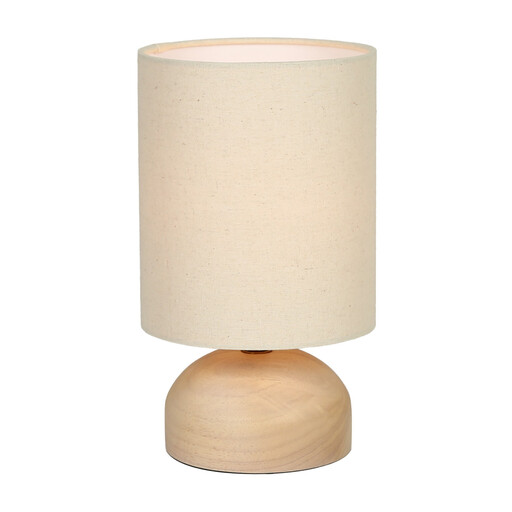
Why it suits this profile: The compact combination of a rubberwood base and round jute shade is ideal for smaller side tables, shelves or bedside tables.
The product details specify an E14 fitting, a maximum wattage of 25 watts and indoor use only. This helps you avoid incompatible bulbs and using the lamp outdoors when it isn’t suitable for that purpose.
The product details clearly specify a wooden base, jute shade and 1.6-metre cable with an in-line switch.
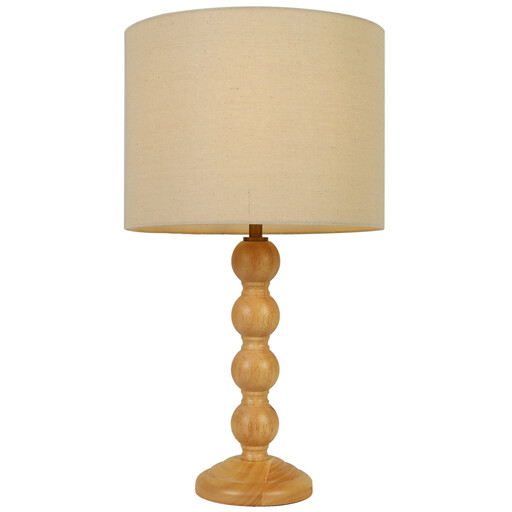
Why it suits this profile: The larger cylindrical fabric shade and wooden base are well suited to living rooms, sideboards and more spacious bedside tables.
The E27 fitting and maximum wattage of 40 watts are clearly specified. The stated indoor use also makes it clear that this isn’t an outdoor light.
The E27 base, rubberwood and 1.6-metre cable with an in-line switch give you clear technical details to help plan your living space.
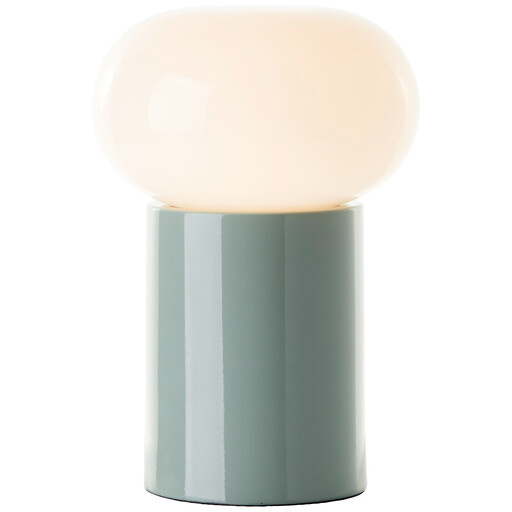
Why it suits this profile: This compact light with a white glass shade works well on a desk, bedside table or small shelf when you want a standard fitting with a replaceable bulb.
The product details specify an E27 fitting, a maximum wattage of 25 watts, a height of 21.9 centimetres and an IP20 rating. This makes the fitting, approximate size and suitability for dry indoor use clear.
The glass shade, in-line switch, European plug and 1.8-metre cable are all listed as specific features.
Solar garden lights are a separate product category for paths, flower beds and patios. According to the product details, the Aigostar set of six lights comes with a solar panel, a Ni-MH battery and an IP44 rating. The stated charging time is around four to six hours in suitable conditions, with a run time of eight to twelve hours. Direct sunlight remains key to how well they charge.
For the cellar, car, camping or power cuts, an LED torch is more practical than a table lamp. According to the product description, the Philips SFL4000T/10 offers 120 lumens, a beam distance of up to 140 metres, IPX4 splash protection and takes three AAA batteries. IPX4 doesn’t mean the torch can be fully submerged.
We’ve put together a complete, regularly updated list of products that meet these strict selection criteria and fully comply with the safety regulations in force across the EU.
It depends on the bulb you want to use and the lamp you have. E14 is the smaller base, while E27 is the larger standard base. Each type needs a compatible bulb. Don’t exceed the table lamp’s maximum wattage.
This depends on the light source you use. An LED bulb rated at 6 watts, for example, uses considerably less energy than a 40-watt bulb. Running costs depend on the wattage, how many hours you use the lamp each day and your electricity tariff. With replaceable bulbs, you can choose the level of energy efficiency you need.
The lamp’s lifespan depends on its build quality, switch, cable and how it’s used. For LED bulbs, the lifespan is stated by the bulb manufacturer. Fabric and jute shades should be cleaned gently and kept dry. Always switch off and unplug the lamp before cleaning it.