
Lieferung heute & morgen

Qualitätsgarantie

Willkommens-Angebote freischalten: KOSTENLOSE Lieferung | Bis zu 80 % RABATT | Kostenlose 30-Tage-JoyPlus-Testphase
App herunterladen
A table lamp should do more than complement your home décor. It needs to sit securely where you plan to use it, create the right ambience and be safe and convenient to operate. There are clear differences between a traditional table lamp with a replaceable bulb and a modern LED table lamp with touch controls.
Three common buying mistakes can easily lead to the wrong choice:
If you’re choosing a table lamp with a replaceable bulb, check the fitting:
Do not exceed the maximum wattage. For example, depending on the model, a Lameke lamp with an E27 fitting is rated for a maximum of 25 or 40 W. The Lameke Black Dome Table Lamp with an E14 fitting is rated for a maximum of 25 W. For everyday use, lumens are also important, as they indicate light output. Warm white light at around 2,700 to 3,000 kelvin is often a good choice for bedrooms and living rooms, while a more neutral or cooler light may be more suitable for a desk.
Measure the space where you plan to put the lamp before buying. Check:
A wooden table lamp or one with a ceramic base can have a very different look from a metal table lamp. What matters most is that it stands securely on the surface you have in mind. Fabric shades such as jute or linen can diffuse the light more widely, while open metal mesh can create more defined shadows. For all models, stay within the maximum wattage specified by the manufacturer.
A dimmable table lamp can work well in different situations: a low setting on a bedside table, medium light for reading or a brighter setting at your desk. Check whether the lamp has an in-line switch, push switch or touch controls.
For your desk, an LED desk lamp with an adjustable arm and colour temperature could be a good option. A table lamp with a USB charging port can charge a smartphone or another compatible device while the lamp is plugged into the mains. A built-in clock, calendar or temperature display can be handy, but these features should not take priority over the basics, such as stability and suitable light output.
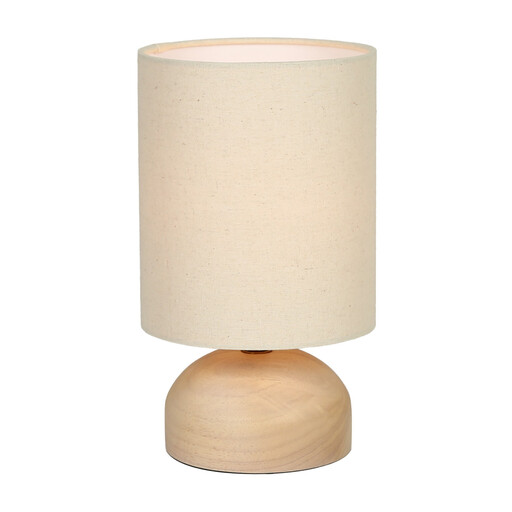
Why it suits this profile: The compact combination of a wooden base and fabric shade is well suited to a bedside table, shelf or small side table. The E14 fitting supports bulbs up to a maximum of 25 W.
The fitting and maximum wattage are clearly stated, so you can check which bulb you need before buying.
Wood and fabric construction, E14 fitting, 1.6 m power cable and in-line switch.
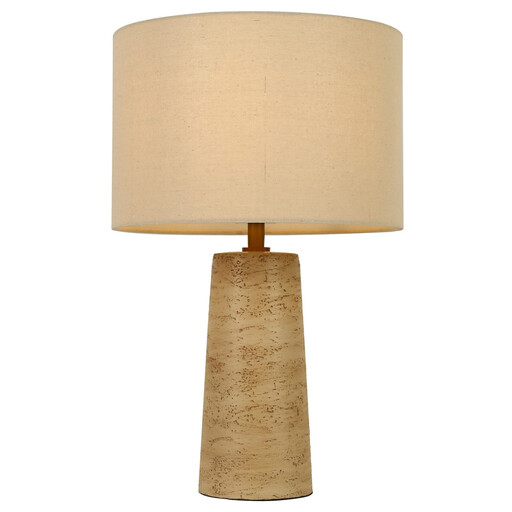
Why it suits this profile: The cylindrical jute shade and base made from metal, fabric and cement combine a tactile finish with clearly stated indoor use.
The specifications list the materials, shade dimensions, E27 fitting and maximum wattage of 40 W, making it easy to choose a suitable bulb.
E27 fitting, 40 W maximum wattage, 1.6 m cable and cylindrical fabric shade.
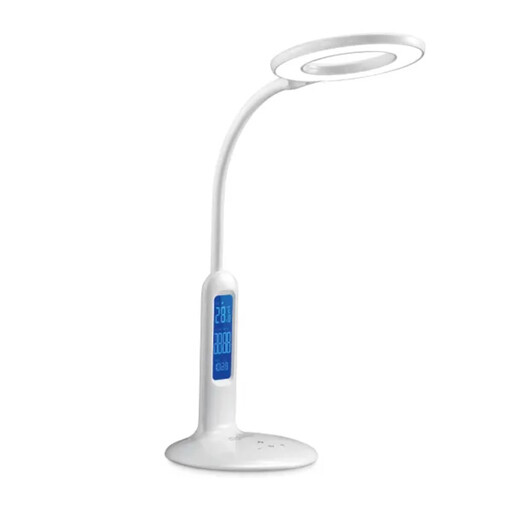
Why it suits this profile: This LED desk lamp offers touch controls, stepless dimming, an adjustable arm and an adjustable colour temperature from 2,700 to 6,500 K.
The dimming function and colour temperature range are clearly specified. The lamp is also listed as producing 360 lm at 7 W, with a calendar display showing the time, date and temperature.
Adjustable arm, touch controls, 2,700–6,500 K, 360 lm and built-in calendar functions.
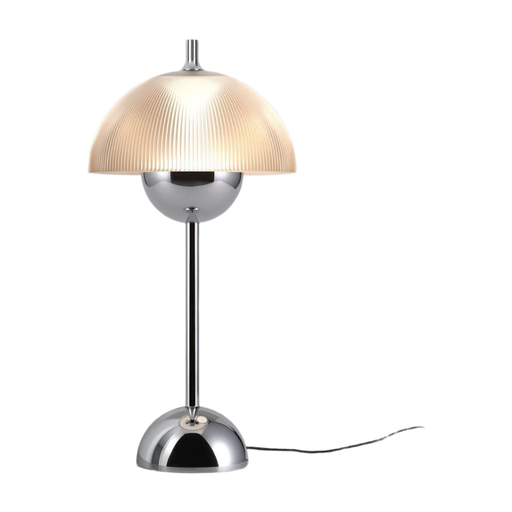
Why it suits this profile: This compact decorative table lamp is designed for bedside tables, shelves and small desks. Four touch-dimming settings and a memory function make it easy to use day to day.
The description clearly lists the four dimming settings, 3,000 K colour temperature and mains-powered operation. You can check the controls and lighting details before buying.
LED light source, warm white light, four touch settings and memory function.
We’ve put together a complete, regularly updated range of products that meet these strict selection criteria and fully comply with the safety regulations in force in the EU.
It depends on how you plan to use it. A decorative bedside lamp usually needs less light than a desk lamp for reading. Compare the lumen rating, and also consider the shade shape, how the light is distributed and the distance from the work surface.
Compact models with warm white light and an in-line switch or touch controls are often practical choices for a bedroom. Check the available space first, and choose a lamp with a shade that won’t shine light directly into your eyes. A wooden, ceramic or fabric table lamp can suit a range of interior styles.
Running costs depend on the lamp’s power, how many hours you use it each day and your electricity tariff. A simple calculation is: power in kilowatts × operating hours × electricity price. Ten hours of use from a 7 W LED table lamp comes to 0.07 kWh. The exact cost depends on your current unit rate.