
Lieferung heute & morgen

Qualitätsgarantie

Willkommens-Angebote freischalten: KOSTENLOSE Lieferung | Bis zu 80 % RABATT | Kostenlose 30-Tage-JoyPlus-Testphase
App herunterladen
A table lamp should provide the right light for its intended space, take up little room and work reliably day to day. So when buying one, it’s not just the colour and shape that matter. Details such as luminous flux, power supply, dimming function and materials determine whether a lamp will work well on your desk, bedside table or in a child’s room.
Three common marketing traps can lead to the wrong purchase:
Luminous flux, measured in lumens (lm), describes how much visible light a lamp emits. A bedside lamp or children’s night light usually needs to be less bright than a desk lamp. Colour temperature is measured in kelvin:
According to the product details, the Aigostar LIGHT08 provides around 400 lm, uses 8 W and emits warm white light. These figures offer a useful guide to what a compact LED table lamp can provide, but you should still check whether its brightness suits your workspace.
A touch table lamp switches on or off when you touch a designated area. Check that the controls are clearly described and find out how many brightness levels it has. A dimmable table lamp with several settings gives you more flexibility than a model with just one fixed brightness.
For a rechargeable lamp, battery capacity, charging port and stated charging time are important details. A capacity of 1,200 mAh, as on the VIVREAL model, tells you the battery size, but nothing more. Actual battery life depends on factors including the brightness setting.
Also, be sure to distinguish between:
A stable base and suitable dimensions are important for a desk or bedside table. A tall lamp may take up more space and should be sturdy enough not to tip over easily. In a child’s room, rounded shapes, an enclosed casing and an easy-clean surface are practical features to look for.
For a silicone night light, also check whether the material is specifically described as suitable for indoor use. Don’t assume it’s water-resistant unless a suitable protection rating is stated. If you have young children, keep the charger, cable and small parts out of their reach. A night light isn’t a toy unless the manufacturer explicitly says it is.
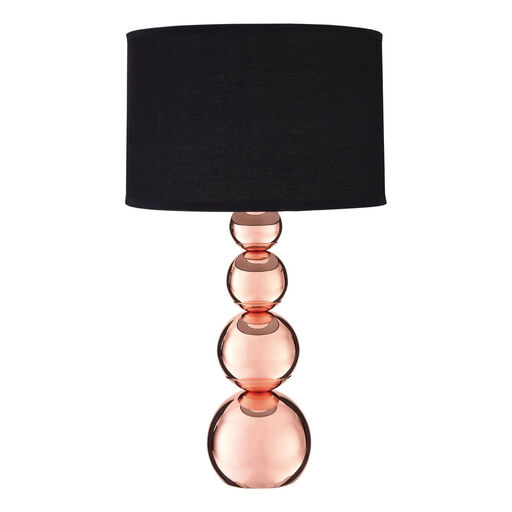
Why it suits this profile: This lamp pairs the classic look of a fabric shade with touch controls and three stated brightness levels. It’s a good option if you’re looking for a decorative lamp for your living room or bedroom.
The product details specify three brightness levels rather than making a vague claim about dimming. Even so, check before you buy that the light is bright enough for your planned reading spot.
Touch controls, three brightness levels, E14 bulb according to the product details, and an EU plug.

Why it suits this profile: The details on its 8 W power consumption, around 400 lm, warm white light and touch dimming make it easier to assess its technical specifications. The USB port is a handy extra alongside mains power on a desk or bedside table.
Specific performance figures are more useful than vague brightness claims. The description mentions USB charging, so check separately before buying if you need Qi charging.
8 W power consumption, around 400 lm, touch controls and an integrated USB charging port.
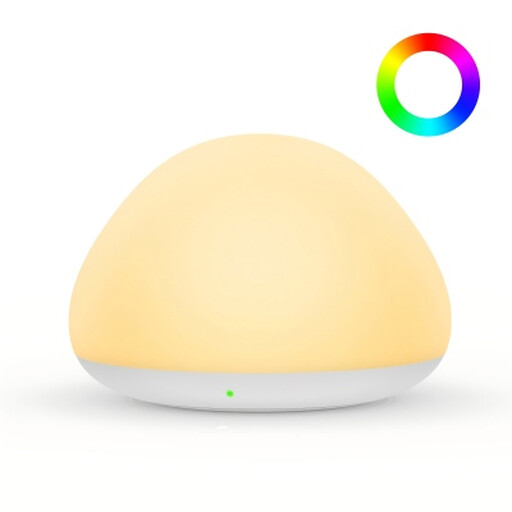
Why it suits this profile: This model is aimed at parents looking for a dimmable RGB night light with touch controls, a timer and USB charging for a child’s room or bedroom.
The timer and dimming function are listed as specific features. For younger children, supervision, keeping the light away from heat sources and protecting it from water remain important precautions.
RGB function, silicone casing, touch controls, dimming and timer, according to the product description.
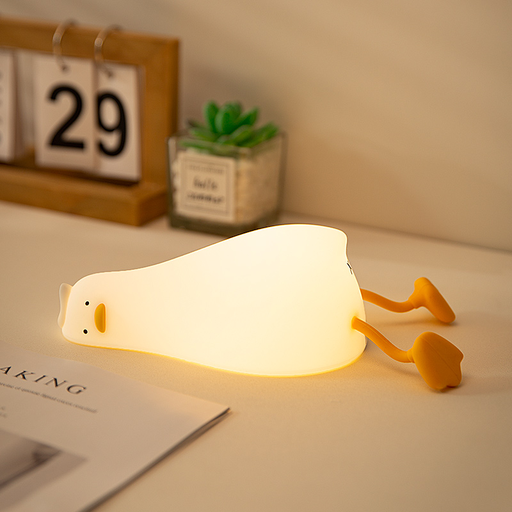
Why it suits this profile: Its cordless, rechargeable design is handy for short trips around a child’s room or as a bedside lamp, if you don’t want to use a socket permanently.
The battery capacity and USB charging are clearly stated. Check the retailer’s details for the actual battery life at each brightness setting.
1200-mAh battery, soft silicone material, USB charging and a compact duck shape.
We’ve put together a complete, regularly updated list of products that meet these strict selection criteria and fully comply with the safety regulations in force in the EU.
Running costs depend on power consumption, daily use and the price of electricity. The simple calculation is:
Power in kW × operating hours × electricity price = electricity costs
For example, an 8-W lamp used for five hours a day consumes 0.04 kWh per day. To work out the exact cost, use the current rate on your electricity tariff. A rechargeable table lamp also has charging losses, though in everyday use these usually account for less than the lamp’s actual consumption.
Check the stated luminous flux in lumens and look for even light distribution. For reading or working, specific brightness figures are more useful than claims such as “extra bright”. A dimming function lets you adjust the light to suit the time of day and what you’re doing.
Yes, provided the sensor is easy to reach and the lamp stands firmly. Before buying, check whether the touch function only switches the lamp on and off or also adjusts the brightness.
Battery life per charge depends on the battery capacity, brightness and electronics. The capacity in mAh alone isn’t enough to give a reliable indication of how long the lamp will stay lit. For long-term use, also check that it has a suitable USB port, clear charging instructions and a replaceable or permanently built-in battery.