
Lieferung heute & morgen

Qualitätsgarantie

Willkommens-Angebote freischalten: KOSTENLOSE Lieferung | Bis zu 80 % RABATT | Kostenlose 30-Tage-JoyPlus-Testphase
App herunterladen
A table lamp should do more than simply look good. It needs to suit the available space, create the desired lighting ambience and match your power supply. Many disappointing purchases happen because product images leave out important details: a decorative shade can block a significant amount of light, a rechargeable lamp needs regular charging and touch controls do not respond equally reliably on every surface.
This guide will help you assess the relevant features of a table or bedside lamp and choose a model for your bedroom, living room, home office, children's room, hallway or terrace.
A decorative table lamp can enhance the look of a room, but it will not necessarily provide enough light for reading or working. Dark fabric shades, tinted glass or an indirect design can reduce the perceived brightness. So check whether the lamp is intended for accent lighting, use as a bedside lamp or task lighting.
With some models, you can only switch between two, three or four fixed brightness levels. This may be sufficient for a bedside lamp, but it offers less control than a continuously dimmable table lamp. Also check whether the controls are operated via a switch, an in-line cable module, a touch surface or a rotary dial.
A wireless table lamp can be placed flexibly, but the battery, charging time and protection against moisture must be considered separately. Even if a product description mentions outdoor use, you should follow the safety instructions. For balconies and terraces, only dry, sheltered areas are suitable unless a clear protection rating for wet conditions is specified.
A LED table lamp generally uses little energy and may be available with an integrated light source or a replaceable bulb. Check the following:
A bedroom table lamp should not shine unnecessarily directly into your eyes. A shade or diffuser can partially shield the light source.
For everyday use beside the bed, a touch table lamp is convenient as long as the sensor surface remains easy to reach. Mains-powered models provide continuous power and do not need charging. A rechargeable table lamp, on the other hand, offers greater freedom of movement, but should provide details of battery capacity, charging port, operating time and charging time.
A USB port on the base may allow you to charge a smartphone or e-reader. Check whether it is a charging output or merely the lamp's power connection. USB-C is now common on battery-powered models; only use compatible power sources in accordance with the product specifications.
Measure the available space before buying. In addition to height and diameter, consider cable routing and the space needed to operate the lamp. A lamp with a heavy base is generally more stable, while lightweight models are easier to move.
Materials affect both care requirements and appearance:
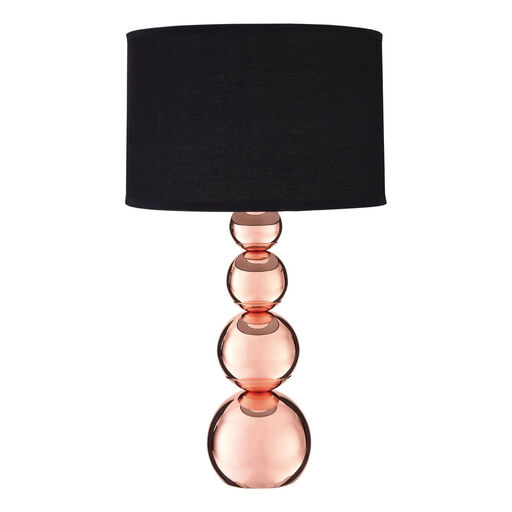
Why this product suits this profile: This mains-powered table lamp combines a black fabric shade with touch controls and three brightness levels. It fits neatly on bedside tables, side tables or small consoles.
The three clearly specified brightness levels remove any ambiguity around the “dimmable” claim. The EU plug makes it easy to use with German sockets.
Touch controls, three brightness levels, E14 bulb with a specified maximum output of 40 watts and dimensions of approximately 43 × 25 × 25 cm.
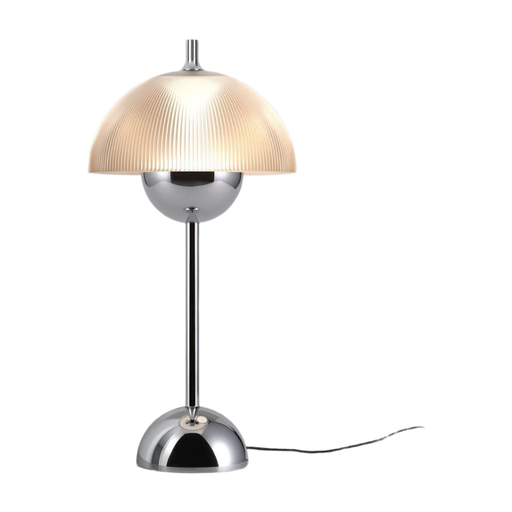
Why this product suits this profile: This compact LED table lamp features a transparent ribbed shade, warm white light at 3,000 Kelvin and a memory function that retains the last selected setting.
The four fixed dimming levels are clearly specified. The mains-powered design prevents interruptions caused by a flat battery.
LED light, 3,000 Kelvin, four-level touch dimming, memory function and a compact design for bedside tables or desks.

Why this product suits this profile: This rechargeable table lamp is designed for flexible use in living spaces, hallways and dry outdoor areas. The integrated battery and ten brightness levels support longer, portable use.
The product details specify the battery capacity, dimming levels and intended dry-use area. This makes it easier to assess its portability realistically.
4000-mAh battery, ten dimming levels, 3,000-Kelvin crown light and an additional lighting effect; according to the product details, up to 160 hours at the lowest brightness level.
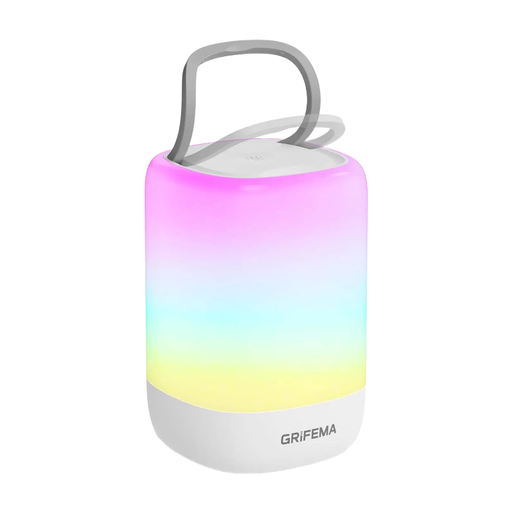
Why this product suits this profile: As an RGB night light, this compact model is suitable for bedrooms, children's rooms, camping or decorative lighting accents. It is operated via touch controls.
The functions are clearly described: seven RGB colours, continuously adjustable brightness from 5 to 100 per cent and a 30-minute timer.
USB-C charging, 1500-mAh battery, touch controls, RGB colour modes and a stated battery life of up to 15 hours.
We have put together a complete, regularly updated list of products that fully meet these strict selection criteria and the safety regulations applicable in the EU.
Consumption depends on the power rating and how long the lamp is used each day. A 5-watt lamp that is switched on for four hours a day uses 0,02 kilowatt hours per day in theory. To calculate the running cost, multiply the energy used by your electricity tariff. With integrated LEDs, you will usually find the power rating on the product data sheet or rating plate.
For a bedside table, compact dimensions, warm white light and easy-to-reach controls are important. A dimmable table lamp with touch functionality can be practical. If there is no socket nearby, a wireless or rechargeable version may be suitable. Before buying, check whether the lamp is intended only to provide decorative light or whether it also offers enough brightness for reading.
Its lifespan depends on the design, usage, heat dissipation and operating conditions. With integrated LEDs, replacing the bulb is often not possible. You should therefore check the manufacturer's specifications, warranty terms and ventilation requirements. The lamp must not be covered and should only be used under the stated conditions.