
Lieferung heute & morgen

Qualitätsgarantie

Willkommens-Angebote freischalten: KOSTENLOSE Lieferung | Bis zu 80 % RABATT | Kostenlose 30-Tage-JoyPlus-Testphase
App herunterladen
A table lamp needs to do more than complement your décor. It should also stand securely, provide enough light and suit your power supply and intended use. Whether you’re looking for an LED table lamp, bedside lamp, desk lamp or decorative table light, many disappointing purchases happen because product photos are given more attention than the technical specifications.
A decorative table lamp may look attractive but give off very little light. This is especially worth checking with small lamps or models with a heavily tinted shade: are they intended as accent lighting, or are they suitable for reading and working? Details such as lumens, bulb type and maximum wattage will help you decide.
A table lamp with an E27 fitting needs a different bulb from one with an E14 fitting. If you don’t check the fitting before buying, the bulb you already have may not fit. Also, the bulb is not included with several of the models available.
A tall lamp could topple over on a narrow bedside table or obstruct your view of the television. On the other hand, a very small table light may look out of place on a large desk. Remember to check the cable length, switch position and space needed for the plug before ordering.
The fitting determines which bulbs you can use. E27 is a common size for both traditional and LED bulbs, while E14 is often used in more compact bedside lamps. The maximum wattage is the permitted electrical power and must not be exceeded.
A higher wattage doesn’t automatically mean more brightness. For LED bulbs, lumens are a more useful way to compare light output. A lower lumen output is often enough for a softly lit bedroom, while a desk lamp needs focused, sufficiently bright light for the task at hand.
Compare the height and diameter of the table light with the space available. A heavy ceramic or wooden base can help keep a lamp steady, while particularly lightweight models may slide more easily on uneven surfaces. With a bedside lamp, you should be able to reach the switch without getting out of bed.
Mains-powered models provide a constant supply of electricity but need a free socket. A USB table lamp, on the other hand, can be powered by a USB adapter, computer or power bank. Check the stated voltage, particularly for models with integrated LEDs.
A dimmable table lamp will only offer stepless or multi-level dimming if this feature is expressly stated in the product description. For lamps with replaceable bulbs, you should also check that both the bulb and the lamp are suitable for dimming.
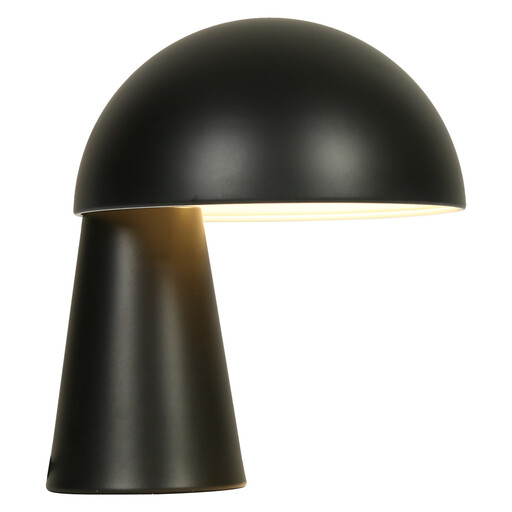
Why it suits this profile: This compact iron lamp is a good fit for a bedside table, side table or small workspace. Its E14 fitting lets you choose a suitable bulb.
The stated maximum power of 25 W and E14 fitting make it clear which bulbs are suitable. This reduces the risk of choosing the wrong bulb.
Iron shade, E14 plastic fitting and an in-line switch; designed for indoor use.
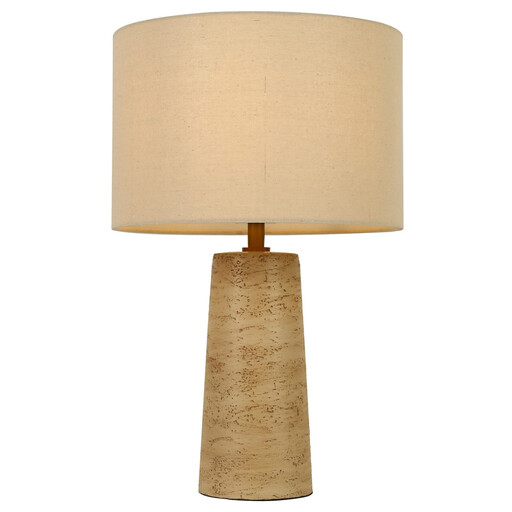
Why it suits this profile: The cylindrical jute-fabric shade and base made from metal, fabric and cement complement natural, rustic or understated interiors.
The product details list the materials, dimensions and maximum power of 40 W. This makes it easier to check that the lamp will suit your available space and bulb.
E27 fitting, 1.6 m cable and indoor use; the cement base helps keep the lamp stable.
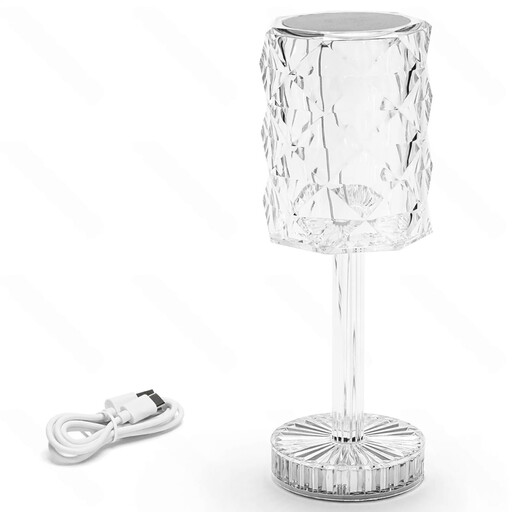
Why it suits this profile: This USB table lamp is suitable for a desk, shelf or bedside table if low power consumption and flexible power options are important to you.
The product details specify 1 W, 105 lm, USB with DC5V and an integrated, non-replaceable LED. You’ll know in advance that there’s no need to buy a separate bulb.
Three colour temperature ranges, from 2700 K to 6500 K, USB power and compact dimensions of 90 × 260 mm.
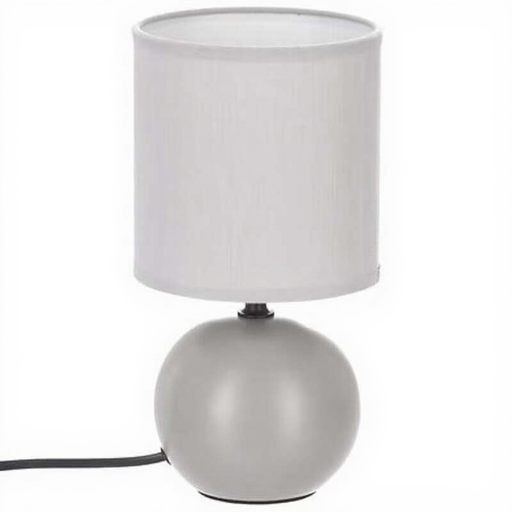
Why it suits this profile: The spherical ceramic base and cylindrical polyester shade make this lamp a good choice for the bedroom, living room or hallway.
Its E14 compatibility and the clear note that the bulb is not included help you know exactly what to expect in the box.
25 cm tall, with a ceramic base and polyester shade; designed for indoor use.
We’ve put together a complete, regularly updated list of products that meet these strict selection criteria and the safety regulations in force in the EU.
Compact models with an easy-to-reach switch are a good choice for a bedside table. Check the height, base and whether it has an E14 or E27 fitting. For simple ambient lighting, an integrated LED table lamp with low power consumption may be enough. For reading, choose a bulb that provides the brightness you need.
Its lifespan depends on the quality of the LED, heat dissipation and how many hours you use it each day. With integrated LEDs, replacing the bulb is usually not an option. Before you buy, check whether the light source can be replaced or whether you’ll need to replace the whole lamp if it fails.
Running costs depend on power, how long you use the lamp and your electricity tariff. A simple way to work them out is: power in kilowatts × hours of use × electricity price. A 1 W LED uses less energy than a higher-powered bulb over the same period. Even so, check the lumen rating to make sure it provides the brightness you need.