
Lieferung heute & morgen

Qualitätsgarantie

Willkommens-Angebote freischalten: KOSTENLOSE Lieferung | Bis zu 80 % RABATT | Kostenlose 30-Tage-JoyPlus-Testphase
App herunterladen
A well-chosen table lamp is more than just a light source. It's a central element of your interior design, creating atmosphere while providing functionality. However, the market is saturated with models whose appealing aesthetics often conceal functional shortcomings. Before making a decision, it's crucial to understand the common pitfalls that can lead to disappointment and unnecessary expense.
This guide will help you distinguish marketing promises from genuine quality features, enabling you to find a table lamp that will meet your long-term needs for both design and function.
Many buyers focus primarily on design, but certain flaws only become apparent with daily use. Pay special attention to these three points:
To avoid a poor purchase, you should focus on objective criteria that determine a lamp's practical utility and longevity.
Choosing the right light source is crucial for visual comfort and mood. Modern LED table lamps are the top choice here, as they are energy-efficient and long-lasting. Look for the following features:
The type of power supply and operation directly impacts flexibility and everyday convenience.
The material influences not only the aesthetics but also the stability and durability. A modern table lamp often combines materials like metal, glass, or high-quality plastic.
Instead of making generic recommendations, we have identified models that meet specific requirement profiles and purposefully avoid the pitfalls mentioned.

Why this model is a great fit: This model is a clear statement piece for lovers of modern industrial design. The combination of a matte black outer frame and a golden inner surface creates a sophisticated contrast, making the lamp a decorative object that adds a touch of class to both a bedside table and an office desk.
The weighted, non-slip steel base ensures high stability (avoids pitfall 1). The dual-shade architecture prevents direct glare and provides high-quality, even light distribution (avoids pitfall 2).
Offers 3 colour temperature modes (Warm, Neutral, and Daylight White) and stepless dimming via touch. The integrated USB charging port is a practical detail.

Why this model is a great fit: Ideal for anyone who wants maximum independence from power outlets. This lamp can be effortlessly moved from the bedroom to the balcony or used as mood lighting in the living room. Its vintage design, reminiscent of a classic oil lamp, is a particularly eye-catching feature.
With a 4000mAh battery, it offers a very long runtime, thus escaping the trap of short-lived cordless lamps (pitfall 3). The interactive yet simple features (blowing to turn off) are intuitive and not just a gimmick.
The extremely long battery life of up to 160 hours (at the lowest brightness) is outstanding. The control via a rotary touch knob with 10 levels is precise and convenient.
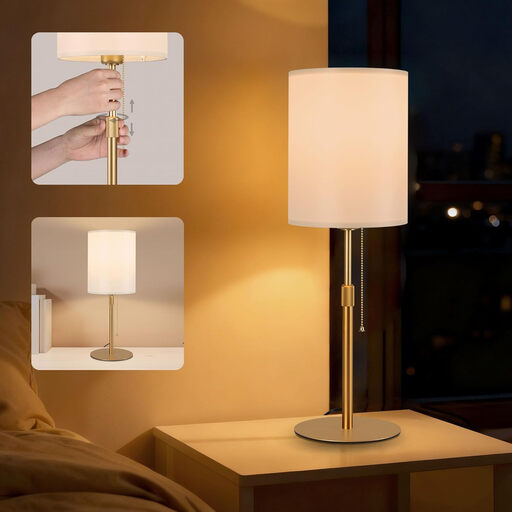
Why this model is a great fit: For users who appreciate a timeless aesthetic and straightforward, reliable operation. This lamp combines a modern design with the nostalgic and tactile feel of a classic pull chain—perfect for the bedroom or living room.
The sturdy double-frame metal base provides excellent stability (avoids pitfall 1). The mechanical pull chain is durable and avoids the problems of sensitive or unreliable touch sensors (avoids pitfall 3).
The height-adjustable rod allows for flexible adaptation to various table and bedside table heights. The universal E26 socket allows for a free choice of bulb.
We have compiled a comprehensive, up-to-date list of products that fully meet these strict selection criteria and applicable safety regulations.
1. What colour temperature (Kelvin) is ideal for a table lamp? It depends on the intended use. For a relaxed, cosy atmosphere, such as with a bedside lamp, warm white light between 2,700 and 3,000 Kelvin is ideal. For focused work at a desk lamp, neutral white light around 4,000 Kelvin is recommended. Daylight white (over 5,000 Kelvin) promotes concentration but can feel too cool in the evening.
2. How many lumens should a desk lamp have? For general ambient lighting, 250 to 500 lumens are often sufficient. However, if the lamp serves as the primary light source for reading or detailed work, 500 to 1,000 lumens are recommended to ensure adequate brightness and reduce eye strain. Dimmable models offer the most flexibility here.
3. Are cordless table lamps a good choice? Yes, provided the specifications are right. They offer unparalleled flexibility and a clean look without cable clutter. The deciding factor is battery performance. Before buying, check the battery capacity (specified in mAh) and the manufacturer's stated maximum runtime. For stationary use on a desk or bedside table, a corded model is often the more reliable and lower-maintenance solution.