
Lieferung heute & morgen

Qualitätsgarantie

Willkommens-Angebote freischalten: KOSTENLOSE Lieferung | Bis zu 80 % RABATT | Kostenlose 30-Tage-JoyPlus-Testphase
App herunterladen
A table lamp should not only look good, but also work reliably day to day. It’s often only after buying one that you discover the shade blocks too much light, the lamp takes up too much room on your bedside table or the bulb doesn’t fit the socket. If you’re looking for a table lamp for your bedroom, living room, desk or shelving, consider the technical details alongside where and how you’ll use it.
A decorative table lamp may look compact in product photos, but take up a lot of room in reality. It’s not just the height that matters: check the diameter of the base and shade, too. Models around 15 to 25 cm wide are generally easier to fit on a bedside table than larger lamps.
A fabric shade can diffuse light, but that alone doesn’t tell you how bright the lamp is or what colour the light will be. Check whether a bulb is included, which socket the lamp uses and its maximum permitted wattage. Many models don’t include a bulb or LED light source.
A table lamp with an EU plug is convenient for German homes, but you should still check the connection details. Specifications such as 240 V, 220–240 V or a European plug are important clues. A lamp with a different mains voltage, such as 110 V, won’t necessarily be suitable for plugging straight into German sockets.
The socket determines which bulb you can use:
Warm white light can work well in bedrooms and living rooms. For focused work at a desk, brightness, glare control and positioning matter more than a purely decorative look.
Measure the space where you plan to put the lamp before buying. Check the:
A taller lamp measuring 60 cm, such as a tripod design, is better suited to a side table or a clear surface. A small bedside lamp around 22 cm high can also fit on narrower surfaces.
Metal, glass, wood, ceramic and fabric all affect a lamp’s appearance and how much care it needs. A fabric shade usually gives a softer light, but can collect dust and should be gently cleaned with a dry cloth. Chrome-plated metal surfaces show fingerprints more easily. Wood may have natural variations in colour. Follow the manufacturer’s cleaning instructions; several of the models mentioned here should not be cleaned with abrasive products.
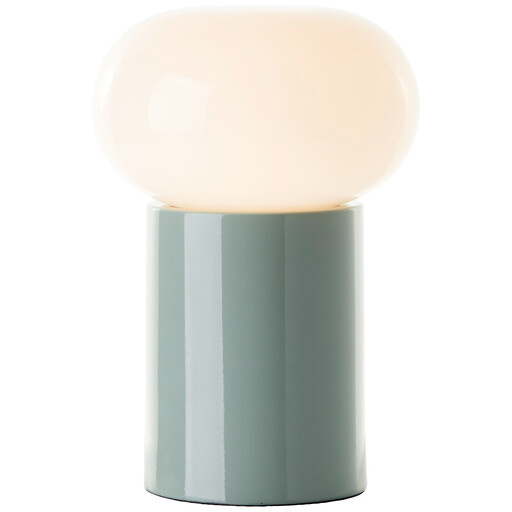
Why it suits this profile: This compact table lamp is 21.9 cm high, 15 cm wide and has an E27 socket. It fits on side tables, bedside tables or desks.
The stated measurements help you plan the space it will need. You can choose a bulb separately to suit your preferred colour temperature and brightness.
E27 socket, 180 cm cable, in-line switch and European plug; maximum wattage of 25 W according to the product specifications.
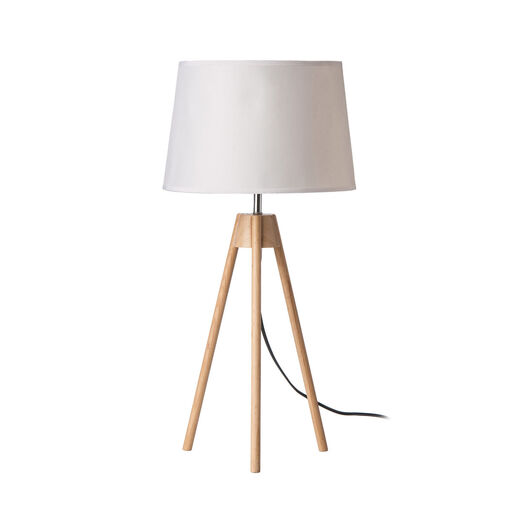
Why it suits this profile: This 60 cm-high lamp combines a white fabric shade with wooden legs and a slim metal neck. It makes a striking living room lamp on a table with enough space.
The dimensions and design are clearly stated, so you can check in advance whether the lamp’s larger footprint and height will suit your room.
E27 socket, EU plug and white fabric shade; designed for a bulb of up to 40 W. The lamp is described as suitable for indoor use.
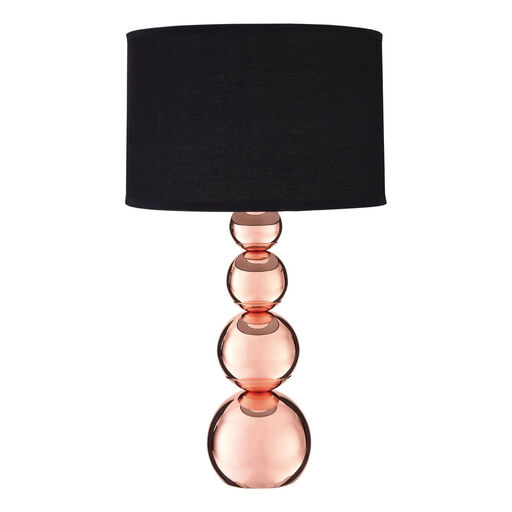
Why it suits this profile: This modern table lamp offers three brightness settings at the touch of a finger, making it suitable for a bedside table, reading nook or living room.
The dimming feature is clearly specified as having three settings, rather than being advertised as a vague convenience feature. The EU plug makes it easy to connect.
Touch controls with three brightness settings, E14 socket and bulb included according to the product specifications; maximum wattage of 40 W.
We’ve put together a complete, regularly updated list of products that meet these strict selection criteria and fully comply with the safety regulations in force in the EU.
Place your table lamp on a flat, stable surface and keep it away from easily flammable materials. Don’t cover fabric or paper shades. Before changing a bulb, switch off and unplug the lamp, then let it cool down completely. Many indoor lamps aren’t suitable for damp rooms; an IP rating should be clearly stated if they are.
A dimmable table lamp also needs a compatible bulb, unless the dimming function is already built in. If you’re choosing an E14 or E27 lamp, it’s worth checking the specifications from both the lamp and bulb manufacturers.
Consumption depends on the type of bulb and its wattage. A low-wattage LED bulb generally uses less electricity than a higher-wattage traditional bulb. To get an estimate, multiply the wattage in kilowatts by the number of hours you use the lamp each day and your electricity tariff.
Compact models with a small base, an easy-to-reach switch and a shade that doesn’t cause glare are practical choices for a bedside table. E14 lamps are often space-saving, while E27 models offer a wider choice of bulbs. The key things to consider are the lamp’s actual dimensions and the brightness you want.
A lamp’s lifespan depends on its socket, switch, cable, materials and how you use it. With a replaceable bulb, you can change the light source separately. For a table lamp with a built-in LED, check the LED lifespan stated by the manufacturer. In general, using the lamp indoors in dry conditions, ensuring good ventilation and cleaning it correctly will help it stand up to everyday use.