
Lieferung heute & morgen

Qualitätsgarantie

Willkommens-Angebote freischalten: KOSTENLOSE Lieferung | Bis zu 80 % RABATT | Kostenlose 30-Tage-JoyPlus-Testphase
App herunterladen
A table lamp should do more than simply look good. It needs to suit the available surface area, the lighting effect you want and your power supply. If you choose based solely on colour or shape, you can easily overlook important details: a light may not provide enough illumination for reading, the cable may be on the wrong side or the lampshade may restrict the light output more than expected.
Three common buying mistakes in particular can lead to unnecessary expense:
An LED table lamp with an integrated light source does not require separate bulb replacement. Check whether the LED can be replaced or is permanently built in. With permanently integrated LEDs, the stated service life is an important product parameter, while an E27 table lamp gives you greater flexibility when choosing a bulb.
Brightness is measured in lumens (lm). A decorative table lamp with around 30 to 100 lumens is more suitable for accent or ambient lighting. For concentrated work, a higher light output is advisable, although suitability also depends on the distance, beam angle and lampshade.
The colour temperature in Kelvin (K) affects the lighting effect:
For a dimmable table lamp, both the brightness levels and colour temperature should be stated in the technical specifications.
Measure the available surface area before buying. A bedside lamp with a wide base can be impractical on small surfaces. Also pay attention to the height of the lampshade: it should not shine directly at eye level when you are sitting at the table.
The material affects the appearance, weight and cleaning requirements. A wooden table lamp can complement Scandinavian or natural interiors. Metal often offers a clean, modern design language. Fabric shades diffuse the light, but can be more sensitive to dust.
For indoor use, a rating such as IP20 is standard. This means that the light is intended for dry indoor spaces. Bathrooms, covered outdoor areas and damp environments require different protection ratings. Details such as 230 volts, maximum wattage and bulb fitting should match the intended place of use.
A mains-powered table lamp is suitable for a permanent position. Check the cable length, switch position and plug type. An ** аккумулятор table lamp** can instead be moved flexibly between a shelf, side table or balcony surface, provided it is approved for the relevant area.
For portable models, battery capacity, charging time and the operating time stated by the supplier are all relevant. USB power can be supplied via a mains adaptor, laptop or power bank. With a table lamp with wireless charging, your smartphone should be Qi-compatible. A table lamp with Bluetooth speaker also requires details of the Bluetooth version and range, so that the feature can be assessed realistically.
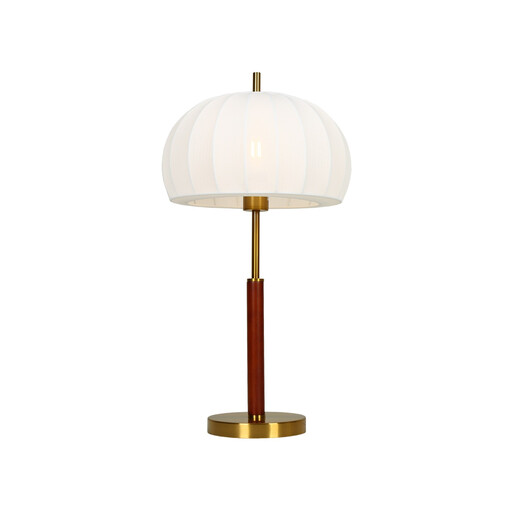
Why this product suits this profile: This mains-powered light with a white fabric shade and wooden details is designed for permanent positions in the living room, bedroom or hallway. The E27 fitting allows you to choose a suitable bulb.
The fitting and maximum wattage of 40 W are clearly stated. This makes it easy to choose the right bulb instead of relying solely on appearance.
E27 plastic fitting, bowl-shaped fabric shade and 1.6 m connection cable according to the product description.
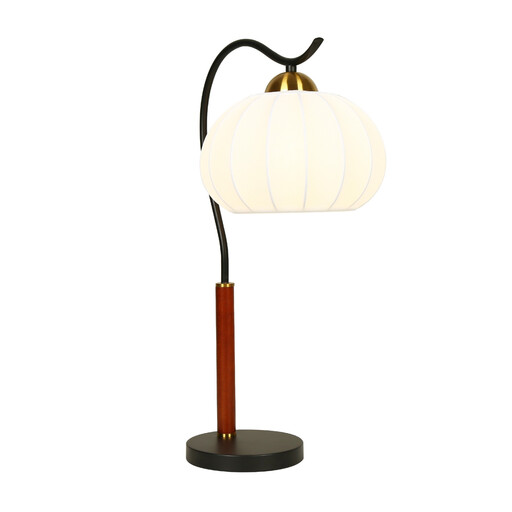
Why this product suits this profile: The curved arm and seamless fabric shade combine a clearly defined shape with a homely mix of metal, fabric and rubber wood.
The shade and base dimensions are listed in detail. This allows you to check before buying whether the light will fit comfortably on the intended table.
E27 fitting, 40 W maximum wattage and 1.6 m transparent connection cable for indoor use.
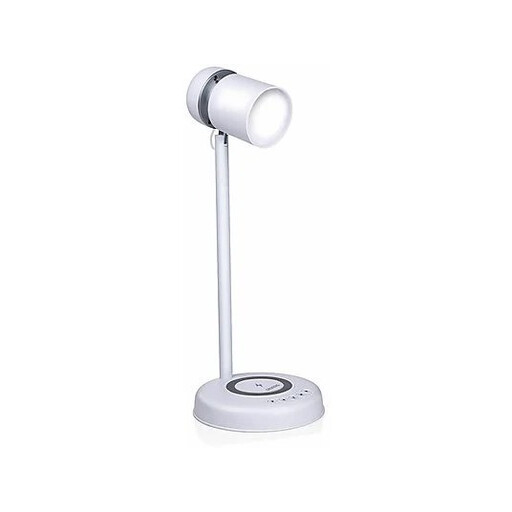
Why this product suits this profile: Designed for home offices, desks and multifunctional workspaces, this light combines LED illumination, Qi charging, USB-A and USB-C outputs, plus a Bluetooth speaker.
The product data specifies 76 lumens, 4000 K, Bluetooth 5 with a range of up to 10 m and Qi compatibility. This makes the additional features easier to assess accurately.
Adjustable neck, four colour modes, 3 W speaker and integrated Qi technology according to the manufacturer’s specifications.
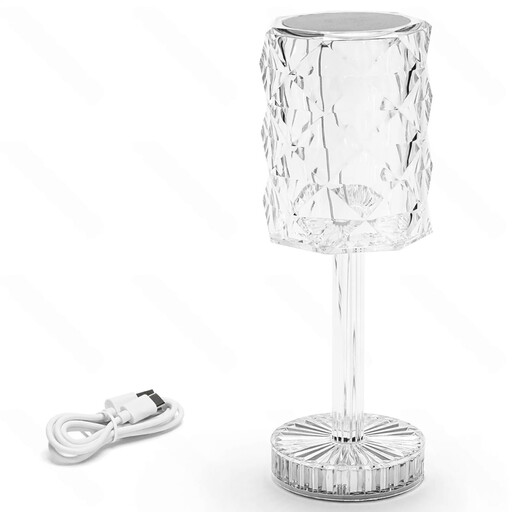
Why this product suits this profile: This battery-powered or USB-powered light is designed for bedside tables, shelves and side tables, and offers an adjustable colour temperature from 2700 to 6500 K.
The power supply via DC5V and USB is specified; according to the description, a mains adaptor is not included. This prevents the need for an unexpected additional purchase.
1 W power, 105 lumens, three light colours or a range from 2700 to 6500 K, plus an integrated LED module.
We have put together a complete, regularly updated list of products that fully meet these strict selection criteria and the safety regulations applicable in the EU.
For a desk, an adjustable desk lamp with a neutral colour temperature and sufficient illumination is a practical choice. In the bedroom, a warm bedside lamp with a fabric shade or low light output can create a more pleasant atmosphere. A decorative table lamp on a shelf, on the other hand, should primarily be selected based on its height, cable routing and viewing angle.
With E27 models, the bulb is not always included. Before buying, check whether you need an LED bulb and what maximum wattage is specified. With permanently integrated LEDs, there is no need to buy a separate bulb, although the light source cannot be replaced easily.
That depends on how it will be used. Low values may be sufficient for ambient lighting or a decorative accent. Higher lumen levels are advisable for reading or working. The lampshade, distance and direction of the light beam are also important factors.
That depends on the battery capacity, operating time and charging connection. They are practical if you need to move the lamp frequently. For a fixed workstation, a mains-powered light with a permanent connection may be more convenient.
Running costs depend on the wattage, daily usage time and electricity tariff. A 1 W light uses less energy over the same operating period than a model with a higher power consumption. For an exact calculation, you can multiply the power in kilowatts by the operating hours and your tariff.