
Lieferung heute & morgen

Qualitätsgarantie

Willkommens-Angebote freischalten: KOSTENLOSE Lieferung | Bis zu 80 % RABATT | Kostenlose 30-Tage-JoyPlus-Testphase
App herunterladen
A high-end table is often the centrepiece of a home. Protecting it from scratches, stains, and everyday wear and tear without hiding its beauty is a common goal. A clear table protector seems like the ideal solution. However, the market is flooded with products of widely varying quality. Certain flaws often only become apparent after a few weeks of use, leading to disappointment.
This guide highlights the most common pitfalls to avoid when buying and explains the objective criteria you should look for to find a durable and functional protective solution for your table.
To avoid these problems, you should check three key parameters before making a purchase. These largely determine the functionality and longevity of the protector for your table.
The thickness of the protector is one of the most important indicators of its protective qualities and durability.
A good clear tablecloth should be made from high-quality, low-odour polyvinyl chloride (PVC). Look for products described as robust, durable, and easy to clean. A key advantage of PVC is that it provides completely waterproof and wipe-clean table protection. Stains from coffee, wine, or sauces can be simply wiped away with a damp cloth without soaking into the material.
Appearance is crucial. To prevent the problem of air bubbles on high-gloss tables, some manufacturers recommend placing a thin cotton cloth underneath the protector. Another option is to choose a film with a slightly textured or matte underside.
Another practical aspect is the ability to cut the protector yourself. Many products can be trimmed to size with a sharp utility knife and a ruler. For those who want a perfect fit without the effort, a custom-cut table protector is the way to go.
Instead of presenting an overwhelming list, we have selected products that are suited for specific user profiles and meet the quality criteria mentioned.
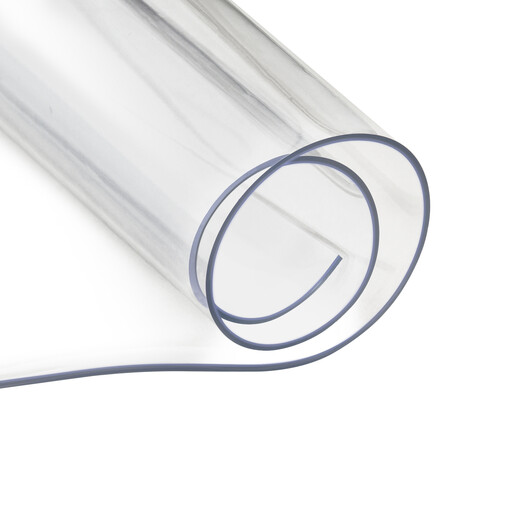
Why This Fits Their Persona: Families need protection that can withstand more than just a few coffee spills. This cover is designed for heavy-duty use in kitchens or dining rooms where eating, crafting, and playing happen daily.
With its 2 mm thickness, the cover lies heavy and flat without slipping or curling at the edges. It effectively resists impacts and scratches from cutlery or toys.
According to the manufacturer, the cover is heat-resistant up to 80°C, waterproof, and very easy to wipe clean. The manufacturer also transparently notes the potential for air bubbles on high-gloss tables.
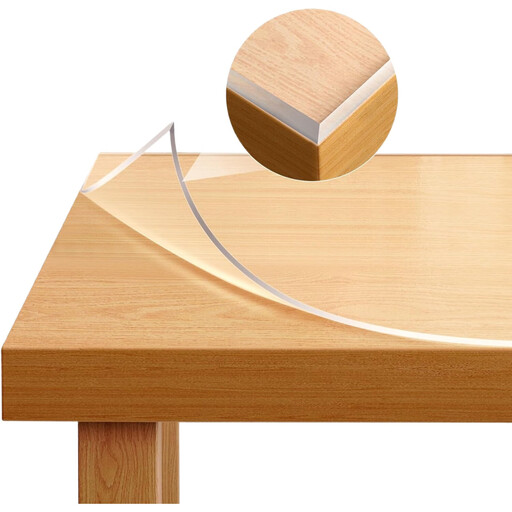
Why This Fits Their Persona: Owners of expensive solid wood tables want to protect them without hiding the natural grain and feel. Here, aesthetic details that blend seamlessly into the overall design are just as important as protection.
This model goes beyond mere protection. The bevelled 45° edges are not only safer but also create a softer, more elegant transition to the table's edge.
The combination of 2 mm thickness and a clean edge finish offers robust protection with a high-end look. According to the manufacturer, food-grade PVC is used.
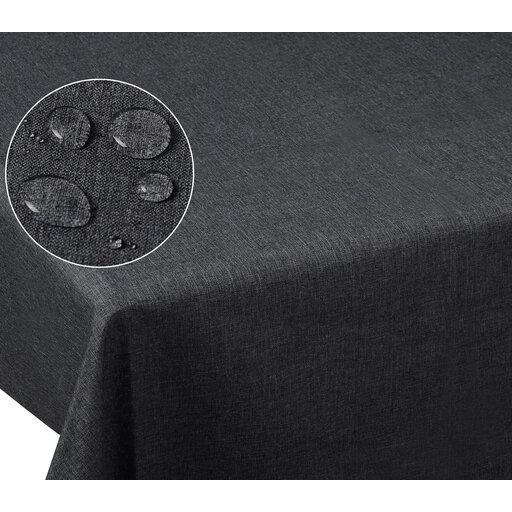
Why This Fits Their Persona: Not everyone likes the smooth surface of a PVC film. Those who prefer a warmer, more textile feel without sacrificing protection will find a great alternative in modern fabric tablecloths.
Instead of a transparent film, this product offers a linen-look tablecloth made of polyester. It completely bypasses the issues of odour and air bubbles, providing a cosy, home-like aesthetic.
According to the manufacturer, the tablecloth is water and stain-resistant (lotus effect). Liquids bead up and can be wiped away. Furthermore, it is machine-washable as a washable fabric tablecloth.
We have compiled a complete, up-to-date list of products that fully meet these strict selection criteria and comply with UK safety regulations.
Since the protectors are delivered rolled, they need some time to flatten out. Lay the protector flat on the table and weigh down the corners and any waves with heavy books for 24-48 hours. Alternatively, you can roll it in the opposite direction or, following the manufacturer's instructions, gently warm it with a hairdryer on a low setting to speed up the process.
No, this problem mainly occurs when combining a smooth protector with a non-porous, high-gloss surface (e.g., glass, high-gloss lacquer, polished marble). On matte or porous surfaces like oiled or waxed wood, this effect typically does not occur.
Yes, most PVC table protectors can be customised. Use a sharp utility knife or sturdy scissors and a long steel ruler for a straight cut. It is recommended to cut the protector with an overhang of 1-2 cm per side, as the material can shrink slightly over time. Always check the manufacturer's instructions for specific guidance.