
Lieferung heute & morgen

Qualitätsgarantie

Willkommens-Angebote freischalten: KOSTENLOSE Lieferung | Bis zu 80 % RABATT | Kostenlose 30-Tage-JoyPlus-Testphase
App herunterladen
A high-quality table is often the centrepiece of a home. To protect its surface from scratches, stains, and daily wear and tear without compromising its appearance, a transparent table protector is a practical solution. However, the purchase is not always straightforward. Certain product characteristics, often unmentioned in marketing, can lead to unsightly results and disappointment.
This guide will help you understand the crucial criteria and avoid the three most common traps when buying a protective film, enabling you to make an informed decision for your dining table, desk, or work surface.
Many buyers focus solely on size and price, overlooking crucial material properties. This often leads to three problems that severely limit the protector's usefulness.
To avoid the problems mentioned above, you should check three core parameters before buying. These determine the durability, functionality, and appearance of your table cover.
The thickness of the film is a direct indicator of its protective capability and overall quality.
The most important rule is: standard, crystal-clear PVC films are primarily suitable for matte and porous surfaces like wood, matte-finished tops, or concrete-look finishes. Here, they adhere without bubbling and remain virtually invisible.
For tables made of glass, high-gloss lacquer, or polished marble, such a transparent PVC tablecloth is not directly suitable. To prevent bubbling, some manufacturers suggest placing a very thin, barely visible cloth between the film and the table.
A good wipe-clean clear tablecloth should have a specified level of heat resistance. Many quality films are heat-resistant up to 80°C. This means that warm plates or cups can be placed on them without issue. However, hot pots or pans straight from the hob must not be placed on it, as this would permanently damage the material. Cleaning should always be done with a damp cloth and mild detergent, as harsh chemicals or abrasive sponges can cloud the surface. Many films can also be precisely cut for a custom-fit table protector using a sharp utility knife and a metal ruler.
Based on the criteria mentioned, we have compiled a few products for different user profiles.

Why it's a good fit: Ideal for users seeking solid basic protection for less frequently used tables without a large budget. The 1 mm thickness effectively protects against liquids and light signs of use.
Although thinner, this film offers higher tear resistance than generic products. The manufacturer also explicitly states that it is not recommended for high-gloss surfaces, thereby preventing the bubbling trap.
Good value for money for basic protection. According to the manufacturer, the material contains at least 50% recycled material.
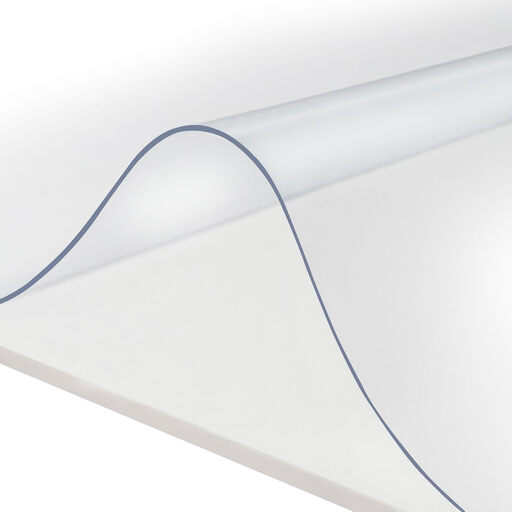
Why it's a good fit: Perfect for families and owners of high-quality wooden tables. The 2 mm thickness provides robust protection against the challenges of daily life, from colouring pens to accidental bumps.
This film directly addresses the pitfall of insufficient material thickness. Its heavy weight ensures it lies flat and stable without curling, and it provides a buffer against mechanical impacts.
High durability and protective performance. The heat resistance up to 80°C (according to the manufacturer) makes it suitable for everyday use on dining and kitchen tables.
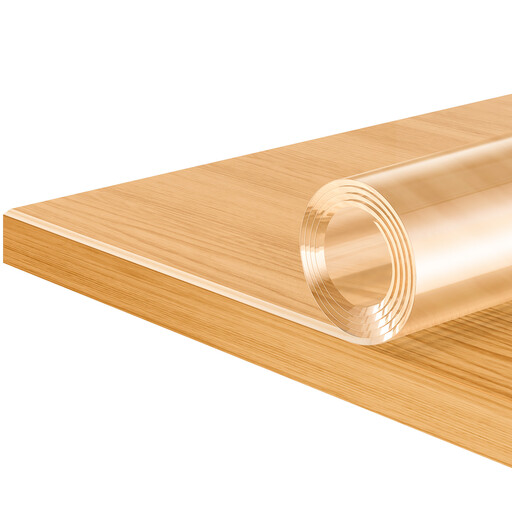
Why it's a good fit: An excellent choice for desks or dining tables where you sit for long periods. The specially bevelled edges increase comfort and prevent the unpleasant sensation of a sharp edge on your forearms.
This product goes beyond mere protection to address an often-overlooked comfort issue. It combines the robust 2 mm thickness with a thoughtful design feature that makes daily use more pleasant.
The 45° V-cut on the edges provides a soft, comfortable resting surface for the arms and reduces the risk of pressure marks or scratches.
We have compiled a complete, up-to-date list of products that fully meet these strict selection criteria and applicable regulations.
Since the films are rolled for transport, they need some time to flatten out completely. Unroll the film and place it on the table with the outwardly curved side facing down. Weigh down the corners and edges with heavy books for 24–48 hours. Alternatively, you can speed up the process by gently warming the film with a hairdryer on a low setting while smoothing it out.
This effect occurs because air gets trapped between the perfectly smooth film and the smooth table surface, leading to irregular light refraction. Standard PVC films are not designed for this type of surface. The problem can only be avoided by placing a very thin cloth underneath or by choosing a specially designed, slightly frosted film for glass.
Yes, this is usually possible without any problems and is a good way to get a custom-fit table protector. Use a sharp utility knife (cutter) and a long steel ruler or a spirit level as a guide. It is recommended to work on a cutting mat. Some PVC materials can shrink minimally after being laid out, so it may be wise to leave an overhang of 1–2 mm on each side and trim it if necessary after a few days.