
Lieferung heute & morgen

Qualitätsgarantie

Willkommens-Angebote freischalten: KOSTENLOSE Lieferung | Bis zu 80 % RABATT | Kostenlose 30-Tage-JoyPlus-Testphase
App herunterladen
A high-quality table is often the centerpiece of a home or office. Whether it's a solid wood dining table where the family gathers or a modern desk, you want to protect its surface without compromising the aesthetic. A transparent table protector seems like the ideal solution. However, the market is flooded with products that don't live up to their promises. Before you make a decision, it's crucial to understand the most common pitfalls that lead to disappointment and unnecessary expense.
This guide will help you separate the wheat from the chaff. We focus on the objective criteria that define a functional and durable protector, showing you how to avoid common issues like unsightly air bubbles, poor durability, and chemical odors from the start.
Choosing the right protector depends on more than just its dimensions. Certain technical properties determine whether the product will perform well in daily use or become a source of frustration. Pay close attention to the following three key parameters.
One of the most common disappointments stems from insufficient material thickness. Protectors less than 1 mm thick often provide inadequate protection against impacts, deep scratches, or the weight of heavy objects. They tend to curl at the edges, slide around easily, and can start to look cheap after a short time.
A 2mm PVC table cover has established itself as the practical industry standard. This thickness provides a robust barrier that effectively shields the table from daily wear and tear. Its own weight helps it lie flat and stable on the surface, serving as a durable, scratch-resistant desk pad or a reliable protector for the dining table. Investing in a thicker protector pays off with significantly longer durability and superior protection.
A widespread issue when using a clear table cover on high-gloss lacquer, glass, or other very smooth surfaces is the formation of unsightly air bubbles or wet-looking patches. This phenomenon occurs because the smooth underside of the protector adheres to the equally smooth table surface, making trapped air visible.
There are two solutions to avoid this:
Not every transparent protector is suitable for use in the kitchen or dining room. Two key features are crucial here:
Another practical aspect is the ability to use the protector as a custom-cut table cover. PVC protectors can usually be trimmed to the desired size with a sharp utility knife and a metal straightedge.
Based on the criteria mentioned, we have identified some products that are suitable for specific user profiles.
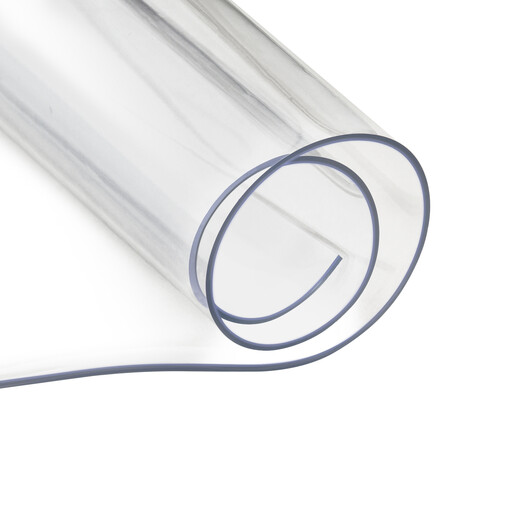
Why This Fits Their Persona: Ideal for households with children or pets where the dining table sees heavy daily use. Its generous size and robust material provide reliable protection against spills, paint stains, or scratches.
With a thickness of 2 mm, this protector resists curling and slipping—a common problem with thinner, lower-quality alternatives. It offers real physical protection, not just a flimsy cover.
Its waterproof and smooth surface is extremely easy to maintain. According to the manufacturer, it is heat-resistant and designed for long-term furniture protection.
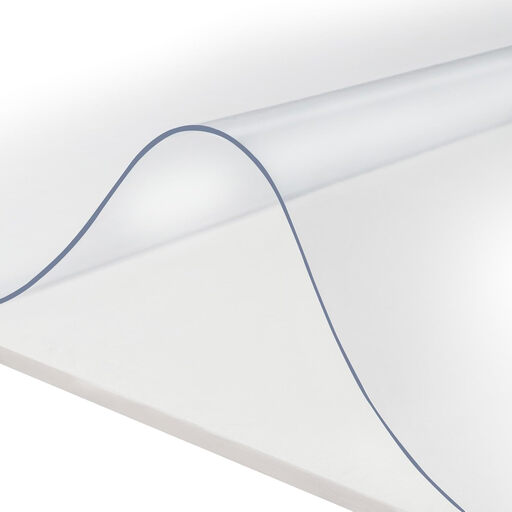
Why This Fits Their Persona: A practical size for standard desks or smaller workspaces. It protects the tabletop from scratches caused by keyboards, marks from monitors, or accidental coffee spills.
This product is made from high-quality PVC, which reduces the risk of strong chemical odors (off-gassing)—a common flaw in cheap products that is particularly disruptive in an office environment.
The 2 mm thick protector serves as an effective scratch-resistant desk pad. It is waterproof, oil-resistant, and, according to the manufacturer, easy to clean.
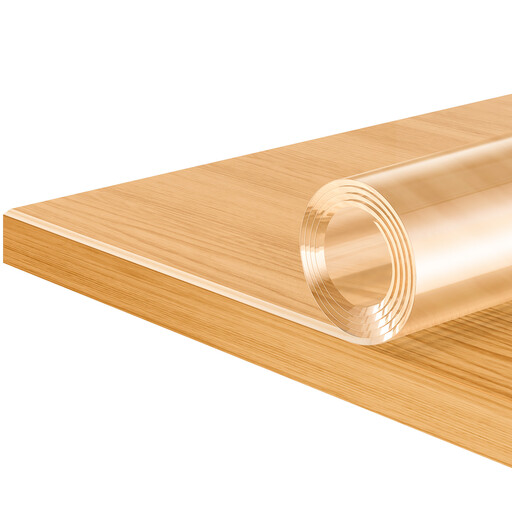
Why This Fits Their Persona: For owners of designer furniture where aesthetics are a top priority. The beveled edges (V-cut) look more elegant than sharp-edged protectors and provide more comfort when resting your arms.
The manufacturer proactively addresses the pitfall of air bubbles: the product description recommends placing a cloth underneath for glass or high-gloss surfaces. This prevents customer frustration.
The standout feature is the 45° V-cut edges, which reduce the risk of bumping into corners and provide a more pleasant feel. The protector is also non-slip.
We have compiled a complete, up-to-date list of products that fully meet these strict selection criteria and comply with German safety standards.
PVC protectors are delivered rolled up for shipping purposes. After unpacking, it may take some time for it to lie completely flat. To speed up the process, you can spread the protector out on the table and weigh down the corners with heavy books. Alternatively, gently heating it with a hairdryer on a low setting can help the material relax. For best results, lay the protector on the table with the curl facing down.
Most PVC table protectors offer basic heat resistance, typically up to around 80°C (176°F). This protects the table surface from warm plates, cups, or laptops. However, hot pots, pans, or casserole dishes coming directly from the stove or oven should never be placed directly on the protector. Always use a suitable trivet in these cases.
Air bubbles are caused by trapped air between two perfectly smooth surfaces. This issue occurs almost exclusively on high-gloss, lacquered, or glass tables. On matte or porous wood surfaces, protectors generally adhere without bubbles. If you have a high-gloss table, the safest method is to place a very thin tablecloth underneath the protector or choose a protector with a slightly matted underside.