
Lieferung heute & morgen

Qualitätsgarantie

Willkommens-Angebote freischalten: KOSTENLOSE Lieferung | Bis zu 80 % RABATT | Kostenlose 30-Tage-JoyPlus-Testphase
App herunterladen
A beautiful table is often the centerpiece of the home. Whether it's made of solid wood, delicate veneer, or a modern design, you want its surface to remain visible while being protected from the wear and tear of daily life. A transparent table protector seems like the ideal solution. However, the market is flooded with products whose quality differences are barely noticeable at first glance. Many buyers only realise after a short time that their choice was a compromise.
Before you make a decision, you should be aware of three common pitfalls that lead to disappointment and unnecessary expense:
A thoughtful choice not only preserves the beauty of your table but also saves you the frustration of a bad purchase.
To find the right transparent table protector, you should focus on a few crucial technical features. These determine the product's durability, protective performance, and appearance.
The thickness of the protector is one of the most important quality indicators. While 1 mm protectors may suffice for rarely used side tables, a 2mm table protector offers significant advantages for high-traffic surfaces like the dining table:
A thicker protector is an investment in a more durable and functional protective solution.
Two other details are important for daily use:
A good wipe-clean table protector is a basic requirement. High-quality PVC is water- and grease-repellent, so spills can be easily wiped away with a damp cloth.
When it comes to a heat-resistant table protector, it's essential to check the manufacturer's specifications carefully. Heat resistance up to 80°C means that warm dinner plates or cups are generally not a problem. However, for hot pots, pans, or casserole dishes, a separate trivet is mandatory to protect both the protector and the table underneath.
To help you choose, we have identified products that are well-suited for different user profiles.

Why This Fits Their Persona: Ideal for users seeking solid basic protection for less-frequented tables like desks or craft tables without a large budget. It offers a cost-effective way to experience the functionality of a protective cover.
Although it is 1 mm thick, it is described as more robust than conventional thin films. Crucially, the manufacturer notes that it is not suitable for high-gloss surfaces, proactively avoiding the "bubble trap."
Good value for money for basic protection. According to the manufacturer, the material contains recycled components.
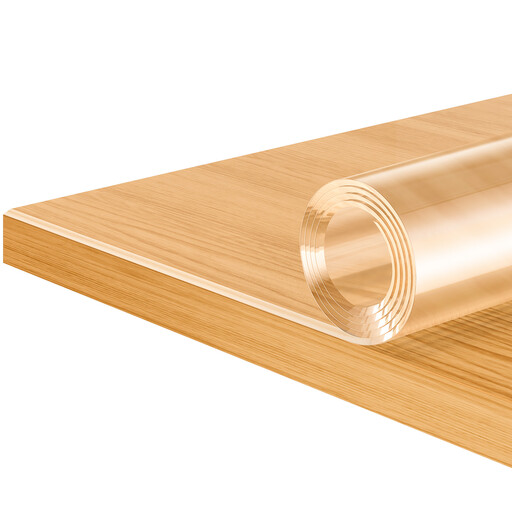
Why This Fits Their Persona: Perfect for the high-traffic family dining table. The robust 2 mm thickness effectively protects against scratches and impacts, while the beveled edge increases safety for children and improves comfort for adults.
The 2 mm material thickness prevents the "thin-film trap" of curling, inadequate protectors. The high-quality, beveled edge is a clear differentiator from basic, sharp-edged models.
High protective performance and durability. The 45° V-cut edge offers noticeably more comfort and safety in daily use.
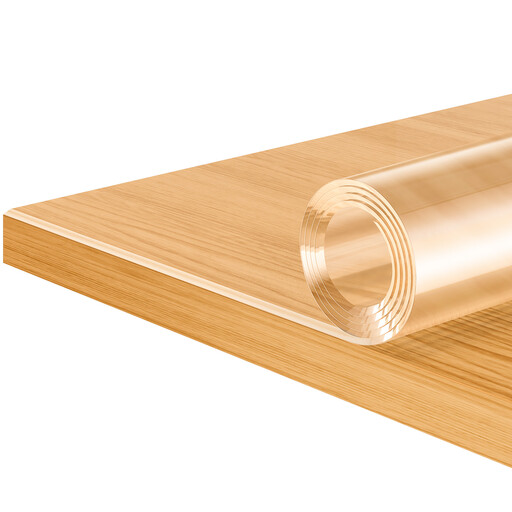
Why This Fits Their Persona: The solution for owners of large dining or conference tables who need a seamless and robust protector for their dining table. The generous dimensions cover the entire surface without any awkward seams.
This product combines the robust 2 mm thickness with a large size. This eliminates the impractical task of piecing together smaller protectors and guarantees a uniform, smooth protective layer.
Seamless protection for very large table surfaces. Combines the benefits of the 2 mm thickness with the comfort of a beveled edge.
We have compiled a complete, up-to-date list of products that fully meet these strict selection criteria and UK safety regulations.
Since the protectors are rolled for transport, they need some time to flatten out completely. Lay the protector on the table and weigh it down evenly with heavy books for 24 to 48 hours. Alternatively, you can speed up the process by gently warming the protector with a hairdryer on a low setting while smoothing it out.
Yes, most PVC protectors can be trimmed. Use a sharp utility knife or sturdy scissors and a straight edge (e.g., a steel ruler) as a guide. It is recommended to order the protector with a slight surplus, as the material can shrink minimally (approx. 0.5–1%) over time. Measure precisely and cut carefully.
The safest method is to choose a protector explicitly recommended by the manufacturer for high-gloss surfaces—these are often slightly satin-finished. For a completely transparent protector, there's a trick: place an ultra-thin, barely visible fabric tablecloth between the table and the protector. This prevents direct contact and thus the formation of bubbles. However, many manufacturers advise directly against use on such surfaces, which should be considered when selecting a product.