
Lieferung heute & morgen

Qualitätsgarantie

Willkommens-Angebote freischalten: KOSTENLOSE Lieferung | Bis zu 80 % RABATT | Kostenlose 30-Tage-JoyPlus-Testphase
App herunterladen
A beautiful table is often the centerpiece of the home—whether it's the dining table for shared meals, the desk in your home office, or the solid wood table in the living room. Protecting it from scratches, stains, and everyday wear and tear is a natural priority. A table protector film seems like the ideal solution, but the wrong choice can quickly lead to disappointment. Many products simply don't live up to their promises.
Before you make a decision, you should be aware of the most common pitfalls that can lead to buyer's remorse:
To avoid these issues, it's best to focus on a few crucial product characteristics. These features determine whether a protective film will be a functional and aesthetic enhancement for your table.
The thickness of the film is a direct indicator of its protective capability and durability. While thin films may only guard against liquids, a 2mm PVC table cover provides a solid buffer against impacts from dropped cutlery, scratches from keys, or indentations from writing tools. This thickness also ensures it lies flat and heavy on the table, dampens clattering noises, and has a more premium feel overall. A scratch-resistant table protector like this is an investment in the long-term preservation of your furniture.
The air bubble issue is a simple physical phenomenon that occurs when two perfectly smooth surfaces meet. To prevent this with a transparent table film, there are two proven solutions. According to manufacturers like WOLTU, placing an ultra-thin fabric tablecloth underneath can prevent air bubbles from forming. Alternatively, there are special films with a one-sided matte finish; their slightly textured underside breaks the direct contact, ensuring a flawless look. Always check the manufacturer's recommendations for high-gloss surfaces before purchasing.
A good table protector should be easy to maintain. PVC films are naturally water-repellent and can be easily wiped clean with a damp cloth, making them an ideal washable table protector. Another key factor is dimensional stability. PVC is a material that can react to temperature changes and may shrink slightly over time (typically 1-3 mm). For this reason, many films are delivered with a slight oversize. For a perfect fit, a custom-fit table protector can be trimmed to size, often with just a simple utility knife and a straightedge.
Based on these objective criteria, we have identified several products that represent a smart choice for specific use cases and households.

Why This Fits Their Persona: In a household with children, a table protector must be durable and, above all, easy to clean. This film reliably protects against spilled juice, paint stains, or scratches from toys, eliminating constant worry.
With a thickness of 2 mm, this film withstands daily wear and tear far better than thin, cheap alternatives that quickly tear or become unsightly.
High durability and easy cleaning. According to the manufacturer, the material is heat-resistant up to 80°C and odorless.
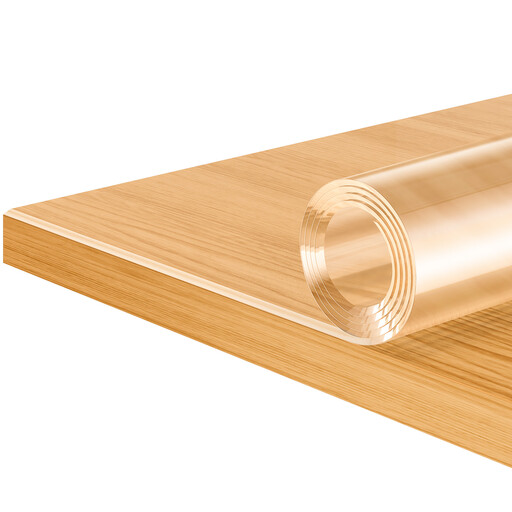
Why This Fits Their Persona: Anyone with an expensive solid wood or designer table wants maximum protection without hiding the beautiful grain and color. This film is highly transparent, and its beveled edge provides a comfortable feel and a sophisticated look.
The beveled edge (V-cut) is a detail that makes all the difference. It eliminates the hard, sharp edge found on ordinary films, ensuring comfort when resting your arms on the table.
The combination of 2 mm thickness and a polished, beveled edge offers high-level protection without compromising the table's aesthetics.
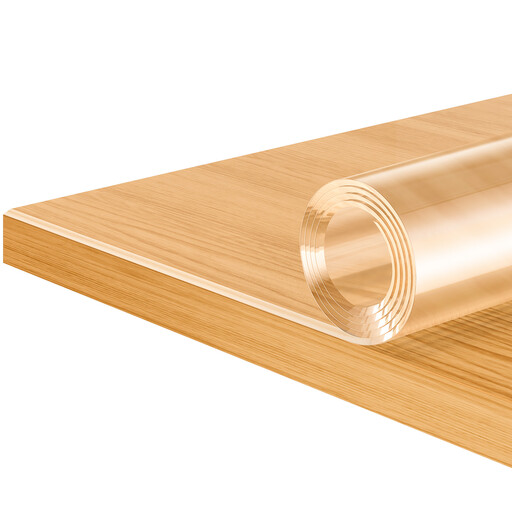
Why This Fits Their Persona: On a desk, this film serves not only as protection but also as a functional work surface. It needs to be smooth enough for a computer mouse and provide a stable writing area, all while shielding the tabletop from scratches and coffee rings.
Unlike thin desk pads that curl or slide around, this 2 mm thick film lies flat and stays put due to its own weight. The beveled edge prevents pressure marks on your forearms during long work sessions.
Creates an ideal, scratch-resistant work surface that can also double as a mouse pad. Its transparent design preserves the look of your desk.
We've compiled a full list of products that meet these strict selection criteria.
Since the films are rolled for shipping, they need some time to flatten out completely. Lay the film flat on the table and weigh down the corners and any wavy areas with heavy books for 24-48 hours. Alternatively, you can try rolling it in the opposite direction or, as per manufacturer instructions, gently warm it with a hairdryer on a low setting to speed up the process.
No, you should avoid doing this. Most PVC protective films, including those mentioned here, are heat-resistant up to about 80°C (176°F), according to manufacturers. A hot pot or pan straight from the stove will far exceed this temperature and would permanently damage the film. Always use a proper trivet for hot cookware.
Air bubbles form when a smooth film is placed on another perfectly smooth, non-porous surface like glass, high-gloss lacquer, or polished marble. The trapped air cannot escape. To prevent this, you can place a very thin, barely visible fabric tablecloth between the table and the film. This breaks the direct contact and allows the air to escape. For such surfaces, it is advisable to check the manufacturer's recommendations before you buy.