
Lieferung heute & morgen

Qualitätsgarantie

Willkommens-Angebote freischalten: KOSTENLOSE Lieferung | Bis zu 80 % RABATT | Kostenlose 30-Tage-JoyPlus-Testphase
App herunterladen
A high-quality table is often the centerpiece of the home—whether it's the dining table for shared meals, the desk in your home office, or the workbench for creative projects. Protecting it from scratches, stains, and everyday wear and tear is a smart move. A table protector film offers a practical solution, shielding the surface without obscuring the furniture's appearance.
However, the selection is vast, and not every film delivers on its promise. Before you make a decision, it's important to know the most common pitfalls that can lead to a purchase you'll regret.
Common Problems When Choosing a Table Protector Film:
To avoid these problems and find the right protector for your dining table, you should focus on a few crucial technical specifications.
The thickness of the film is one of the most important factors for its protective performance and durability. The choice between a 1 mm and a 2mm table film largely depends on its intended use.
To avoid the dreaded air bubbles, the finish of your table surface is critical.
A good table protector film should be both waterproof and easy to maintain. A wipeable tablecloth made of PVC can be effortlessly cleaned with a damp cloth, which is a major advantage, especially in households with children or pets.
However, the term heat-resistant requires a closer look. Most PVC films can withstand temperatures of about 60°C to 80°C (140°F to 176°F). This is sufficient for warm plates, cups, or laptops. However, hot pots, pans, or casserole dishes straight from the oven must never be placed on it, as this can cause permanent warping or melt marks. A trivet is still required for this purpose.
Here are some recommendations tailored to different user profiles that take the above criteria into account.
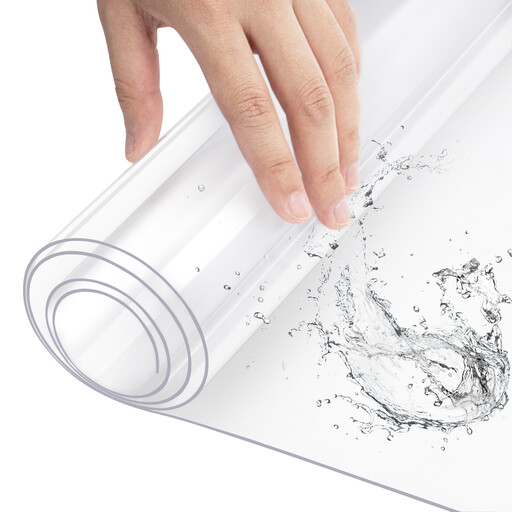
Why it's a good fit: Ideal for protecting desks or side tables with light use. The 1 mm thickness provides solid baseline protection without being bulky, making it a cost-effective solution.
The product description clearly states that this film is not suitable for high-gloss surfaces, thus preventing the problem of air bubbles. The defined 1 mm thickness avoids the purchase of a film that is too thin and unusable.
Offers a good balance of protection, discreet appearance, and price for lightly used furniture surfaces.

Why it's a good fit: Perfect for the dining table in a busy household. The 2 mm thick PVC construction offers robust protection against the challenges of family life—from spilled drinks to coloring pens.
The material thickness of 2 mm prevents you from buying a film that is too thin to withstand the stress. According to the manufacturer, the film is supplied with a length tolerance to compensate for potential material shrinkage.
High durability and longevity for heavily used tables. The film is waterproof, oil-resistant, and heat-resistant for warm dishes.
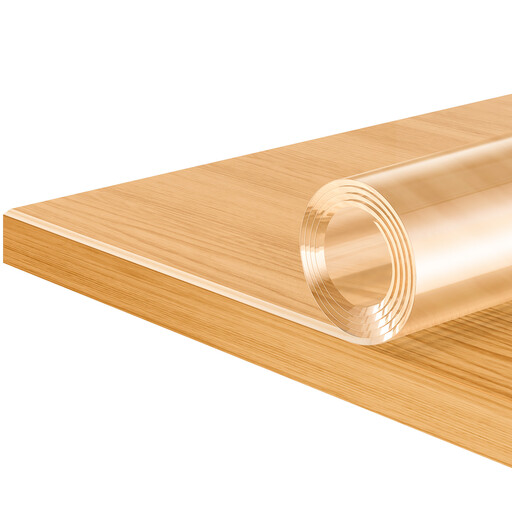
Why it's a good fit: For users who value comfort and a refined aesthetic in addition to protection. The beveled edges provide a more comfortable feel when resting your arms on the table.
This product addresses an often-overlooked detail: edge comfort. A sharp 90-degree edge can be uncomfortable. The 45° V-cut solves this problem, providing a more premium feel and look.
Combines robust 2 mm protection with a thoughtful design feature for enhanced user comfort and an elegant appearance.
We have compiled a complete, up-to-date list of products that fully meet these strict selection criteria and German safety regulations.
Since the films are delivered rolled up, they need some time to flatten out completely. Unroll the film and place it on the table with the curved side facing down. Weigh down the corners and the center with heavy objects like books for 24 to 48 hours. Gently warming it with a hairdryer on a low setting can speed up the process.
It is generally not recommended to use a smooth, transparent film directly on high-gloss, glass, or lacquered surfaces, as this can lead to air pockets (bubbles). For such tables, films with a slightly frosted or textured surface are the better choice. Alternatively, a very thin, barely visible fabric tablecloth can be placed between the table and the film to prevent direct adhesion.
Most PVC table protector films are heat-resistant up to a temperature of about 60–80°C (140–176°F). This is sufficient for warm plates and cups. However, you should never place hot pots, pans, or casserole dishes directly from the stove onto the film, as the heat can permanently damage the material. Always use a suitable trivet for very hot items.