
Lieferung heute & morgen

Qualitätsgarantie

Willkommens-Angebote freischalten: KOSTENLOSE Lieferung | Bis zu 80 % RABATT | Kostenlose 30-Tage-JoyPlus-Testphase
App herunterladen
A high-quality table is often the centrepiece of the home – whether it's the dining table for shared meals, the desk in the home office, or the kitchen countertop. To protect its surface from scratches, stains, and everyday wear and tear, a transparent table protector is a practical solution. However, the market offers a bewildering array of options, and not every film delivers on its promise.
This guide will help you avoid the most common pitfalls and make an informed decision that preserves the value of your furniture for the long term.
By Joybuy Product Recommendation Officer, 29 August 2026
Many buyers only realise after unpacking that the product does not meet their expectations. Look out for these three typical flaws to avoid a poor purchase:
To find the right protective film for your dining table or desk, you should check three core parameters. These determine the product's durability, functionality, and aesthetics.
The thickness of the film is directly responsible for its protective performance and how flat it lies. While thin films (<1.5 mm) offer only light protection, a thickness of 2mm for table protection has established itself as a reliable standard for most applications.
Not every transparent tablecloth is suitable for every table surface. The crucial question is: do you have a matte or a high-gloss surface?
A good washable PVC tablecloth should be not only practical but also safe. Pay attention to the following features:
Instead of making a one-size-fits-all recommendation, we have selected products tailored to specific user profiles.
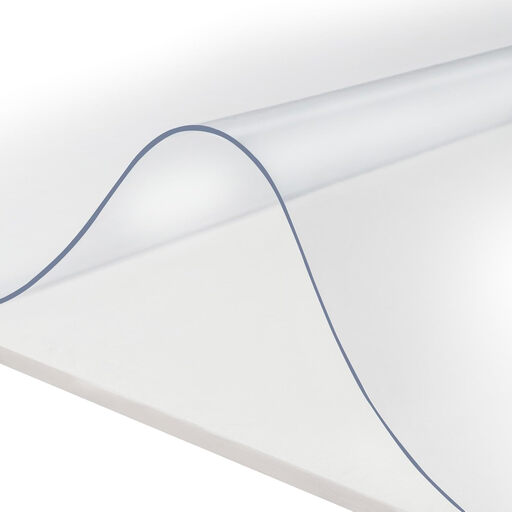
Why it's a match: Ideal for the dining table in a family with children. The film provides reliable protection against spilled drinks, paint stains, or scratches from toys and cutlery. Cleaning is straightforward and quick.
The robust 2 mm material thickness prevents the slipping and curling that often occurs with thinner films. It offers solid, long-lasting protection rather than just a thin barrier.
The surface is completely waterproof and oil-resistant, making it extremely easy to clean with a damp cloth. Its heat resistance protects against warm plates.
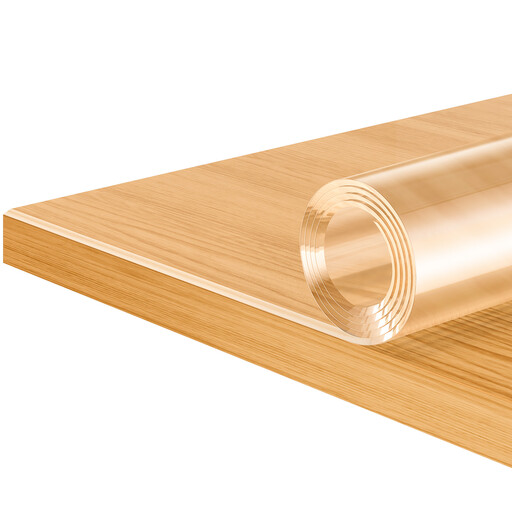
Why it's a match: Perfect for the desk. The film protects the work surface from scratches caused by laptops, keyboards, or pens and provides a smooth surface for a mouse. The key advantage lies in the detail of the edge finishing.
The high-quality PVC material is low-odour and therefore not disruptive in the study. The bevelled edge prevents the uncomfortable feeling of a sharp edge on your forearms during long hours at the desk.
The 45° V-cut edge is an ergonomic detail that significantly increases comfort. The film not only protects the table but also makes working on it more pleasant.

Why it's a match: This film offers the robust protection of a 2 mm cover while preserving the view of the valuable tabletop. It is designed for users who do not want to compromise the aesthetics of their high-gloss or glass table.
The manufacturer explicitly states that the film is not suitable for high-gloss surfaces to prevent air bubbles. This transparency helps customers make an informed decision and proactively solve the problem (e.g., by using a thin underlay).
High transparency and a robust 2 mm thickness. The manufacturer's clear application advice is a sign of a well-thought-out product and saves the buyer from disappointment.
We have compiled a complete, up-to-date list of products that fully meet these strict selection criteria and applicable safety regulations.
Since the films are delivered rolled up, they need some time to flatten out completely. Place the film on the table and weigh down the corners and edges with heavy books for 24 to 48 hours. Alternatively, you can gently warm the film with a hairdryer on a low setting while smoothing it out.
Yes, this is usually possible without any problems. Use a sharp utility knife or sturdy scissors and a straight edge (e.g., a long ruler or a spirit level) as a guide. Measure carefully before you cut. Some manufacturers deliberately supply the film slightly longer to compensate for a natural material shrinkage of a few millimetres over time.
Most PVC films are heat-resistant up to a temperature of about 80°C. This means they can withstand the heat from normal plates, laptops, or coffee cups. However, you should never place a hot pot, casserole dish, or pan directly from the hob or oven onto the film, as this can cause permanent deformation or melting marks. Always use a trivet for this purpose.