Choosing a table tennis racket can be challenging, given the vast array of options. Whether for beginners, regular club training, or competitive play, the racket's properties have a direct impact on control, speed, and spin generation. This guide will help you understand the features of different rackets and make an informed decision that suits your individual playing style.
What to Look for When Buying a Table Tennis Racket
The right choice depends on several factors that go beyond pure design. The material, construction, and how it matches your skill level are crucial.
1. Your Skill Level as a Starting Point
The demands on a racket vary depending on your experience.
- Table Tennis Rackets for Beginners: Entry-level models are typically designed for maximum ball control. They are more forgiving of imperfect shots, allowing you to learn the fundamental techniques with confidence. The speed is intentionally reduced to help you develop a better feel for the ball.
- Table Tennis Rackets for Intermediate Players: Players who have mastered their basic techniques and train at a club need a racket that offers a balanced mix of control, speed, and spin. These models enable more advanced shots like topspins and backspins.
- Professional Table Tennis Rackets: Competition rackets are optimized for maximum speed and spin generation. They require a very clean technique and extensive experience, as their high dynamics are less forgiving. Materials like carbon fibre are often used to reinforce the wood and maximize power transfer.
2. Racket Construction: Blade, Rubber, and Handle
A table tennis racket consists of three main components whose interaction determines its playing characteristics.
- The Blade: The heart of the racket. It is usually made of several layers of glued wood veneers. The number and type of layers (e.g., classic 7-ply all-wood) influence stiffness and speed. Intermediate and professional models often integrate carbon layers (dual-layer carbon) to enlarge the "sweet spot" (the optimal hitting area) and increase speed.
- The Rubber: The rubbers are crucial for spin and speed. The main distinction is between pimples-in and pimples-out rubbers. Pimples-in rubbers are the standard for offensive and spin-oriented playstyles. The thickness of the underlying sponge also affects the speed.
- The Handle: The most common handle shape in Europe is the shakehand grip. Within this style, there are variations such as flared (wider at the bottom), anatomic, or straight. An ergonomic, non-slip handle ensures a stable grip and precise power transfer during intense rallies.
Recommended Table Tennis Rackets
Based on the criteria mentioned, we have compiled a selection of models from the Double Fish brand for different types of players.
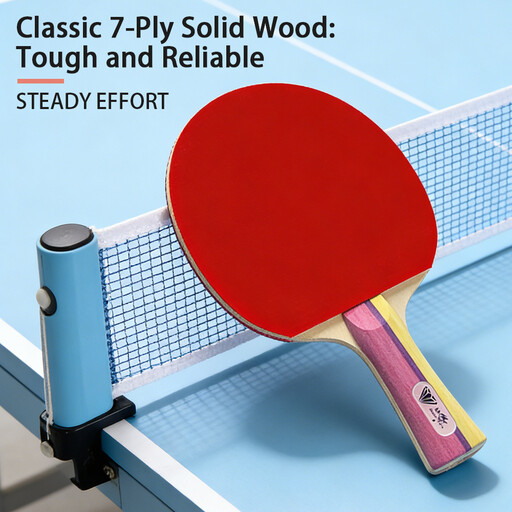
For Beginners and Recreational Players: Double Fish Diamond Series 1-Star

Why it stands out: This model is consistently tailored to the needs of beginners. The classic 7-ply all-wood construction provides high stability and a good feel for the ball, making it easier to learn the basic strokes.
Advantages:
- Balanced Playstyle: The double-sided rubber (pimples-out for speed, pimples-in for control) allows you to practice both offensive and defensive shots.
- High Fault Tolerance: An enlarged sweet spot improves hitting accuracy and forgives imprecise ball contact.
- Secure Grip: The multi-coloured, non-slip, and sweat-absorbent handle ensures stable handling.
Who is it for?: Ideal for children, students, and adult beginners looking for a reliable racket for their first steps in table tennis.
For Intermediate and Club Players: Double Fish Diamond Series 4-Star

Why it stands out: The 4-Star racket is the logical next step for players looking to take their game to the next level. It offers a great balance of stability and spin potential to perform well in training and initial competitions.
Advantages:
- Improved Dynamics: The 7-ply all-wood blade with a reinforced core provides good feedback and allows for more powerful shots.
- Spin-Oriented Rubber: The highly elastic and wear-resistant rubber is designed for a spin-based game and supports various topspin shots.
- Comfortable Handle: The smoothly polished all-wood handle with a non-slip coating fits securely in the hand and prevents slipping during fast rallies.
Who is it for?: Ambitious recreational players and intermediate club players who need a racket for regular training.
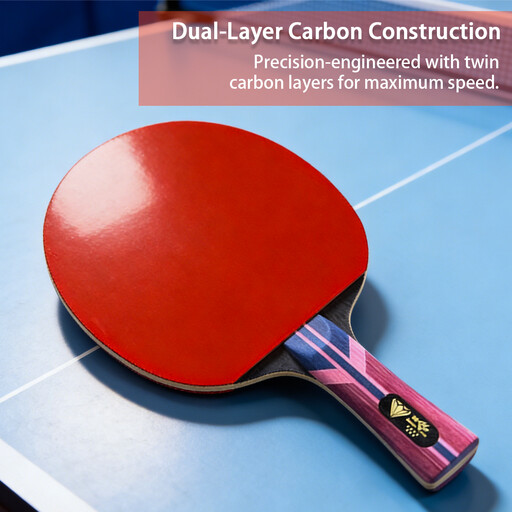
For Competition Athletes: Double Fish Diamond Series 7-Star

Why it stands out: This competition racket is designed for maximum performance. The construction with dual-layer high-modulus carbon gives the racket enormous explosiveness and speed for a dominant attacking game.
Advantages:
- Maximum Power Transfer: The carbon layers maximize the ball's launch speed, enabling powerful, fast shots.
- Competition-Ready Build: The high-tension rubber ensures a quick ball release, while the robust edge guard protects the racket from impacts.
- Precise Control: The ergonomically shaped, flared shakehand grip offers high comfort and allows for exact racket guidance at high speeds.
Who is it for?: Experienced club and competition players seeking a professional table tennis racket with high speed potential for an offensive-oriented game.
Looking for More Options?
The models presented cover a broad spectrum, but the selection of table tennis rackets is even larger. If you want to compare more models or filter by specific features, you can find a more comprehensive overview in our main category.
Discover more rackets here
Frequently Asked Questions (FAQ)
What is the difference between a beginner and a professional table tennis racket?
The main difference lies in the balance between speed and control. A table tennis racket for beginners is slower and more control-oriented to make learning the technique easier. A professional table tennis racket is designed for maximum speed and spin, which requires a precise and mature technique. Professional models often use lighter and stiffer materials like carbon, while beginner rackets are usually made of pure wood constructions.
How do I properly care for my table tennis racket?
To maintain the performance and longevity of your racket, you should regularly clean the rubber with a soft, dry cloth to remove dust and dirt. Avoid high temperatures, direct sunlight, and moisture. It is best to store the racket in a protective case to shield it from impacts and scratches.
What does "shakehand grip" mean?
The shakehand grip is the most widely used grip in table tennis worldwide. The racket handle is held as if you were shaking someone's hand. The index finger rests on the bottom edge of the rubber, which allows for good control and flexibility for both forehand and backhand shots.