
Lieferung heute & morgen

Qualitätsgarantie

Willkommens-Angebote freischalten: KOSTENLOSE Lieferung | Bis zu 80 % RABATT | Kostenlose 30-Tage-JoyPlus-Testphase
App herunterladen
A high-quality dining table is often the centrepiece of the home. To protect its surface from scratches, stains, and everyday wear and tear without obscuring the beauty of the wood or design, a transparent table protector is a practical solution. However, the market offers a bewildering array of options, and not every product delivers on its promise. Many buyers are frustrated by poor quality that creates more problems than it solves.
Before you make a decision, you should be aware of the common pitfalls:
To avoid these problems, it's essential to pay attention to a few technical features. These determine the durability, functionality, and appearance of your dining table protector.
The thickness of the film is one of the most important quality indicators. While thinner films are cheaper, they often don't provide the desired level of protection.
The surface finish is crucial for preventing the unsightly air bubble effect.
A heat-resistant table film is also a relevant feature. Most PVC films are resistant to temperatures up to around 80°C. This protects against hot plates or cups. However, pots or pans taken directly from the hob must not be placed on it, as this can lead to permanent warping or damage.
Most transparent protective films are made of polyvinyl chloride (PVC). A high-quality washable PVC tablecloth is characterised by a dense, non-porous surface. Liquids like water, juice, or oil cannot penetrate and can be easily wiped away with a damp cloth. Look for products described as low-odour to avoid unpleasant fumes.
Based on the quality criteria mentioned, we have identified some products that are suitable for different needs and households.

Why This Fits Their Persona: A functional and cost-effective solution for surfaces with light use, such as desks, craft tables, or console tables. It provides basic protection from scratches and liquids without breaking the bank.
At 1 mm thick, it is more robust than cheap films and lies flatter. The manufacturer also explicitly states that it is not recommended for high-gloss surfaces, which prevents the mistake of buying a product prone to air bubbles.
Water- and dirt-repellent; easy to clean. Flexible and can be cut to size.
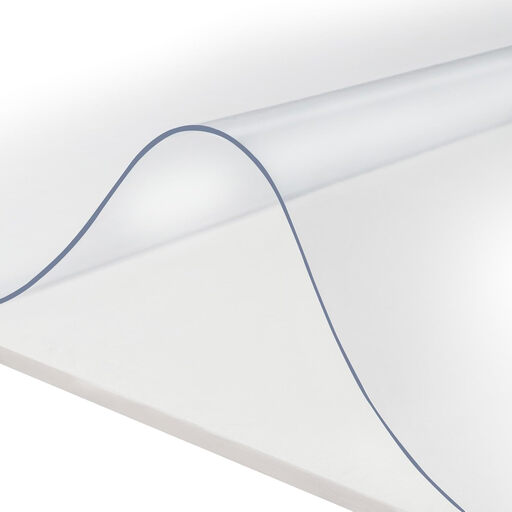
Why This Fits Their Persona: Ideal for the heavily used dining table in a family household. The film must withstand daily meals, spilled glasses, and children's homework without losing its protective function.
The 2 mm thickness ensures high dimensional stability and prevents the edges from curling up. It provides a robust barrier against scratches and impacts and sits securely on the table.
Very hard-wearing and durable. Fully waterproof and oil-resistant for effortless cleaning.
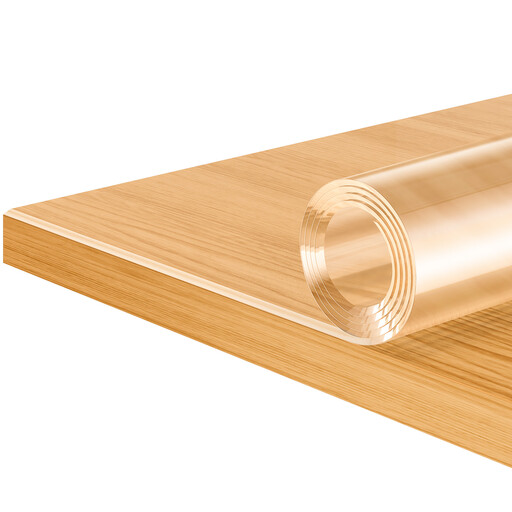
Why This Fits Their Persona: For users who want not only robust protection but also a premium feel and added safety. Especially relevant in households with children, where sharp edges can pose a risk.
Combines the benefits of a 2 mm thick film with thoughtful finishing. The bevelled edges prevent the unpleasant feel of a sharp plastic edge and minimise the risk of injury.
The bevelled edge (Biseauté) provides a pleasant, smooth transition at the table's edge. The non-slip texture on the underside improves grip.
We have compiled a complete, real-time list of products that fully satisfy these strict selection criteria and UK safety regulations.
New films are delivered rolled up and often have waves or curled edges. To flatten the film, unroll it in the opposite direction and let it sit for a few hours. Alternatively, you can place the film on the table and weigh it down with heavy books. Gentle heat, for example from a hairdryer on a low setting and at a sufficient distance, can speed up the process.
On high-gloss, glass, or lacquered tables, a smooth film will trap air. The most reliable way to prevent this is to choose a film with a slightly matte or textured underside. If you already have a high-gloss film, there's a trick: place a very thin, barely visible fabric tablecloth (e.g., made of organza) between the table and the film. Another, less permanent method is to moisten the table surface with a minimal amount of water (finely misted with a sprayer) and then smooth the film from one side to the other, pushing the water out.
No. The "heat-resistant" specification (usually up to 80°C) means the film can withstand the heat from hot plates, bowls, or cups. However, it is not designed to have a hot pot or pan placed directly on it from the hob. The extreme heat would permanently damage and melt the PVC. Always use separate trivets for cookware.