
Lieferung heute & morgen

Qualitätsgarantie

Willkommens-Angebote freischalten: KOSTENLOSE Lieferung | Bis zu 80 % RABATT | Kostenlose 30-Tage-JoyPlus-Testphase
App herunterladen
A table needs to suit your room, how you plan to use it and the space available. When looking for tables for your home and office, product images and marketing claims can seem more convincing than the actual technical specifications. Common reasons for buying the wrong table include a work surface that’s too small, unclear load capacity details or a design that’s difficult to put away after everyday use.
This guide explains which measurements and materials to consider before you buy, and which table could suit different needs.
A small dining table may be big enough for two people, but that doesn’t automatically make it suitable as a permanent desk. You’ll usually need more depth and width for a laptop, a second monitor and writing materials. So check not only the table surface, but also the clearance from walls, radiators and seating.
The description ‘sturdy metal frame’ alone tells you little about how the table is actually made. More useful details include the frame material, tube dimensions, table top thickness, maximum load and adjustable feet. The load should also be distributed evenly, and a high stated capacity is no substitute for secure assembly.
An adjustable-height desk won’t automatically suit every way of working. The key details are the actual height range, lifting speed, controls and maximum load. With an electric sit-stand desk, make sure the cables are accessible and that there’s enough clearance around moving parts. When cleaning, disconnect the power supply in line with the manufacturer’s instructions.
Compact dimensions can work well for a small dining table or an extra work surface. A space-saving table with a folding design is easier to put away after use. Before you buy, measure the space it will take up both unfolded and folded.
For a desk or computer table, the main things to consider are:
For example, a 120 × 60 cm work table is suitable for a laptop or a single monitor. If you use two monitors or share the table, a larger surface such as 180 × 80 cm is more practical.
An MDF table top is made from compressed wood fibres and can provide an even, easy-care surface. Check the stated thickness and any guidance on moisture, scratch protection and cleaning. Don’t use harsh cleaning products on a coated surface.
A wood-effect table isn’t necessarily made from solid wood. That’s not a drawback, but it’s worth bearing in mind when deciding what to buy. For everyday use, the edge finish, surface coating and table top thickness matter more than appearance alone.
A sturdy metal frame can support the table top securely when its joints and feet are suitably designed. Adjustable feet help compensate for uneven floors. For folding tables, also check that the locking mechanism clicks fully into place.
Ideally, assembly instructions should include diagrams, along with all the necessary fixings. Check all the screws and joints again after a few days of use. Always place the table on a level surface.
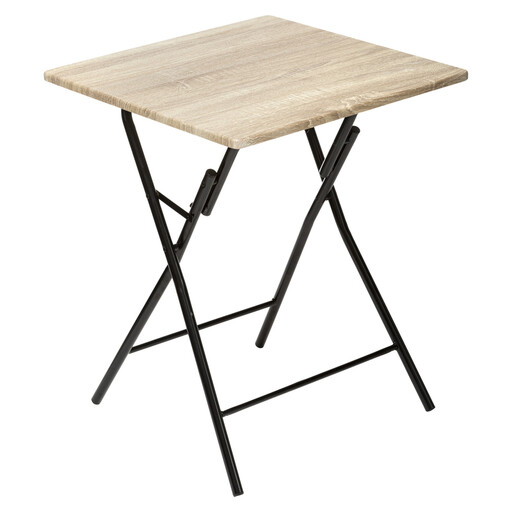
Why it suits this profile: This compact folding table is designed for small flats, balconies or as an extra surface. At 60 × 60 cm, it has room for two people and folds away when not in use.
The dimensions and weight of 6.8 kg are clearly stated. The folding mechanism is designed for compact storage; make sure the lock is fully engaged before use.
Wood-effect MDF top, steel frame, 76 cm height and easy cleaning with a soft, damp cloth.
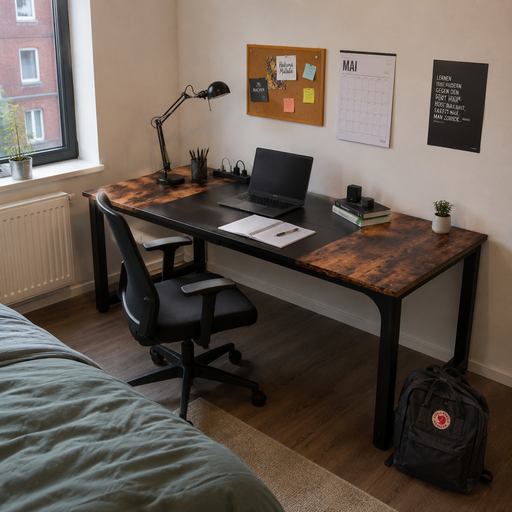
Why it suits this profile: The 180 × 80 cm surface works well as a spacious desk, work table, dining table or conference table. There’s room for several monitors or for sharing.
The product details specify a 1.5 cm-thick coated MDF top, a powder-coated steel frame and adjustable feet. Bear in mind that the four-piece table top may affect transport and assembly.
5 × 5 cm steel tubes, a height of 75 cm and a maximum load capacity of up to 260 kg, as stated by the seller, when the weight is evenly distributed.
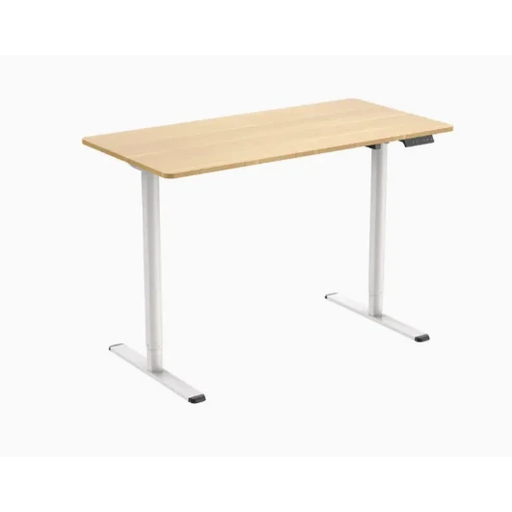
Why it suits this profile: This electric sit-stand desk is aimed at people working from home, students and professionals who want to switch between sitting and standing. How well it suits you depends on your working routine and finding the right height.
The height range of 730 to 1180 mm, maximum load of 60 kg and six-button controls are clearly specified. Protect electrical components from water.
120 × 60 cm table top, 450 mm lift, lifting speed of 15 mm/s and four programmable height settings.
A 120 × 60 cm desk may be big enough for a laptop or a single monitor. If you use two monitors, speakers and documents, allow for more depth or width. You’ll also need to consider cables, clearance from the wall and the space your office chair needs to move.
Check the height range, maximum load, lifting speed and number of programmable positions. The floor should be level, and cables shouldn’t become taut when you adjust the height. Children should not be left unsupervised near moving parts.
Make sure the table is level, avoid putting too much weight in one spot, and clean the surface with a soft, slightly damp cloth. Check the lock on folding tables before each use. Inspect screws and joints regularly, and tighten them if needed.