Designing covers on a tablet you already own
If you want to create on a device you already have, first check that the exact stylus and tablet combination is compatible. Apple, Samsung and Microsoft list compatibility by model.


First, choose a stylus that’s explicitly compatible with your exact tablet model. For pressure-sensitive brushstrokes, your drawing app and the brush you use must also support pressure input; for simple outlines, tilt recognition may be enough. The charging method, storage and any accessories you might need also affect how well the stylus fits into life at a small, shared desk.
If you want to create on a device you already have, first check that the exact stylus and tablet combination is compatible. Apple, Samsung and Microsoft list compatibility by model.
If you want to vary your lines or brushstrokes deliberately, consider pressure and tilt recognition separately. Check that your drawing app and chosen brush support the input you need.
If you use your desk for other tasks too, the charging method, storage and availability of compatible replacement nibs can all make a difference to your everyday workflow.
Start with your exact tablet model, then check which inputs your drawing style needs. After that, the contents of the box, charging method and storage options can help you work out how the stylus will fit into everyday life at a small desk.
| Consideration | What to check before buying | Who will find this especially important |
|---|---|---|
| Compatibility | Check your tablet model and generation against the manufacturer's list for the full stylus model number. | If I want to draw on my existing tablet, the stylus needs to be an exact match. Around 36% of consumers put compatibility first. |
| Brush control | Check pressure and tilt recognition, as well as the brush you plan to use in the relevant app. | If I want varied outlines or shading, I need to know whether my brush responds to pressure or tilt. Around 29% of consumers prioritise control over lines and brushes. |
| Total cost | Check what comes with the tablet and stylus, charging accessories and any replacement nibs you might need. | If I want to avoid buying a second stylus or unnecessary accessories for my cover project, I’ll first check what I already have. Around 21% of consumers pay particular attention to the total cost. |
| Charging and storage | Check the charging method and any accessories needed for the specific version; make sure there’s a safe place to store it. | If I need to use my desk for studying again after drawing, my stylus should be easy to charge and put away. Around 14% of consumers place particular importance on their desk setup and workflow. |
Support depends on the tablet and stylus version. For example, Samsung describes the EJ-PT730 as a replacement for the original stylus for the Galaxy Tab S7 FE.
Before ordering, check the exact tablet generation and full stylus model number against the relevant manufacturer information.
Tilt and pressure are different inputs. Logitech explicitly describes the Crayon in its instructions as not pressure-sensitive.
If you want your brushes to respond to pressure, check that the stylus, tablet and brush in the app all support this feature.
Apple says the Pencil (USB-C) attaches magnetically to the iPad, but pairs and charges using a USB-C cable. According to Apple, the Pencil Pro also pairs and charges magnetically.
Check the charging method and what’s included with the exact version, rather than relying on magnetic attachment alone.
What’s included varies by tablet model, so buying an extra stylus may be unnecessary.
First check whether your tablet comes with a stylus and whether it’s suitable for your drawing app and preferred style.
The Apple Pencil Pro and Apple Pencil (USB-C) are designed for specific, explicitly supported iPad models.
The S Pen EJ-PX510BWEGEU is designed for the specified Galaxy Tab S9 FE and Tab S10 FE series.
Wacom describes the Bamboo Ink Plus as suitable for pen-enabled Windows devices with Active ES or Microsoft Pen Protocol (MPP).
The Surface Slim Pen is designed for Surface models that explicitly support pen input.
The Logitech Crayon is described as an iPad stylus for sketching and annotating; the product page referenced here is for the Lightning version.
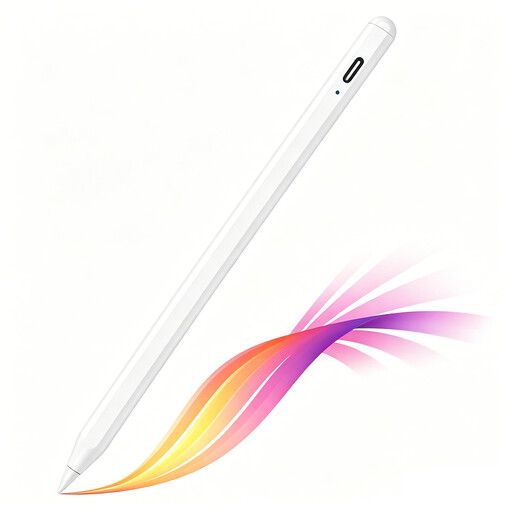
This selection features iPad styluses for sketching and varying your strokes with tilt. Before buying, check that your exact iPad model is supported.
 No image available
May suit sketching and shading with tilt, provided your iPad model is supported.
Tilt recognition and palm rejection; magnetic attachment and LED battery indicator.
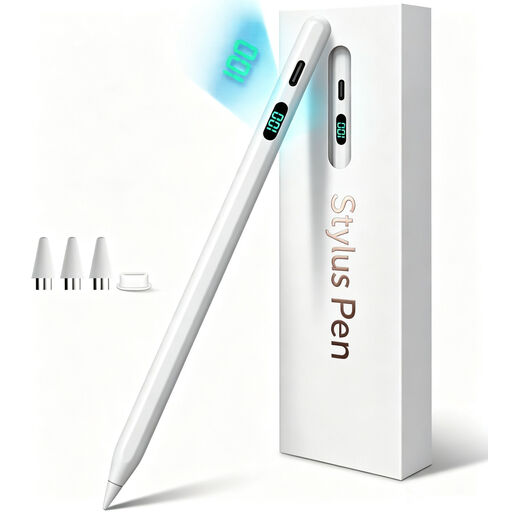
USB-C charging port; listed as compatible with selected iPad models in the product name.
 No image available
For sketching and varying your strokes with tilt, provided your iPad model is supported.
Listed as not pressure-sensitive, so it won’t support pressure-based brush control.
USB-C fast charging; the product name lists iPad models from 2018 to 2026.
Not for every design: a compatible setup with tilt recognition may be enough for consistent outlines. If you want to control line width or opacity with pressure, check the stylus, tablet and brush in the app. Procreate describes pressure-sensitive brush settings.
First, check the exact iPad and Pencil models against Apple’s compatibility list, and confirm the iPadOS version specified there. According to Apple, the Pencil (USB-C) pairs and charges using a USB-C cable; on this model, magnetic attachment is for storage.
If you use Procreate on iPad, the Procreate handbook says you can export, among other formats, a PSD file with its layers preserved or a PNG file. Check which file format is needed before flattening your working file.
Not necessarily. Under § 23 UrhG, adaptations or alterations may generally only be published or used with the creator’s consent. The law sets out an exception where the new work maintains sufficient distance from the work it uses. Whether that applies in a particular case can’t be judged simply by looking at which stylus you buy.
For consumer purchases from a trader in the EU, EU consumer information states that there is a legal guarantee of at least two years from receipt of the goods; this is separate from any voluntary manufacturer’s guarantee. For distance purchases, you generally also have a 14-day right to cancel from delivery, subject to statutory exceptions.