For detailed drawing on your own tablet
If you want to draw fine lines on a tablet you already own, first check compatibility with your exact device model and the drawing features you need.


Choose a stylus based first on your exact tablet model and the stylus technology it supports: a stylus your device doesn’t support won’t help you draw finer lines. Pressure and tilt recognition can be useful for sketching, while a simpler compatible stylus may be enough for annotating plans. At a shared desk, storage, charging requirements and replacement nibs also matter — stylus specifications alone can’t guarantee a drawing is to scale.
If you want to draw fine lines on a tablet you already own, first check compatibility with your exact device model and the drawing features you need.
If you move between workstations, consider how you’ll store the stylus, whether it needs charging and whether worn nibs can be replaced.
A simpler compatible input stylus may be enough for comments and mark-ups; extra pressure sensitivity and drawing features aren’t always necessary.
| Consideration | What to check before buying | Who it matters most to |
|---|---|---|
| Tablet compatibility | Check the device model and generation, as well as operating system requirements. For Windows, check whether it uses AES or MPP; for EMR styluses, check the display technology. | If I want to use the stylus with my existing tablet, confirmed device compatibility is essential. Around 36% of consumers prioritise compatibility. |
| Control over fine and variable lines | Check the specific stylus’s pressure and tilt recognition, and whether the app you use supports them. | When sketching architectural details, I want to vary my strokes deliberately without mistaking stylus specifications for a guarantee of accurate scale. Around 29% of consumers focus on line control. |
| Using it at a shared desk | Check how it attaches, whether it needs charging or pairing, and which replacement nibs are compatible. | If I move between workstations, I want the stylus to be easy to find and ready to use, with a replacement available when the nib wears out. Around 21% of consumers put practical handling first. |
| Upfront and ongoing costs | Compare what’s included, any charging accessories you may need and replacement nibs with the drawing features you actually need. | If I mainly annotate plans, I don’t want to pay for features or accessories I won’t use. Around 14% of consumers prioritise what’s included and ongoing costs. |
Some styluses only work with specific iPad models, Windows protocols or EMR displays. An incompatible stylus may not deliver the input you expect.
Before ordering, check your exact tablet model and the features you need against the information provided by the device and stylus manufacturers.
These specifications describe the stylus’s input features; they don’t independently confirm the accuracy of a drawing in a particular app.
Check the scale and output in the drawing or CAD software you plan to use, rather than assuming stylus specifications mean your plan will be to scale.
Some models need to be charged or may require a separate charging accessory. Battery-free EMR styluses don’t need charging.
Check what’s included, what charging facilities are available and whether replacement nibs for the exact model are easy to get.
Apple Pencil Pro and Apple Pencil (USB-C) are designed for specific, explicitly listed compatible iPads.
S Pen models are designed for the Galaxy tablets listed for each one; the Creator Edition is an option for compatible Galaxy devices.
Noris digital classic and Noris digital jumbo are battery-free drawing styluses for compatible EMR displays.
The Bamboo Ink Plus is designed for tested, pen-enabled Windows devices that use AES or MPP.
The Surface Slim Pen is designed for supported Surface devices and Windows pen input.
This selection includes input styluses for the Android, iPad and Surface use cases described above. Before buying, check compatibility with your exact tablet model.
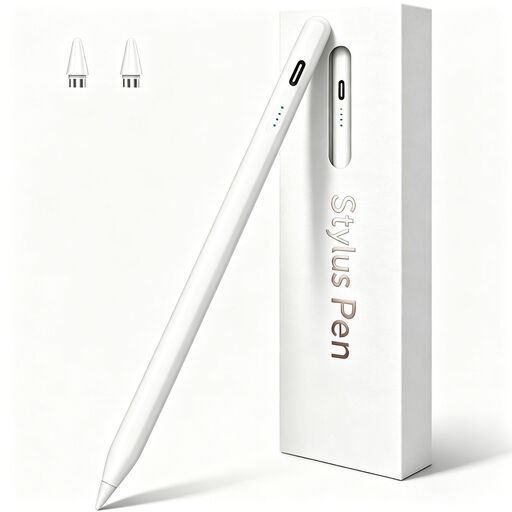 No image available
For an Android tablet with a capacitive touchscreen, provided your specific device is supported.
The description lists a 1.5-mm copper tip, USB-C charging, up to 12 hours of use and a magnetic holder for compatible tablets. It also says the stylus isn’t designed for iPad, Microsoft or some Lenovo tablets.
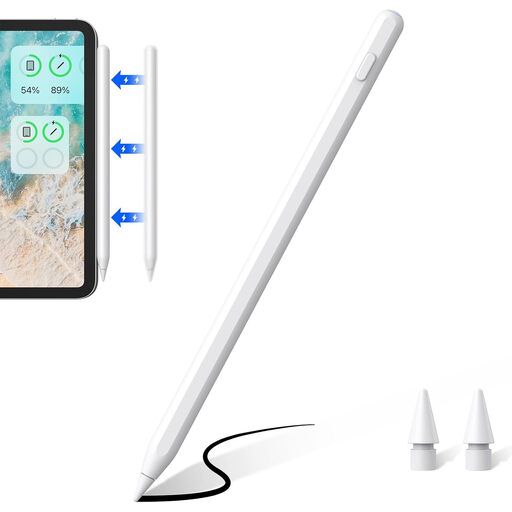 No image available
For the iPad models listed in the product title, provided the stylus features are compatible with your device.
The product title lists iPad Pro 11" generations 1 to 4, iPad Pro 12.9" generations 3 to 6, iPad Air 4 and 5, and iPad mini. The description lists tilt recognition, palm rejection and two replacement nibs; the product title also mentions magnetic charging.
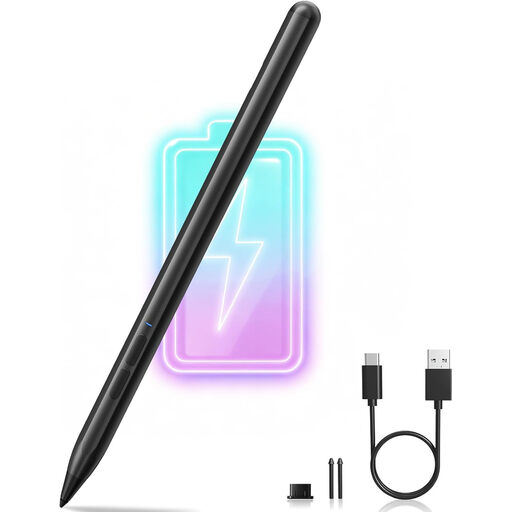 No image available
For the Surface devices listed in the product title or compatible MPP 2.0 devices.
The description lists 4,096 pressure levels, tilt recognition and palm rejection, two shortcut buttons with an eraser function, and magnetic attachment. Surface Laptop Go 1, 2 and 3, and Surface Laptop SE are listed as incompatible.
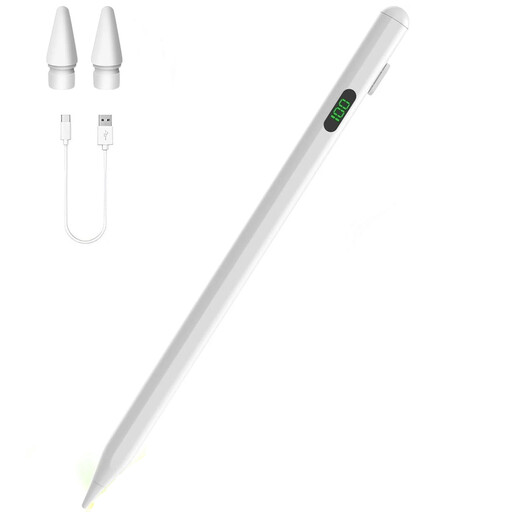 No image available
For the iPad models listed in the product title. Check compatibility with your specific device before buying.
The description lists USB-C charging, an LED charging indicator, tilt recognition and palm rejection, as well as magnetic attachment to compatible iPads.
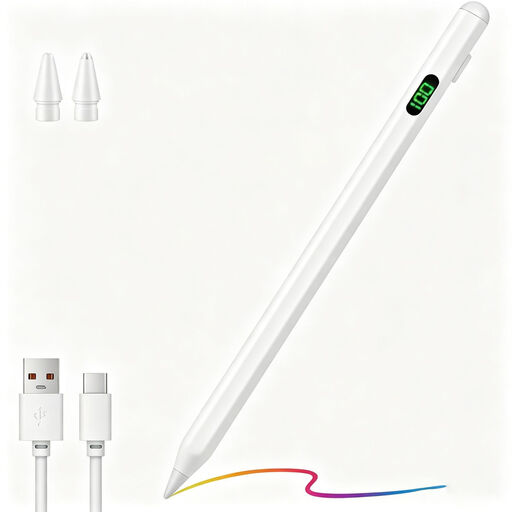 No image available
For compatible capacitive Android or iOS devices, if a POM tip suits the type of input you need.
The description lists a POM tip, USB-C charging, an LED indicator and two replacement nibs. Magnetic attachment is specified for compatible iPads only and is explicitly not for charging.
No. Nib size or pressure levels alone don’t prove that a drawing is to scale. Check the features and scale controls in the specific drawing or CAD app you use; stylus specifications from manufacturers don’t guarantee plan accuracy.
First check that your device is compatible, charge the stylus and set it to AES or MPP to match your device. Bluetooth pairing for the Windows Ink button is a separate step.
Check which replacement nibs fit your exact stylus model. STAEDTLER lists five replacement nibs and a tool in the case for the Noris digital jumbo; Wacom explains how to replace the Bamboo Ink Plus nibs.
Under statutory remedies, § 439(2) BGB provides that the seller must cover the necessary expenses, particularly transport, travel, labour and material costs. For standard claims relating to defects, § 438 BGB generally specifies a period of two years from delivery. This is separate from a voluntary guarantee; the relevant conditions for the claim still apply.
No. The German Environment Agency explains that waste electrical and electronic equipment must be collected separately. If batteries can be removed easily, they should be taken to a battery collection point separately.